
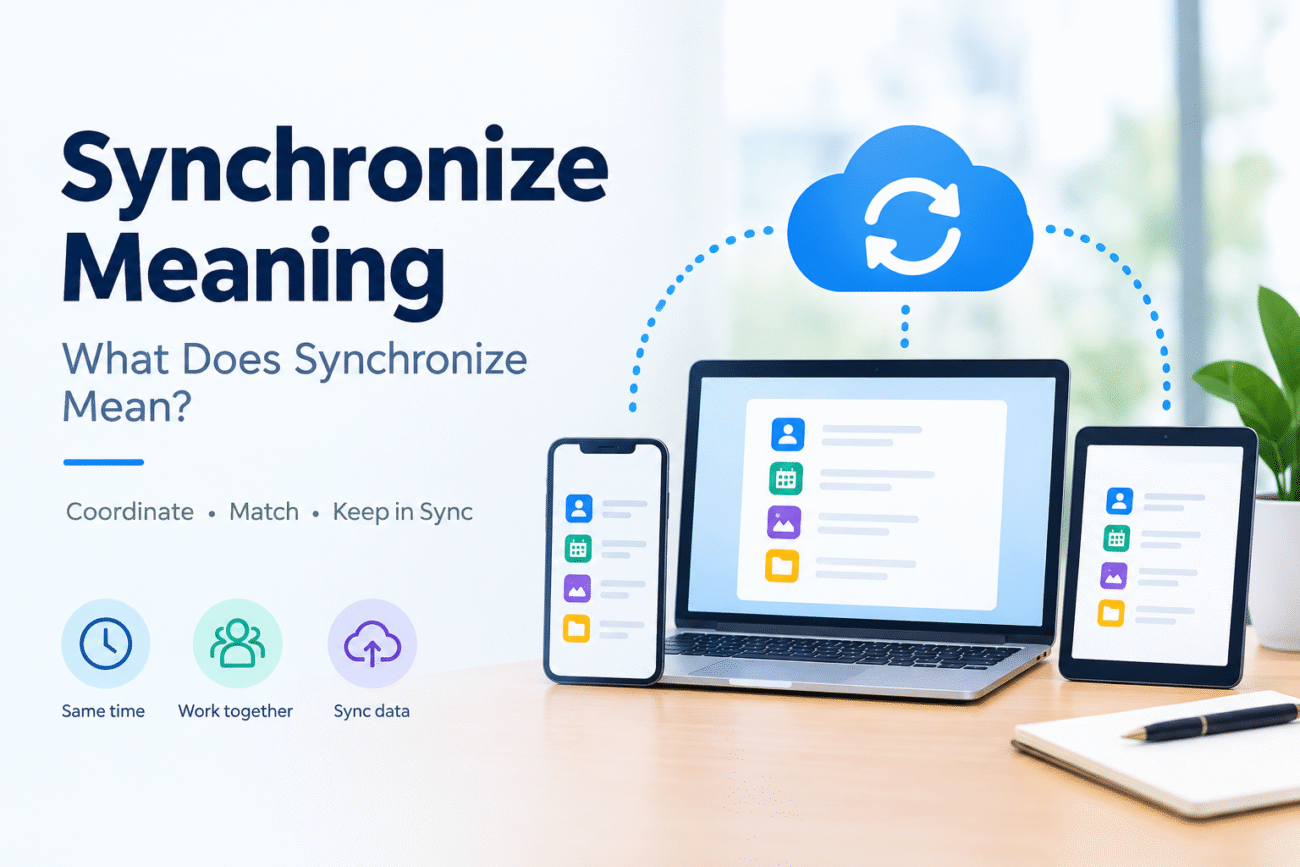
The word synchronize is commonly used when talking about technology, communication, schedules, and everyday activities. But what exactly does synchronize mean?
In simple terms, synchronize means to make two or more things happen at the same time or work together in coordination. In technology, it can also mean making sure that information on different devices or systems stays consistent and up to date.
What Does Synchronize Mean?
The basic meaning of synchronize is to coordinate things so they occur or operate together.
For example:
- Two clocks can be synchronized so they show the same time.
- A team can synchronize its schedules to work together efficiently.
- Your phone can synchronize data with your computer.
- Music and video can be synchronized so the sound matches the action on screen.
The word can therefore describe both physical coordination and the process of keeping digital information consistent.
Synchronize Meaning in Technology
In the digital world, synchronization is especially common. When you synchronize data, you are usually making sure that the same information is available across different devices, applications, or accounts.
For instance, if you add a new contact to your smartphone and your contacts are synchronized with your cloud account, that contact may also appear on another device connected to the same account.
Cloud services, email applications, calendars, photo apps, and file-storage platforms commonly use synchronization.
Example of Data Synchronization
Imagine you edit a document on your laptop. If the document is synchronized with a cloud service, the updated version can become available on your phone or another computer.
This helps users access the latest version of their files without manually transferring them between devices.
Synchronize vs. Sync
Sync is simply the shorter and more informal form of synchronize.
For example:
- “Synchronize your contacts with your account.”
- “Sync your contacts with your account.”
Both sentences have essentially the same meaning. “Sync” is particularly common in technology because it is short and easy to use in software interfaces.
You may see phrases such as sync data, sync files, sync devices, or sync accounts.
Synchronize Meaning in Everyday Life
Synchronization is not limited to computers and smartphones. It can describe coordinated actions in everyday situations.
For example, dancers may synchronize their movements during a performance. A group of people may synchronize their schedules to attend the same meeting. Two clocks may be synchronized to display exactly the same time.
In each case, the main idea is coordination and agreement in timing or information.
Why Is Synchronization Important?
Synchronization helps different people, devices, and systems work together more efficiently.
In technology, it can help:
- Keep information up to date
- Reduce duplicate work
- Make files available on multiple devices
- Keep calendars consistent
- Update contacts and other personal information
- Maintain the same data across connected systems
Without synchronization, users may have different versions of the same information on different devices.
Simple Examples of Synchronize
Here are a few easy examples:
Example 1:
“I synchronized my phone with my computer.”
This means the two devices exchanged or updated information so that their relevant data matched.
Example 2:
“The dancers synchronized their movements.”
This means the dancers performed their movements together at the same time.
Example 3:
“Make sure your calendar is synchronized.”
This means the calendar should be updated so that the information remains consistent across connected devices or accounts.
Final Thoughts
The synchronize meaning is essentially to coordinate things so they work together or happen at the same time. In everyday language, it can refer to coordinated actions or timing. In technology, it often means keeping data, files, or information consistent across devices and services.
Understanding this simple meaning makes terms such as sync data, synchronize devices, and synchronized accounts much easier to understand.
