CT Scan Explained: How It Works, How to Prepare, and What the Risks Are
CT Scan Explained: How It Works, How to Prepare, and What the Risks Are
A CT scan is a medical imaging test that creates detailed pictures of the inside of the body. CT stands for computed tomography. The test uses X-rays and a computer to build cross-section images, sometimes called slices. Doctors use those slices to look at bones, organs, blood vessels, and soft tissue. This guide explains a CT scan in plain language. It covers why doctors order one, how to prepare, what happens during the test, and the risks to discuss. It also answers common questions. However, this is general information only. It does not replace the advice of your own doctor.
Table of Contents
- What a CT scan is
- Why doctors order a CT scan
- How this imaging test works
- Types of CT scan
- How to prepare for a CT scan
- Contrast dye: what it does
- What happens during the test
- After the test and results
- Risks and safety
- CT scan compared with X-ray and MRI
- Special cases: children and pregnancy
- Questions to ask your doctor
- Frequently asked questions
- Conclusion
What Is a CT Scan?
A CT scan is a type of X-ray test. A standard X-ray takes one flat picture. In contrast, this test takes many pictures from different angles. A computer then joins those pictures into slices. Doctors can view one slice at a time. In addition, they can stack slices into a 3D view. As a result, they can see size, shape, and position more clearly than with a flat X-ray.
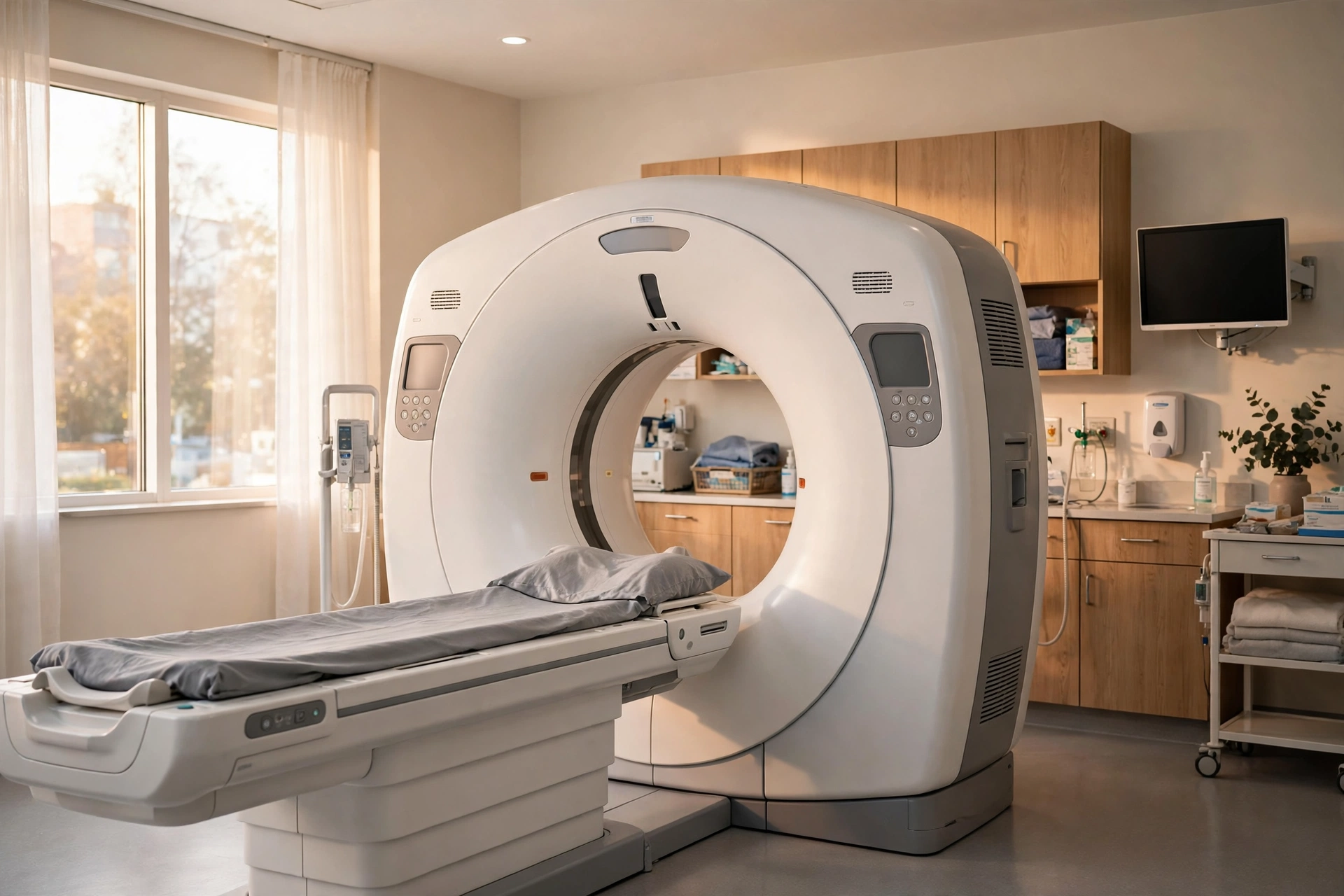
The machine looks like a large doughnut. You lie on a table that slides through the hole in the middle. The ring part rotates around you while it takes pictures. The test is painless for most people. In addition, the scanning part often takes only a few minutes. The full visit may take longer due to preparation and waiting. However, the time inside the machine is usually short.
A CT scan can show nearly any part of the body. For example, doctors use it for the head, chest, abdomen, pelvis, and spine. It can also show blood vessels when contrast dye is used. The Mayo Clinic brain CT scan overview explains that head scans can show bleeding, swelling, and tumors. It also notes that head scans are often the first test after a head injury or signs of stroke. That speed is one of the main strengths of this imaging method.
Why Doctors Order a CT Scan
Doctors order this test for many reasons. One common reason is to find the cause of symptoms. For example, belly pain, a head injury, or a persistent cough may lead to a scan. In addition, doctors use it to check for tumors, infections, and blood clots. It can also show fractures and internal bleeding after an accident. Furthermore, it helps doctors plan surgery, biopsies, and radiation treatment. It can also track how a known condition changes over time.
In emergencies, speed matters. This test is fast and widely available. Therefore, emergency teams often choose it first for trauma and suspected stroke. It can quickly show bleeding in the brain or damage inside the chest or belly. That fast answer can guide urgent treatment. For non-urgent problems, doctors weigh this test against other options. They consider what detail they need, how fast they need it, and the radiation dose.
It is important to know what this test cannot do. It does not give a final diagnosis on its own. A radiologist reads the images and writes a report. Then, your doctor joins that report with your history, exam, and lab tests. In addition, some problems are better seen on MRI or ultrasound. Therefore, the choice of test depends on the question your doctor needs to answer.
How This Imaging Test Works
The science behind this test is easy to grasp in outline. An X-ray tube rotates around your body. As it rotates, it sends narrow beams of X-rays through you. Detectors on the other side measure how much of each beam gets through. Dense tissue, such as bone, blocks more X-rays. Softer tissue blocks less. A computer turns those measurements into pictures.
Each picture is a thin slice of the body. Think of slicing a loaf of bread. One slice shows the inside at one level. Many slices together show the whole loaf. In the same way, many slices show the body from top to bottom. Doctors can also rebuild the slices into views from the side or front. In addition, modern machines can make 3D images from the same data.
You will need to lie still during the test. Movement can blur the pictures. At times, the technologist may ask you to hold your breath for a few seconds. This helps keep chest and belly images sharp. You will hear whirring and clicking sounds. Those sounds are normal. The technologist watches from a nearby room and can talk to you through an intercom.
Types of CT Scan
Not all scans are the same. The main types differ by body part and by contrast use. A head scan looks at the brain and skull. A chest scan looks at the lungs, heart, and major vessels. An abdominal scan looks at organs such as the liver, kidneys, and pancreas. A pelvic scan looks at the lower belly and pelvic organs. In addition, a spine scan looks at bones and discs in the back and neck.
Some scans use contrast dye. Others do not. A scan with contrast shows blood vessels and some tissues more clearly. A scan without contrast is faster and avoids dye risks. It may suit head injuries and some bone problems. Furthermore, special forms exist for specific questions. For example, CT angiography focuses on blood vessels. CT colonography looks at the colon. Your doctor picks the type that fits your question.
How to Prepare for a CT Scan
Preparation depends on the type of test. Your appointment letter should state the exact steps. Follow it closely. If anything is unclear, call the imaging center before the day. General steps are below.
First, you may need to fast. For scans with contrast, you may be asked not to eat or drink for 4 to 6 hours before the test. Water rules vary, so check your letter. Second, wear loose clothes without metal. You may need to change into a gown. Remove jewelry, belts, glasses, and any metal items. Metal can blur the images.
Third, tell the team about your health history. Mention allergies, especially to contrast dye or iodine. Mention kidney problems, diabetes, thyroid problems, and asthma. Also list all medicines you take. For example, people who take metformin for diabetes may need to pause it around the test. Your doctor will advise you. Do not stop a medicine without asking first.
Fourth, tell the team if you might be pregnant. Radiation can harm a developing baby. Therefore, doctors usually avoid this test in pregnancy unless it is clearly needed. In that case, they use the lowest dose possible. Fifth, if you weigh over 300 pounds, check the machine weight limit. Some scanners have limits. The imaging center can advise you.
Finally, plan your ride if sedation is planned. Most people need no sedation. However, children or people who cannot lie still may receive it. If you receive sedation, you will need someone to take you home. For everyday symptom guides, you can also read our sniffles guide to learn how common cold symptoms differ from problems that need urgent review.
Contrast Dye: What It Does
Contrast dye, also called contrast material, helps some structures stand out. It is most often iodine based. It can be given by IV, by mouth, or, rarely, by enema. IV contrast highlights blood vessels and organs with rich blood flow. Oral contrast coats the stomach and intestines. The choice depends on the body part being studied.
When IV contrast enters the body, many people feel a warm flush. Some notice a metallic taste. Others feel a brief sense of needing to pass urine. These feelings are common and pass within seconds to minutes. After the test, drink fluids as advised to help your body clear the dye. Your kidneys remove most IV contrast within a day.
Contrast dye carries small risks. Allergic reactions are the main concern. Most reactions are mild, such as itching or a rash. Severe reactions are rare but need urgent care. Kidney injury is another rare risk. It matters most for people with existing kidney disease. Therefore, the team may check kidney function with a blood test before the test. Tell the team at once if you have had a prior reaction to contrast dye.
What Happens During the Test
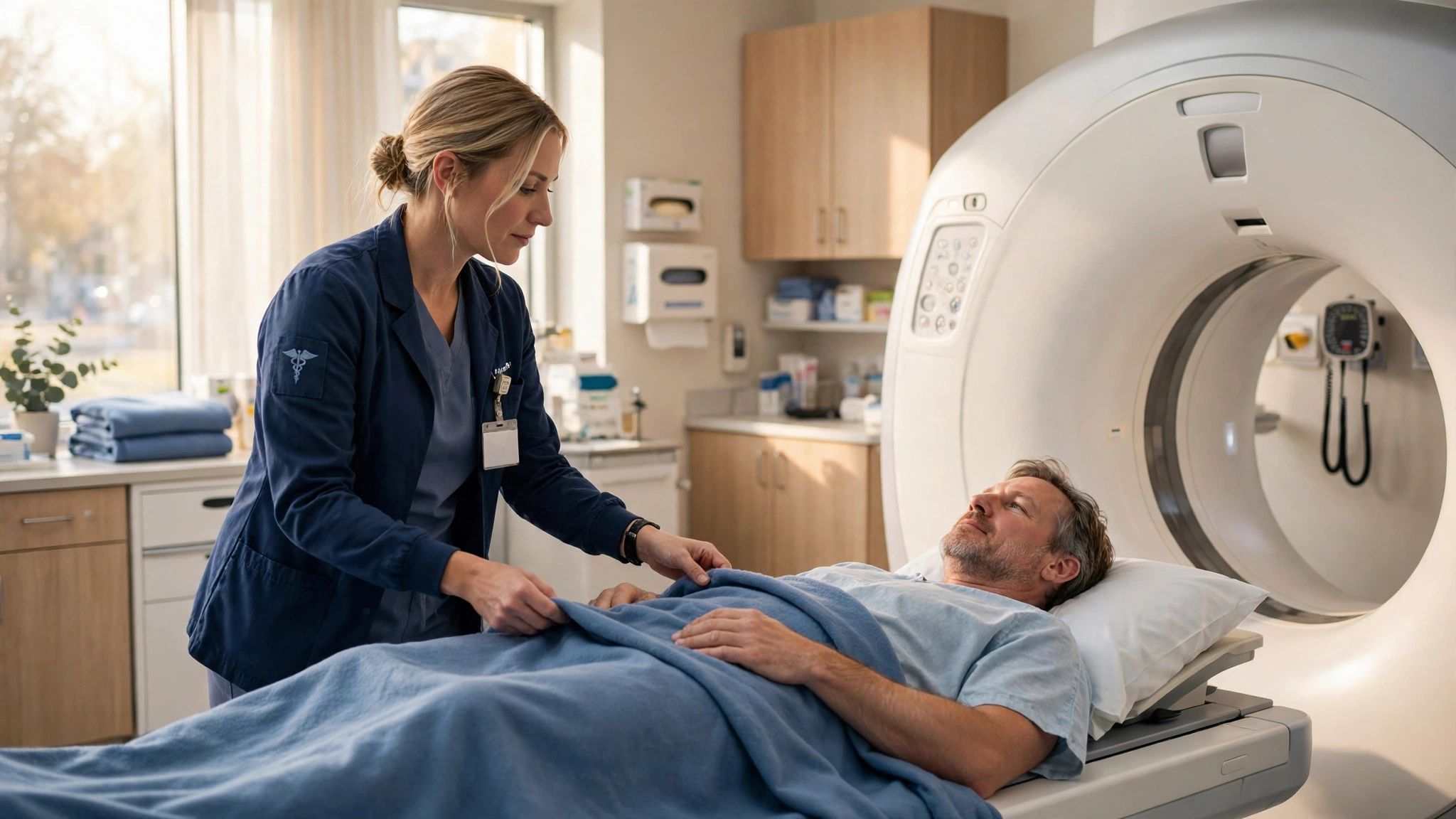
On arrival, you will check in and change if needed. A technologist will explain the steps and answer questions. If IV contrast is planned, a small IV line goes into a vein in your arm. Then, you lie on the table, often on your back. Pillows and straps may help you stay in position. The table then slides into the scanner ring.
During scanning, the ring rotates around you. You may hear buzzing and whirring. The technologist may ask you to hold your breath briefly. Try to stay as still as you can. If you feel unwell, you can speak through the intercom. The technologist can pause if needed. The scanning part often takes under a minute to a few minutes. The full time on the table is usually 10 to 30 minutes.
After scanning, the technologist checks the images. You may need to wait a short time in case extra pictures are needed. Then, the IV line comes out if one was used. Most people return to normal activity at once. If you had sedation, you will rest until it wears off. You can find more general health topics in our health category.
After the Test and Results
Results do not come at once. A radiologist, a doctor trained in imaging, reviews the pictures. Then, the radiologist writes a report for your doctor. This often takes a day or two. In emergencies, the report comes much faster. Your own doctor explains the result and the next steps. Ask when and how you will receive the result.
A normal result means the structures looked normal for the area studied. An abnormal result depends on the body part. It may mean a mass, infection, clot, or injury was found. It may also mean a follow-up test is needed. Try not to read too much into single words in a report. Many findings are minor or unclear and need clinical context. Your doctor can explain what the finding means for you.
If contrast dye was used, drink fluids as advised unless your doctor limits fluids. Watch for delayed symptoms. For example, tell a clinician about new rash, swelling, trouble breathing, or much less urine after the test. Those symptoms are uncommon. However, they deserve prompt review.
Risks and Safety of a CT Scan
This test is generally safe, but it has real risks. The main risk is radiation exposure. A single scan uses more radiation than a plain X-ray. Radiation can raise cancer risk by a very small amount. The risk grows with repeated scans over a lifetime. However, doctors use the lowest dose that gives a clear answer. Modern machines also use dose saving methods. For most people, the benefit of finding a serious problem outweighs the small radiation risk. You can read the plain language safety notes in the MedlinePlus CT scan encyclopedia.
Contrast risks are covered above. Allergic reactions and kidney effects are uncommon. In addition, lying still on a hard table can cause mild discomfort. Some people feel anxious in the machine. The ring is open, not a closed tube. Therefore, claustrophobia is less common than with MRI. Still, tell the team if you feel anxious. They can explain each step and help you cope.
To keep risk low, ask whether the test is needed and whether a lower dose option exists. Tell the team about prior scans. That history helps them avoid repeats. In addition, keep a simple record of your imaging tests. It helps future doctors judge the total dose.
This Test Compared With X-ray and MRI
Patients often ask how this test differs from X-ray and MRI. The table below sums up the main points.
| Test | How it works | Typical time | Best for |
|---|---|---|---|
| Plain X-ray | One flat X-ray picture | Seconds | Fractures, chest screening, foreign objects |
| CT scan | Rotating X-rays rebuilt into slices | Minutes on the table | Bleeding, trauma, lung and belly organs, kidney stones |
| MRI | Magnetic field and radio waves, no radiation | Often 30 to 60 minutes | Brain, spinal cord, joints, soft tissue detail |
In short, X-ray is fastest and simplest. This test adds detail and speed for urgent problems. MRI adds soft tissue detail but takes longer and suits fewer people. For example, people with some metal implants cannot have MRI. Therefore, the best test is the one that answers your doctor's question with the least risk and delay. For general wellness reading, see our immunity shots guide.
Special Cases: Children and Pregnancy
Children are more sensitive to radiation than adults. Therefore, doctors order this test for children only when needed. Pediatric centers use lower doses for smaller bodies. Parents can ask whether an ultrasound or MRI could answer the question instead. If this test is needed, the benefit usually outweighs the small risk. Ask the team how they adjust the dose for children.
In pregnancy, doctors usually avoid this test. They may choose ultrasound or MRI instead. However, some emergencies need the speed and detail of this test. In those cases, the team shields the belly when possible and uses the lowest dose. If you are pregnant or think you might be, tell the team before the test. Do not assume they already know.
People with kidney disease need extra care with contrast dye. The team may check kidney function first. They may also give fluids before and after the test. People with thyroid problems should mention them too. Iodine contrast can affect thyroid function in rare cases. Full disclosure of your history helps the team plan safely.
Questions to Ask Your Doctor
Good questions can lower worry and improve safety. Ask why the test is needed and what it will show. Ask whether contrast dye is planned and why. Ask about fasting, medicines, and allergies. Ask about radiation dose and how it compares with background radiation. Ask when results will arrive and who will explain them. Finally, ask what happens if the result is normal or abnormal. Write the answers down if it helps.
If you feel the test may be a repeat, say so. Ask whether a prior scan could answer the question. In addition, ask whether another test could work with less radiation. Doctors welcome these questions. They show you want to balance benefit and risk.

Frequently Asked Questions About a CT Scan
Is a CT scan painful?
No, the test itself is not painful. You lie still on a table while the machine takes pictures. You may feel mild discomfort from lying still. IV contrast can cause a brief warm feeling or metallic taste. Those feelings pass quickly. If you feel pain, tell the technologist at once.
How long does a CT scan take?
The scanning part often takes only a few minutes. The full visit, including preparation and waiting, often takes 30 to 60 minutes. Scans with contrast may take longer. Your imaging center can give a time estimate for your specific test.
Do I need contrast dye for a CT scan?
It depends on the question. Contrast dye helps show blood vessels and some organs more clearly. However, many scans do not need it. Your doctor decides based on the body part and the problem. If contrast is planned, tell the team about allergies and kidney problems first.
Is a CT scan safe?
For most people, yes. The radiation dose is low and controlled. The small added cancer risk is outweighed by the benefit when the test is truly needed. Contrast reactions and kidney effects are uncommon. Doctors use the lowest dose possible and avoid repeats when they can.
Can I eat before a CT scan?
It depends on the test. Scans without contrast often need no fasting. Scans with contrast often need fasting for 4 to 6 hours. Follow your appointment letter exactly. If you are unsure, call the imaging center before the day.
What is the difference between a CT scan and an MRI?
The main difference is how pictures are made. This test uses X-rays and is fast. MRI uses magnetic fields and radio waves and takes longer. MRI shows soft tissue detail better in some areas. This test is better for trauma, bleeding, and lung or belly problems. Your doctor picks the test that fits your question.
Conclusion
A CT scan is a fast, detailed imaging test that helps doctors find and track many health problems. Preparation is usually simple. It involves fasting for some tests, removing metal, and sharing your allergy and medicine history. Contrast dye can sharpen the pictures but adds small risks. Radiation risk is real but small, and doctors work to keep doses low. If you face this test, ask why it is needed, whether contrast is planned, and when results will arrive. Clear answers will help you feel ready and safe.
This article is for general information only. If you have ongoing symptoms or worries about a test, talk to a healthcare professional.