
What Are the Sniffles? Causes, Home Care, and Relief Guide
Almost everyone knows the sniffles: that runny or stuffy nose that keeps you reaching for tissues all day. It can show up with a cold, with allergies, or after breathing in dust, smoke, or sharp winter air.
So what does the word actually mean? The sniffles are a symptom, not a disease on their own. The term usually covers nasal congestion, nasal discharge, or both, often with sneezing or watery eyes.
Most cases are mild and clear up within a week or two. Still, it helps to know what sets them off, how to stay comfortable, and when a professional opinion makes sense.
Table of Contents
- What they are
- Common causes
- Sniffles vs. cold vs. flu vs. allergies
- How long they last
- Comfort measures
- Sniffles in children
- When to see a professional
- FAQ

What Are the Sniffles, Exactly?
“The sniffles” is everyday slang for a runny nose, a stuffy nose, or both together. Doctors describe a runny nose as excess fluid, usually mucus, draining from the nose. A stuffy nose feels blocked, but the blockage often comes from swollen tissues inside the nose rather than from mucus alone.
The mucus involved can range from clear and watery to thick, white, yellow, or green. Many people assume yellow or green mucus means a bacterial infection. However, mucus color alone does not prove that. Clear discharge is typical of allergies, while thicker, colored mucus often appears a few days into a cold.
These nasal symptoms rarely travel alone. They often arrive with sneezing, watery or itchy eyes, post-nasal drip, a scratchy throat, or a mild cough. Those add-on clues can hint at the underlying cause.
One more important point: the sniffles are a set of symptoms, not a diagnosis. The same runny nose can come from a virus, an allergy, or simple irritation. So finding the cause matters more than naming the symptom.
Common Causes of a Runny Nose
Most involve your immunity reacting to a perceived threat — a short-lived infection, something in the air, or a habit that irritates the nose. Here are the most common ones.
Colds and Other Respiratory Infections
The common cold is the classic cause. According to the CDC, the common cold is a viral infection of the upper airways, and rhinoviruses are its most frequent cause. Colds usually start a few days after exposure and bring a runny or stuffy nose, sneezing, a sore throat, and sometimes a mild cough.
The flu and other respiratory viruses can also set off the sniffles. With the flu, though, a runny nose tends to play a smaller role. Fever, body aches, and exhaustion usually dominate instead.
Seasonal and Year-Round Allergies
Allergies are another top cause of the sniffles. In spring and fall, tree, grass, and weed pollen trigger seasonal symptoms in millions of people. The pattern is a giveaway: clear, watery discharge, lots of sneezing, and itchy eyes or throat.
Some allergies never take a season off. Dust mites in bedding, pet dander, mold, and cockroach debris can cause year-round symptoms. If the drip shows up mainly at home, during cleaning, or around pets, an indoor trigger is worth considering. Unlike a cold, allergies do not cause a fever.
Irritants and Nonallergic Rhinitis
Your nose can react to things that are not allergies at all. Cigarette smoke, strong perfumes, cleaning chemicals, and air pollution can all irritate the nasal lining. Cold, dry air does the same for many people, which is one reason winter brings so many cases of the sniffles.
Doctors call this nonallergic rhinitis: the nose gets inflamed without an allergic response. Temperature swings and even spicy foods can set it off in sensitive people. The discharge is usually clear, with no itching or fever.
Overused Nasal Sprays and Physical Causes
Some cases come from the very products meant to stop them. Decongestant nasal sprays used for more than a few days can cause rebound congestion. As a result, the nose feels stuffier and runnier than before, which keeps the cycle going.
Physical issues can play a role too. A deviated septum, nasal polyps, or enlarged nasal tissues can narrow the passages and make congestion a regular event. These are less common, but they matter when one side stays blocked or symptoms never fully clear.

Quick Clue Table: Cold or Allergies?
| Clue | More likely a cold | More likely allergies |
| Discharge | Starts clear, may thicken over days | Clear and watery throughout |
| Itching (nose, eyes, throat) | Uncommon | Very common |
| Fever | Possible, usually mild | Not typical |
| Duration | Days to about 2 weeks | Weeks or months, while exposed |
| Pattern | Comes on after exposure to a sick person | Returns in the same season or setting |
Sniffles vs. Cold vs. Flu vs. Allergies
People often use “the sniffles” and “a cold” as if they were the same thing. They are related but not identical: the sniffles are symptoms, while a cold, the flu, or allergies are possible causes.
A cold is a viral infection that mainly affects the nose and throat. Its hallmark is nasal symptoms plus sneezing and a sore throat, usually without a high fever. The CDC notes that flu and the common cold are caused by different viruses, and that cold symptoms are usually milder than flu symptoms.
The flu arrives faster and hits harder. It brings fever, chills, muscle aches, and deep tiredness, with less emphasis on a runny nose. Allergies, on the other hand, bring itching and watery eyes but no fever, and they stick around as long as the trigger does.
Why does the difference matter? Because the right response depends on the cause. Allergy-driven sniffles improve when you reduce exposure to the trigger. Cold-driven symptoms simply run their course. And flu-like signs, especially with a high fever or trouble breathing, deserve prompt professional attention. In each case, these symptoms are part of your innate immunity at work, flushing out whatever it finds suspicious.
How Long Do the Sniffles Last?
Cold-related sniffles usually peak within 2 to 3 days and fade over the next week or so. A lingering drip into a second week is still within the normal range.
Allergy symptoms last as long as you keep meeting the trigger. Pollen-season sniffles can drag on for weeks or months, while irritant-related ones ease once the air improves.
Symptoms that last for many weeks, keep coming back, or never fully clear deserve a closer look. At that point, allergies, chronic sinus irritation, or a structural issue may be involved. So watch the calendar: a few days is one story, but many weeks is another.
Comfort Measures for Stuffy and Runny Noses
There is no way to instantly switch the sniffles off, since they are the body responding to a cause. Still, several simple measures can make the wait easier. These are comfort steps, not cures.
Rest and Drink Plenty of Fluids
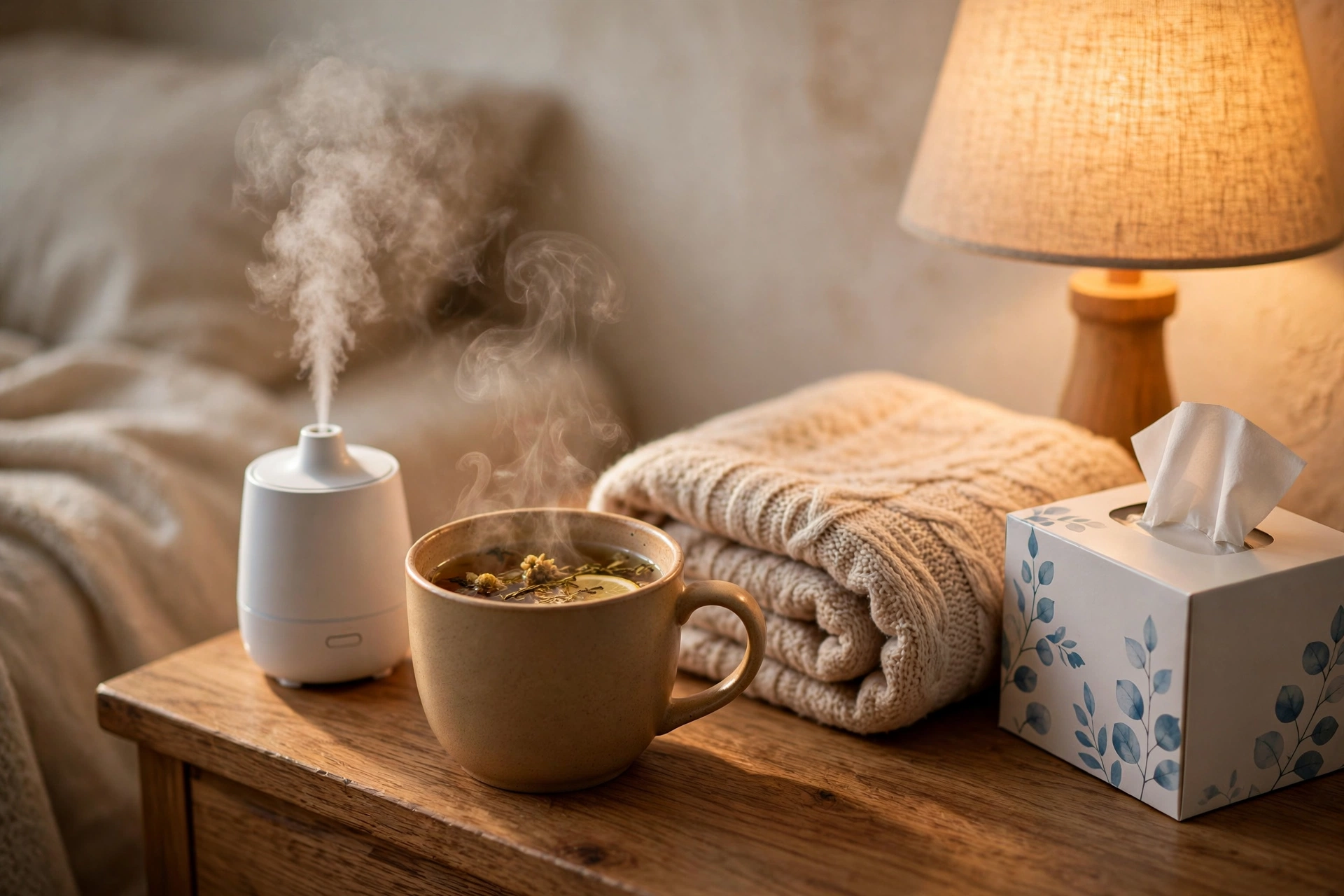
Give your body downtime when a runny nose hits. Rest supports recovery, and fluids help keep mucus thinner and easier to clear. Water is a solid default. Warm drinks like tea or broth feel soothing to many people, and the steam can loosen things up a bit.
Avoid alcohol if you can, since it can leave you more dehydrated. And keep an eye on little ones: babies and toddlers can dry out faster, so offer fluids often and watch for fewer wet diapers or a dry mouth.
Add Moisture to the Air
Dry air makes a stuffy nose feel worse. A cool-mist humidifier in the bedroom adds moisture and can ease nighttime congestion. Clean it regularly, since a dirty tank can spread germs and mold.
A warm shower is another easy option. The steam can briefly open things up and soothe a raw nose. Use comfortably warm water, not scalding steam, and never hold your face over boiling water.
Saline Rinses and Gentle Nose Care
Saline (salt water) sprays and rinses can wash out mucus and irritants. They are inexpensive and gentle enough for regular use. A neti pot works the same way by flushing the nasal passages.
If you use a neti pot or rinse bottle, use only distilled, sterile, or previously boiled and cooled water, and always follow the directions. Tap water is not safe for nasal rinsing. Also blow your nose gently, one side at a time, to avoid pushing mucus where it does not belong.
One caution: decongestant nasal sprays can backfire with overuse and worsen congestion instead of relieving it. Many experts suggest no more than 3 days unless a healthcare professional advises otherwise.
Cut Down Allergy Triggers at Home
If allergies drive your sniffles, small home changes can help a lot. Wash bedding in hot water to cut down dust mites, and consider zippered covers for pillows and the mattress. Vacuum and dust regularly, and fix damp spots quickly to keep mold from growing.
During pollen season, keep windows closed and change clothes after spending time outside. Showering before bed washes pollen from hair and skin so it does not end up on the pillow. If you have pets, washing your hands after handling them and keeping them out of the bedroom can reduce dander exposure.
Sniffles in Children: Extra Care
Kids catch colds more often than adults. MedlinePlus notes that adults catch an average of 2 to 3 colds per year, and children catch even more, thanks to school, daycare, and shared toys. That is normal: a child’s adaptive immunity is still building its memory of common germs.
For babies, a bulb syringe can gently clear mucus before feeds and sleep. Always follow safe sleep guidance: babies should sleep on their backs on a flat surface.
Be careful with over-the-counter cold medicines in young children. Health authorities advise against giving OTC cough and cold medicines to children under 4, since serious side effects are possible. For children between 4 and 6, check with a healthcare provider or pharmacist first. Never give honey to a child under 1 year old.
When to Talk to a Healthcare Professional
Most cases of the sniffles resolve without a medical visit. Still, some signs mean it is time to get professional advice. Reach out if you notice any of the following:
- Symptoms last longer than 10 days without any improvement, or they improve and then come back worse.
- You have trouble breathing, fast breathing, or wheezing.
- A fever is high or lasts longer than a few days.
- Nasal discharge smells bad, comes from only one side, or looks unusual.
- You have severe headache, face pain, or swelling around the eyes.
- There is an earache, ear discharge, or pain that keeps getting worse.
- A baby under 6 months has a runny nose with a fever or seems unusually sleepy or fussy.
People with asthma, immune problems, or other chronic conditions should be quicker to check in. The same goes for anyone who simply feels something is not right. Trusting your instincts is valid: a professional can tell you whether the symptoms need attention or just patience.
Frequently Asked Questions About the Sniffles
What causes a runny nose most often?
Colds and allergies are the two most common causes. Irritants like smoke, dust, strong scents, and cold dry air can also set one off. Tracking when it starts can help you spot your own pattern.
Is it the same thing as a cold?
No. A runny or stuffy nose is a symptom, while a cold is one possible cause. Allergies, irritants, and other infections can produce the same feeling. That is why the same symptom can need different responses.
Why do I get a runny nose in cold weather?
Cold, dry air can irritate the nasal lining directly. In addition, people spend more time indoors in winter, where dust, dry heated air, and close contact with others are common. Cold viruses also circulate more in the colder months. So winter cases can come from the weather, indoor triggers, or a seasonal cold.
Can allergies cause it without a cold?
Yes, absolutely. Allergy-related sniffles are common and can look a lot like a cold at first. The clues are itching of the nose, eyes, or throat, clear watery discharge, and symptoms that return in the same season or setting. Allergies do not cause a fever, which also helps tell them apart from a cold.
How long does it usually last?
Cold-related cases usually peak in 2 to 3 days and fade over 1 to 2 weeks. Allergy cases last as long as you stay exposed to the trigger, which can be weeks or months. If symptoms last much longer than 2 weeks without improving, it is sensible to talk to a healthcare professional.
Can it spread to other people?
The symptom itself does not spread, but its cause might. A cold virus passes easily from person to person through droplets and touch. Allergy or irritant symptoms are not contagious at all. So cover coughs and sneezes, wash your hands often, and avoid touching your face when a cold is going around.
Is blowing your nose better than sniffling?
Blowing gently is usually better than repeatedly sniffling mucus back up. Blow one nostril at a time with light pressure to protect your ears and sinuses. If the nose is too sore or swollen to blow, saline spray and rest can help instead.
Conclusion
The sniffles are simply your nose’s way of responding to a cold, an allergy, or an irritant. They are usually mild, usually short-lived, and manageable with rest, fluids, moist air, and a few trigger-smart habits. The key is noticing the pattern: how they start, how long they last, and what makes them worse.
For a bigger picture of how your body fights these triggers, read our overview of immunity.
As a soft next step, keep a short note the next time they show up. Write down when the symptoms started, what you were doing, and any itching or fever. That small record can reveal your triggers and makes any future conversation with a healthcare professional much easier.
This article shares general health information only and is not medical advice. If your sniffles linger, keep coming back, or worry you, talk to a healthcare professional.