What Is Psyllium Husk? Benefits, Uses, and Safety Explained
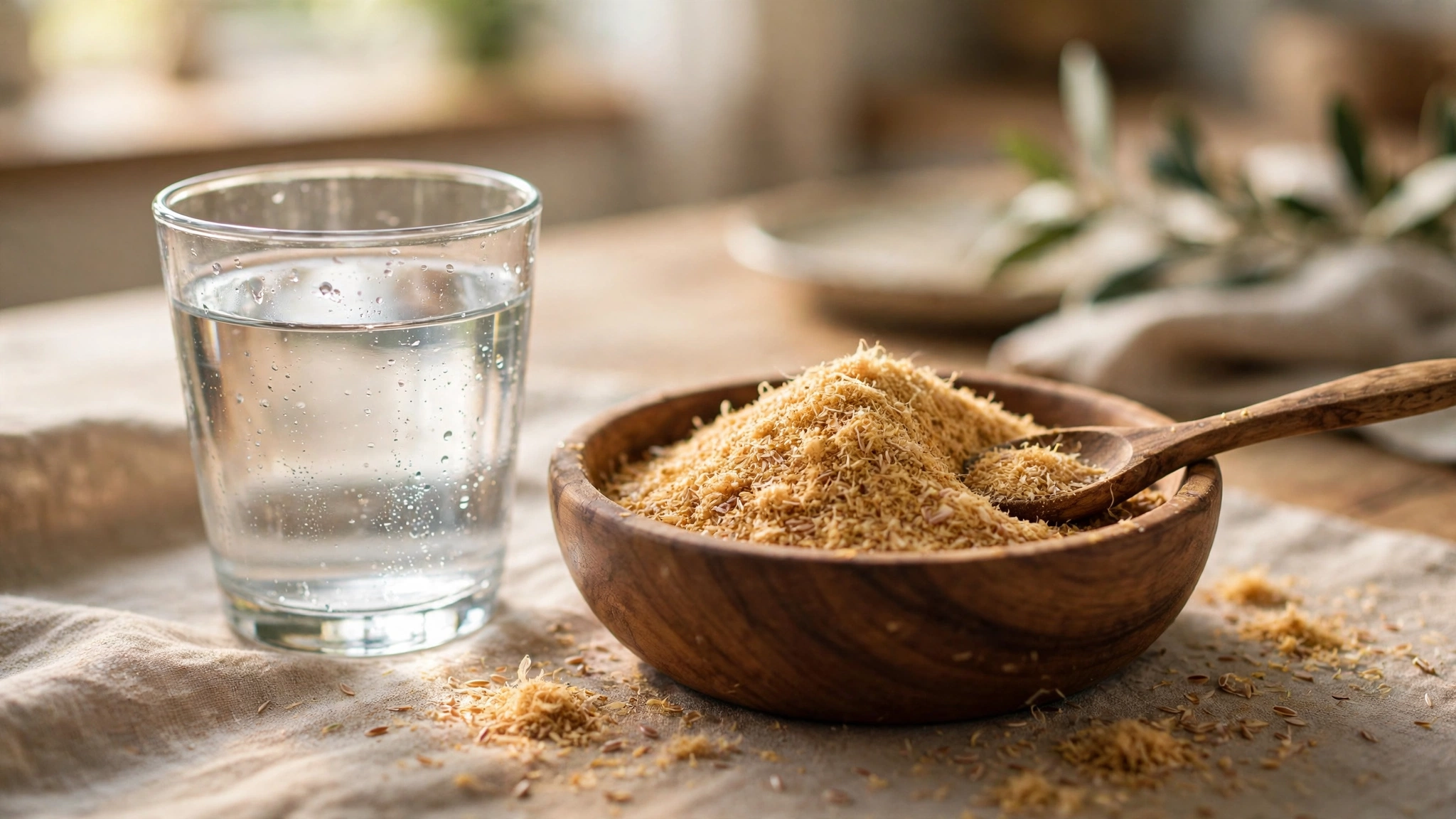
Psyllium husk is a type of soluble fiber made from the outer coating of seeds from the Plantago ovata plant. When mixed with water, psyllium husk forms a thick gel, and that gel is the reason it affects digestion, cholesterol, and blood sugar. MedlinePlus describes psyllium as a bulk-forming laxative that absorbs liquid in the intestines, swells, and forms a bulky stool that is easier to pass.
If you have heard psyllium husk praised for gut health, heart health, or weight management, this guide will help you sort fact from hype. You will learn what psyllium husk is, how it works, what research supports, what risks to watch for, and how to use it safely. This article is general information only. It is not medical advice, and it does not replace guidance from your own healthcare professional.
Contents:
- What psyllium husk is
- How it works in the gut
- Forms and fiber basics
- Constipation and diarrhea
- Cholesterol
- Blood sugar
- Weight management
- Cooking and baking
- Side effects and safety
- Who should talk to a clinician first
- Food-first fiber and smart use
- Frequently asked questions
What Psyllium Husk Is
Psyllium husk comes from the seeds of Plantago ovata, a plant grown mainly in India and nearby regions. The husk is the thin outer layer of each seed. It is rich in soluble fiber, which is fiber that dissolves in water to form a gel. In fact, nearly all of the carbohydrate in psyllium husk is fiber, and most of that fiber is soluble.
You may know psyllium husk as the main ingredient in well-known fiber products sold in pharmacies. It is also sold on its own as a powder, in capsules, and as granules. In addition, food makers use psyllium husk in gluten-free and low-carbohydrate baking, where it helps dough hold together and stay moist.
Psyllium husk is naturally gluten-free. That makes it useful for people who avoid gluten, although anyone with coeliac disease should still check labels for cross-contact warnings. It is also a plant-based fiber, so it fits most dietary patterns.
One point often causes confusion. Psyllium husk is a fiber supplement, not a medicine for weight loss and not a substitute for a high-fiber diet. It can add fiber to your day, but whole foods bring extra nutrients that a powder cannot replace. Keep that balance in mind as you read the benefits below.
How It Works in the Gut
The key to psyllium husk is water. When psyllium husk meets liquid, it absorbs many times its own weight in water and swells into a gel. That gel then moves through the digestive tract and changes how stool forms and how food is digested.
First, the gel adds bulk and softness to stool. Bulk helps trigger normal bowel movements, while softness makes passing stool easier. This is why psyllium husk is classed as a bulk-forming laxative. Unlike stimulant laxatives, it does not force the gut muscles to contract. Instead, it works with the normal movement of the gut.
Second, the gel slows digestion slightly. Food moves through the gut more gradually, and glucose enters the bloodstream at a slower pace. That slower pace is one reason psyllium husk is studied for blood sugar control after meals.
Third, the gel can trap bile acids in the gut. Bile acids are made from cholesterol in the liver and help digest fats. When psyllium husk carries some bile acids out of the body, the liver must use more cholesterol to make replacements. Over time, that process can lower blood cholesterol levels. This chain of events explains the heart-health interest in psyllium husk.
Finally, psyllium husk is only partly fermented by gut bacteria. As a result, it tends to cause less gas than some other fibers. A small amount is fermented into short-chain fatty acids, which support gut lining health. In short, psyllium husk works gently, through bulk, gel, and slower digestion, rather than through harsh stimulation.
Forms and Fiber Basics
Psyllium husk is sold in several forms, and the form you choose affects ease of use. Powder is the most common form. It mixes into water, juice, or smoothies, and it is also used in baking. Granules are similar but coarser. Capsules avoid taste and texture issues, but they still need plenty of water. Wafers and ready-made drinks are also available in some markets.
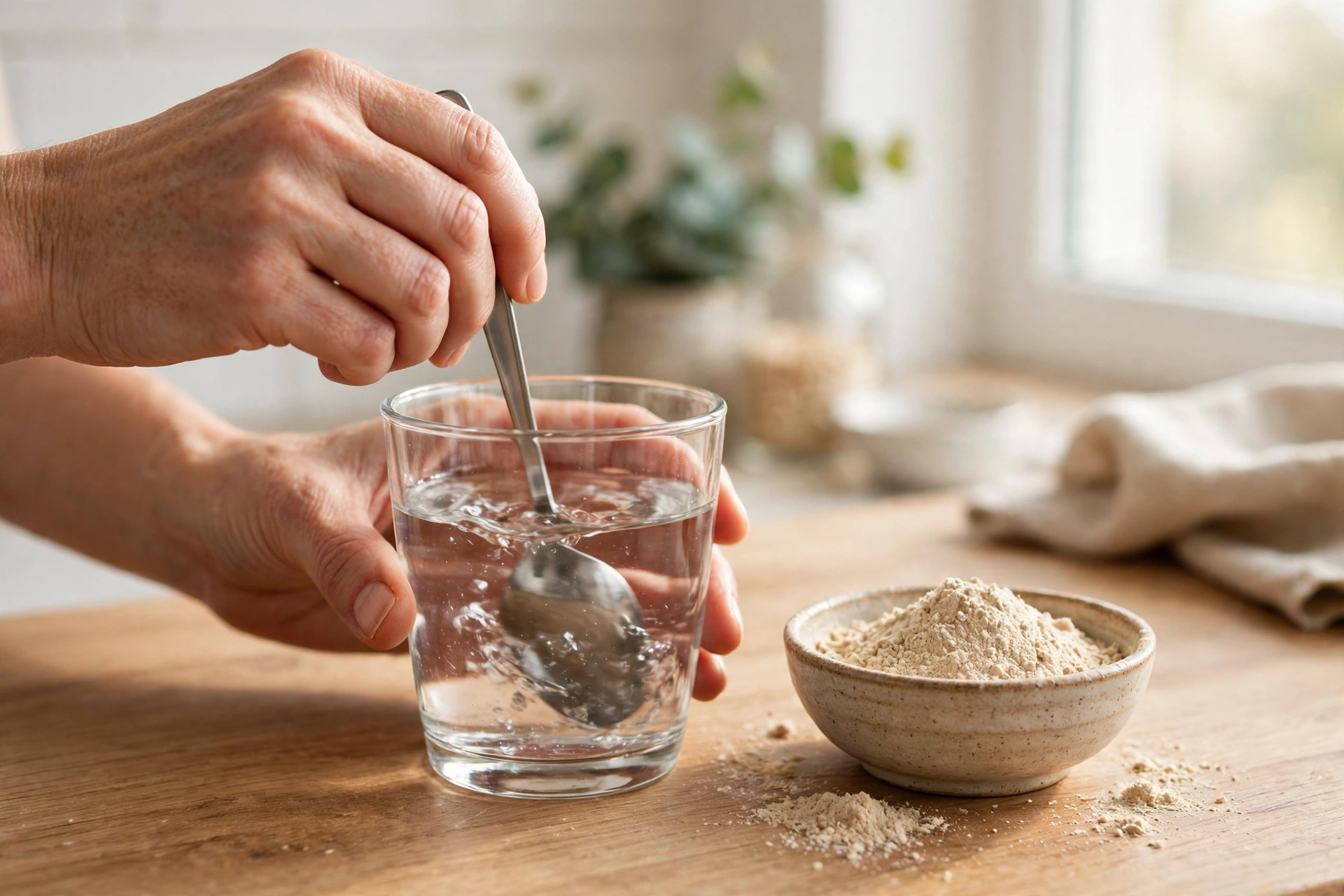
All forms share one rule. Psyllium husk must be taken with enough liquid. Without enough water, it can thicken in the throat or gut and cause problems. Never swallow dry powder. Always mix it fully and drink it promptly, then follow with more water.
Fiber basics help put psyllium husk in context. Adults are generally advised to eat a good amount of fiber each day, yet most people fall short. Fiber comes in two main types. Soluble fiber, such as psyllium husk, forms a gel and supports cholesterol and blood sugar control. Insoluble fiber, found in wheat bran and many vegetables, adds bulk and supports regularity in a different way. A healthy diet includes both types, from a mix of foods.
Psyllium husk is a useful tool for closing a fiber gap, but it should not be the only source of fiber. Fruits, vegetables, beans, lentils, oats, and whole grains provide fiber plus vitamins, minerals, and plant compounds. Use psyllium husk to support a fiber-rich diet, not to replace it.
Constipation and Diarrhea Relief
The best-established use of psyllium husk is for bowel regularity. Research shows it works well for constipation, with few major side effects when used with enough water. It usually takes a couple of days to show a full effect, so patience matters.
For constipation, psyllium husk softens and bulks stool, which makes bowel movements easier and more regular. For diarrhea, the same gel can help in the opposite direction. It binds loose stool and adds form, which can reduce urgency. This two-way effect surprises many people, but it follows from the same gel mechanism.
People with irritable bowel syndrome, often shortened to IBS, may also benefit. Research suggests psyllium husk can ease IBS symptoms and may reduce gut inflammation markers. However, IBS varies widely from person to person. Some people find fiber helpful, while others find that extra fiber worsens bloating at first. Starting with a small amount and increasing slowly can help you judge your own response.
If constipation lasts more than a week, or if you notice blood in stool, severe belly pain, vomiting, or unexplained weight loss, seek medical care promptly. These signs need evaluation, not a fiber supplement. Psyllium husk supports normal bowel function, but it does not diagnose or treat an underlying condition.
Cholesterol
Psyllium husk has one of the stronger evidence bases among fiber supplements for cholesterol. Cleveland Clinic explains that soluble fiber binds bile in the gut and helps the body remove it, which can lead to lower LDL cholesterol, often called bad cholesterol.
Reviews of trials have found modest but real reductions in LDL cholesterol with regular psyllium husk use. The effect grows when psyllium husk is part of a diet already low in saturated fat and cholesterol. In fact, regulators in the United States allow a health claim linking soluble fiber from psyllium husk, as part of such a diet, to a reduced risk of heart disease.
It is important to keep expectations realistic. Psyllium husk lowers cholesterol modestly, not dramatically. It does not replace cholesterol-lowering medicines when those are needed. Some research suggests it may add to the effect of statin medicines, but that combination should only be used under clinician guidance.
For heart health overall, psyllium husk works best as one part of a broader pattern. That pattern includes plenty of vegetables, whole grains, and beans, regular activity, not smoking, and control of blood pressure and blood sugar. Fiber alone cannot offset an otherwise unhealthy lifestyle, but it is a helpful piece of the picture.
Blood Sugar
Psyllium husk may also help steady blood sugar after meals. The gel it forms slows the breakdown and absorption of carbohydrates, so glucose rises more gradually. Over time, regular use has been linked to lower fasting blood sugar and lower long-term blood sugar markers in people with diabetes and prediabetes.
This effect matters most when psyllium husk is taken around meals, because that is when it can slow glucose absorption. However, people with diabetes should be careful. If psyllium husk lowers blood sugar, diabetes medicines may need adjustment. Never change a medicine dose on your own because you started a fiber supplement. Instead, tell your clinician and monitor blood sugar as advised.
For people without diabetes, the blood sugar benefit is less dramatic but still useful. A fiber-rich meal tends to produce a steadier energy curve than a low-fiber meal. That steadier curve can reduce the sharp hunger that often follows a rapid blood sugar fall.
Once again, food context matters. Psyllium husk added to a sugary drink will not turn that drink into a healthy choice. The strongest benefit comes when fiber is part of balanced meals with protein, healthy fats, and whole plant foods.
Weight Management
Psyllium husk is sometimes marketed as a weight-loss aid, and social media has even called it a natural alternative to weight-loss medicines. That claim goes too far. No clinical trial has shown psyllium husk to match the effect of prescription weight-loss medicines, and the two work in very different ways.
What psyllium husk can do is support weight management indirectly. Fiber helps you feel full sooner and for longer, which can reduce overall food intake. Regular bowel movements and steadier blood sugar may also support a healthy routine. These are real but modest effects.
A realistic view is helpful. If you add psyllium husk but keep eating the same large portions of low-fiber, high-calorie foods, weight is unlikely to change much. If you use fiber as part of a broader shift toward whole foods, balanced portions, and regular activity, it can help that shift succeed.
Be wary of any product that promises rapid or effortless weight loss. Such claims are marketing, not science. Sustainable weight management comes from habits you can keep, and fiber is only one habit among many.
Cooking and Baking
Beyond supplements, psyllium husk is a handy kitchen ingredient. In gluten-free baking, it acts like a gum. It binds dough, traps moisture, and gives bread, buns, pizza bases, and tortillas a softer and more flexible texture. Without it, gluten-free dough can be crumbly and dry.
In low-carbohydrate baking, psyllium husk serves a similar role. It adds structure without adding much digestible carbohydrate, since nearly all of its carbohydrate is fiber. Small amounts go a long way in recipes, because it absorbs so much water.
You can also stir psyllium husk into smoothies, oatmeal, soups, and yogurt. When cooking with it, add liquid gradually and use it promptly, because it thickens quickly. Start with a small amount in a recipe until you learn how it behaves. Too much can make a dish gummy rather than pleasant.
One safety note applies in the kitchen too. If you taste raw dough or batter containing psyllium husk, make sure you also drink water. The same swelling that helps baking can cause choking if dry powder is swallowed without liquid.
Psyllium Husk Side Effects and Safety
Psyllium husk is considered very safe for most people when used with enough water. Side effects are usually mild and temporary. The most common ones are gas, bloating, mild stomach cramps, nausea, and changes in bowel habit, including diarrhea or constipation when use starts or increases too fast.
These effects often ease as the gut adjusts over the first days. Starting with a small amount and building up slowly helps reduce them. Drinking plenty of water throughout the day also helps, since fiber needs fluid to work well.
The most serious risk, though rare, is choking or blockage. Because psyllium husk swells on contact with liquid, taking it dry or with too little water can let it thicken in the throat or gullet. In people with narrowing of the gut, prior bowel surgery, or slow gut movement, blockage is also possible, though rare. This is why the water rule is not optional.
Allergic reactions to psyllium husk are rare but possible. Seek urgent care for rash, itching, swelling of the face or throat, trouble breathing, or severe belly pain. In addition, psyllium husk can affect how other medicines are absorbed if taken at the same time. A common precaution is to take other medicines well apart from psyllium husk, but ask your pharmacist for timing advice for your specific medicines.
Who Should Talk to a Clinician First
Most healthy adults can consider psyllium husk, but some people should check first. Talk to a clinician or pharmacist before starting psyllium husk if any of the following apply to you.
- You have trouble swallowing or a narrowing of the throat or gut
- You have a history of bowel blockage or bowel surgery
- You have diabetes and take blood sugar medicines
- You take regular prescription medicines and need timing advice
- You have a long-term bowel condition such as IBS, ulcerative colitis, or Crohn disease
- You are pregnant or breastfeeding
- The product is for a young child
Psyllium husk is generally not advised for young children unless a clinician recommends it. For older adults, the water rule deserves extra care, especially for anyone with swallowing difficulty. When in doubt, a short conversation with a pharmacist can prevent most problems.
Stop psyllium husk and seek medical advice if constipation lasts more than a week, if you have blood in your stool, severe pain, vomiting, or difficulty swallowing, or if you cannot pass gas or stool. These symptoms need prompt evaluation.
Food-First Fiber and Smart Use
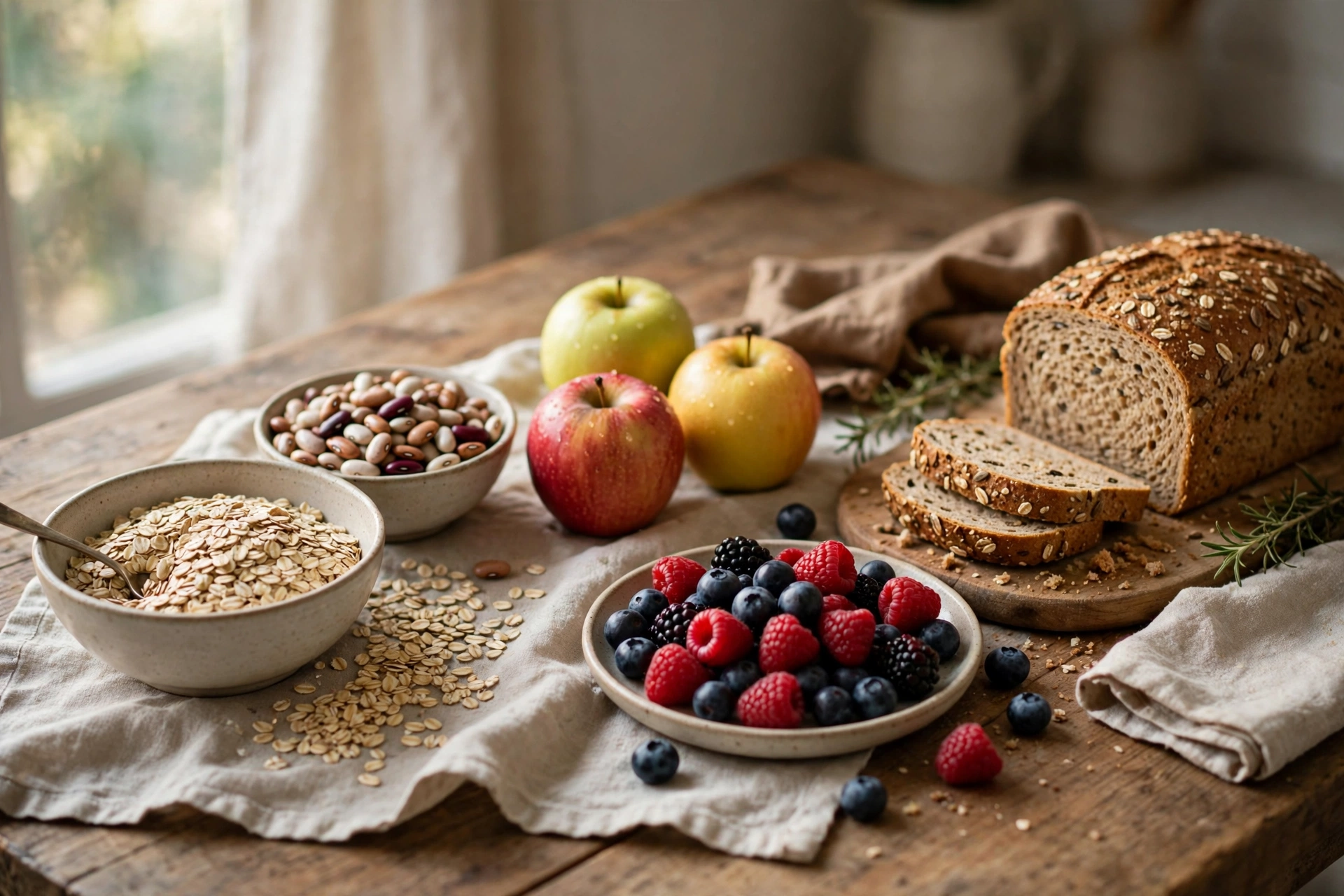
The smartest way to use psyllium husk is food first, supplement second. Aim to build fiber from meals, then use psyllium husk to fill any remaining gap. Good food sources of fiber include beans, lentils, oats, barley, apples, pears, berries, broccoli, carrots, nuts, and seeds.
When you do use psyllium husk, follow a few simple habits. Start small and increase slowly. Mix it fully into liquid and drink it right away. Drink plenty of water through the day. Keep other medicines separated in time, as your pharmacist advises. Choose a plain product without added sugars or unneeded extras, and look for third-party testing marks when possible.
Store psyllium husk in a dry place with the container closed, since moisture will make it clump. Check the expiry date, and discard any product that smells off or has hardened into lumps. These small habits protect both safety and quality.
Finally, judge psyllium husk by your own response over a few weeks, not by a single day. Bowel habits, bloating, and fullness take time to settle. If it helps and causes no problems, it can be a useful long-term part of a fiber-rich routine. If it causes ongoing discomfort, talk to your clinician about other fiber options or a different approach.
Frequently Asked Questions About Psyllium Husk
What is psyllium husk made from?
Psyllium husk is the outer coating of seeds from the Plantago ovata plant. It is a rich source of soluble fiber that absorbs water and forms a gel in the gut. That gel action explains most of its benefits for digestion, cholesterol, and blood sugar.
Does psyllium husk help with constipation?
Yes, psyllium husk is well supported for constipation relief. It bulks and softens stool, which makes bowel movements easier. It usually takes a couple of days to work fully, and it must be taken with plenty of water to be safe and effective.
Can psyllium husk help with diarrhea?
Yes, it can help in some cases. The same gel that softens hard stool can bind loose stool and add form. People with IBS sometimes find it helpful, but responses vary, so start small and watch how your gut reacts.
Does psyllium husk lower cholesterol?
Research supports a modest reduction in LDL cholesterol with regular use, especially as part of a diet low in saturated fat and cholesterol. It does not replace cholesterol medicines when those are needed, and it works best alongside a heart-healthy diet.
Does psyllium husk help with weight loss?
Psyllium husk can support weight management by helping you feel full for longer, but it is not a weight-loss medicine and cannot match prescription weight-loss drugs. Lasting weight control still depends on overall diet, portions, and activity.
Is psyllium husk safe to take every day?
For most healthy adults, regular use with plenty of water is considered safe. Mild gas or bloating can occur at first. People with swallowing problems, bowel blockage history, or diabetes medicines should check with a clinician first.
Can I take psyllium husk with other medicines?
Psyllium husk can reduce absorption of some medicines if taken at the same time. Ask your pharmacist how far apart to space psyllium husk and your medicines. Never change a prescription dose because you started a fiber supplement.
What happens if I swallow psyllium husk dry?
Never swallow psyllium husk dry. It swells on contact with moisture and can thicken in the throat, creating a choking risk. Always mix it fully into liquid, drink it promptly, and follow with more water.
Conclusion: What to Remember About Psyllium Husk
Psyllium husk is a soluble fiber from Plantago ovata seeds that forms a gel with water, and that simple action supports steadier digestion, modest cholesterol and blood sugar benefits, and a feeling of fullness. Used with plenty of water and started slowly, psyllium husk is safe for most people, but it works best as part of a fiber-rich diet rather than as a replacement for one. If you take medicines or have a gut condition, the safest next step is to ask your clinician or pharmacist before starting it.
This article is for general information only and is not medical advice. If you have ongoing health concerns, talk to a healthcare professional.