Social Media and Mental Health: Effects & Healthy Habits
You probably checked a social app today before you even finished your morning coffee. You meant to glance at one notification — and twenty minutes later, you were still scrolling.
If social media sometimes leaves you feeling drained, or sometimes makes you feel connected and informed, both experiences are real.
The truth about social media and mental health is more complicated than “it’s ruining us” or “it’s harmless.” What matters is how much you use it, how you use it, and what it quietly replaces in your day.
What the Research Actually Shows
Most of the evidence is correlational. Studies consistently find that heavy social media use is associated with higher rates of anxiety, depressive symptoms, poor sleep, and lower life satisfaction, especially among teenagers and young adults. Association is not proof of causation. It is possible that social media worsens mood — and also possible that people who already feel low reach for their phones more often. In reality, both directions probably feed each other.
How you use social media matters more than how long. Researchers draw a line between passive use — scrolling, watching, comparing — and active use — messaging friends, commenting, sharing, joining a group. Passive scrolling is the pattern most strongly linked to worse mood. Active, social use is often linked to feeling more connected. Two people can each spend an hour on the same app and walk away feeling completely different.
The effects are modest on average but real at scale. A decade-long Australian study that followed nearly 1,200 young people found that adolescents spending at least two hours a day on social media were more likely to report depressive symptoms and poorer wellbeing a year later. A large 2026 analysis of surveys from more than 180,000 adults found that spending around 2.5 hours or more a day scrolling was linked to self-reported depression.
The Good Side of Social Media

It is easy to forget that social media does real good, because the good parts rarely make headlines. For people far from family or in a new city, it keeps friendships alive. Support groups for health conditions, grief, parenting, and hobbies give people a community that understands them. Therapist-led accounts and people openly discussing recovery have made help-seeking feel less shameful.
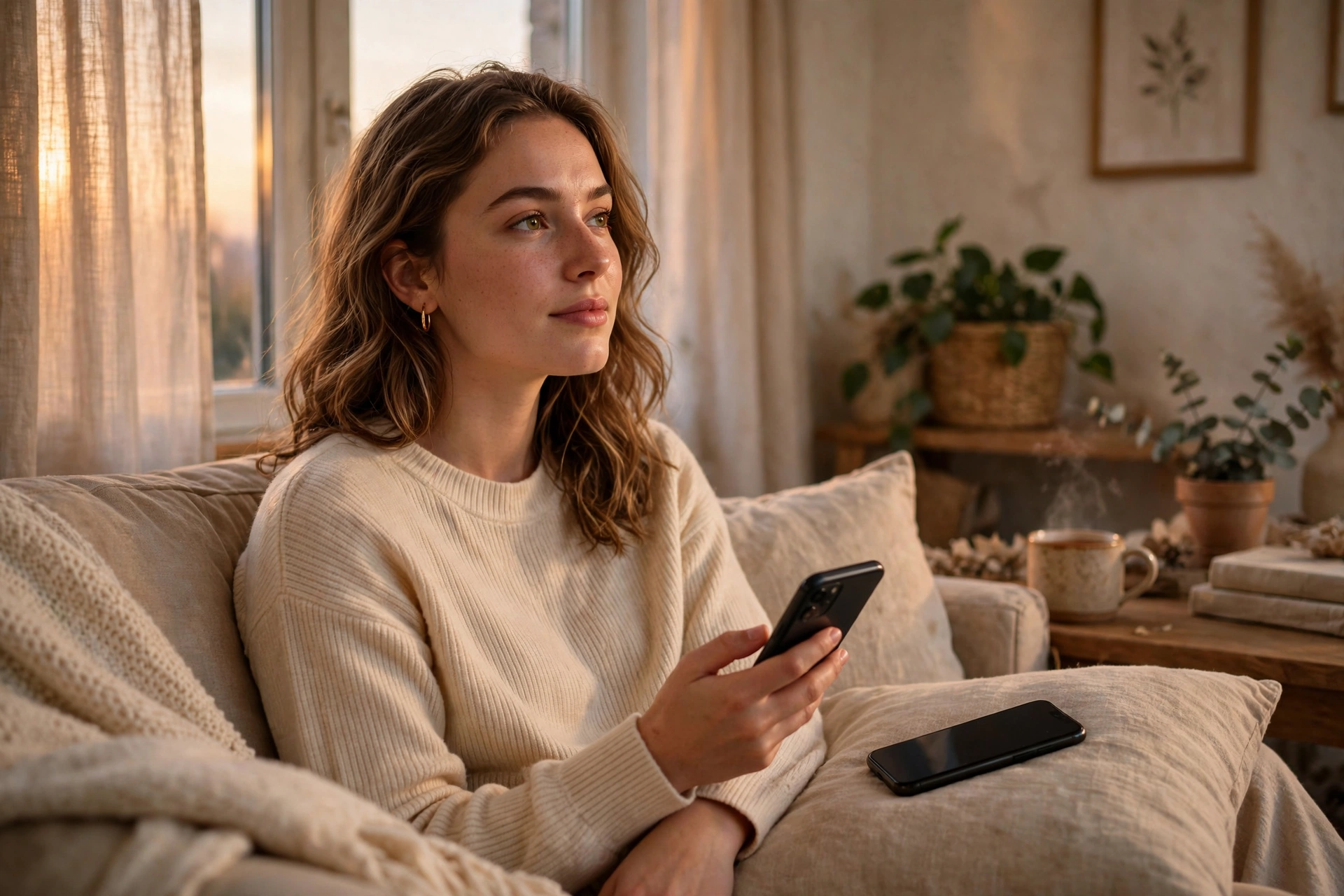
The question is not whether social media has value. It does. The question is whether the way you use it gives you more of the good than the bad.
Where It Starts to Hurt
The Comparison Trap
Social media is a highlight reel. People post the promotion, the vacation, the glowing skin — not the argument, the rejection, or the ordinary Tuesday. Comparing your full, unedited life to everyone else’s curated best moments will almost always leave you feeling short.
FOMO: The Fear of Missing Out
Seeing friends at a gathering you were not invited to, or watching everyone else seemingly live a fuller life, can trigger a sharp sting of exclusion. FOMO keeps people checking their phones compulsively — not because they enjoy it, but because they are afraid of being left out. The checking itself often deepens the feeling of being on the outside.
Doomscrolling and the News Spiral
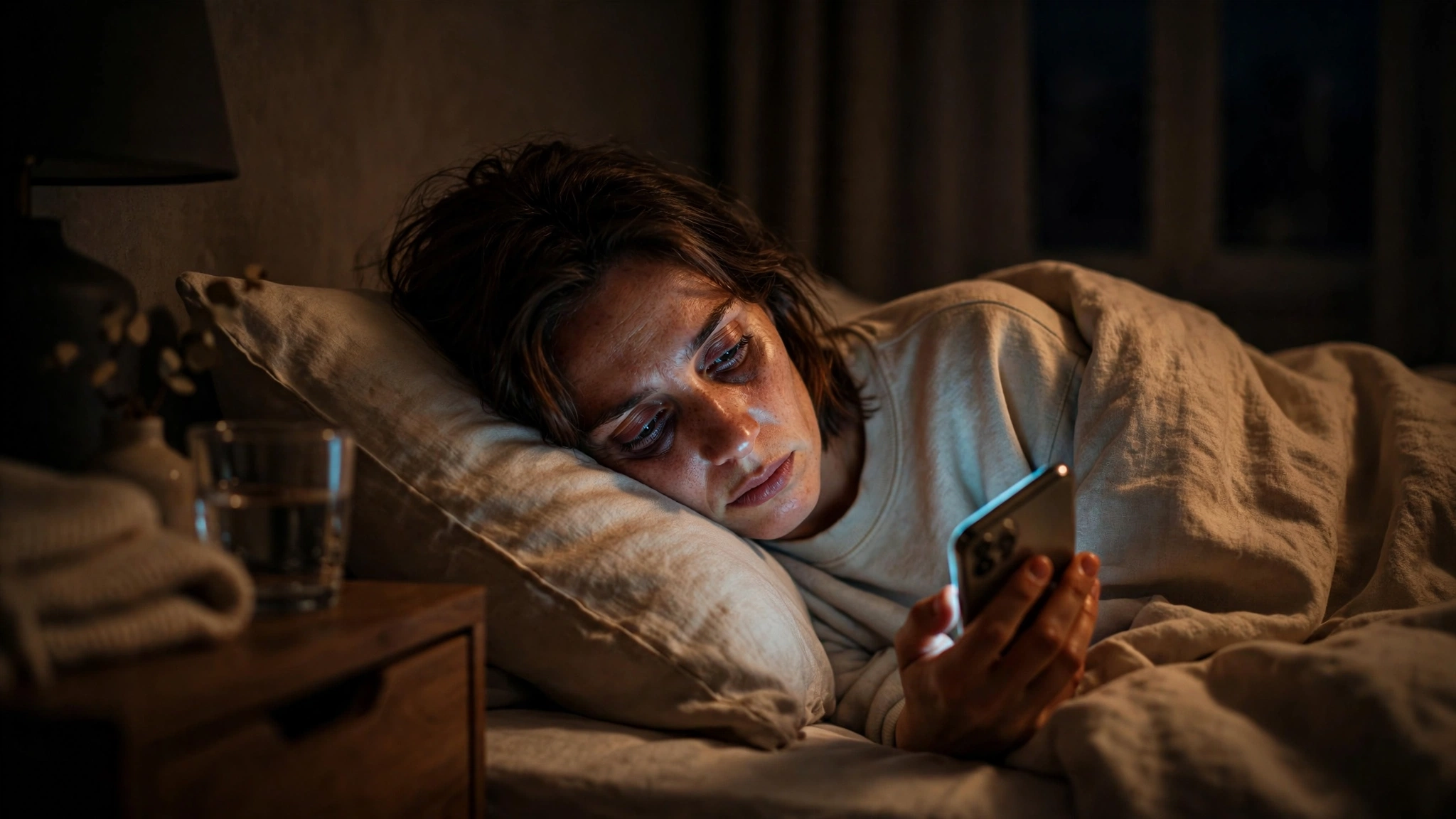
Bad news grabs attention, and algorithms have learned that. Endlessly scrolling through crises, outrage, and disaster — especially late at night — keeps your nervous system on high alert. You may feel informed, but you are mostly absorbing stress you cannot act on.
Sleep Disruption
Screens before bed expose you to bright light and stimulating content, and one more “just one more video” delay pushes sleep later and makes it shallower. Poor sleep then worsens mood, concentration, and emotional resilience the next day.
Cyberbullying and Toxic Interactions
Comment sections, anonymous accounts, and pile-ons can deliver a volume of hostility that would be unthinkable face to face. Teens are the most exposed, but adults get it too.
The Validation Loop
Likes, comments, and shares deliver tiny bursts of approval. That feels good in the moment, and it trains the brain to keep checking for the next hit. Over time, self-worth can start to depend on the numbers: a post that flops feels like a personal rejection.
Social Media and Teens: Why Young People Are More Vulnerable
Early adolescence is a sensitive window. Identity, belonging, and peer approval matter enormously at that age, and the brain’s impulse control is still developing. That combination makes teens more reactive to comparison, exclusion, and online drama — and more likely to lose sleep and real-world social time to their phones.
This does not mean teens should be cut off from digital life. It does mean adults should stay involved: talking about what teens see online and setting reasonable boundaries around time and bedtime.
Warning Signs Your Social Media Habit Is Hurting You
Not every heavy user has a problem. But these signs suggest your relationship with social media needs attention:
- You feel anxious, irritable, or low after scrolling — most of the time, not just occasionally.
- You check your phone compulsively, even during meals, conversations, or work.
- You have lost interest in hobbies, exercise, or in-person time you used to enjoy.
- You stay up late scrolling and feel exhausted the next day.
- You compare yourself to others online and regularly feel worse about your body, career, or life.
- You skip responsibilities, gatherings, or sleep to stay online.
If several of these sound familiar, that is not a failure — it is information. It means something in your routine needs adjusting.
10 Habits for a Healthier Relationship With Social Media
You do not have to quit social media to feel better. Small, deliberate changes usually beat dramatic ones.
1. Decide Why Before You Open the App
Before tapping an app, name your purpose: “I am messaging Sara,” or “I am checking the event time.” If you cannot name a reason, you are probably opening it out of habit. That one-second pause breaks the autopilot loop.
2. Set a Daily Time Budget
Use your phone’s built-in screen-time tools to set a realistic limit, such as 30 to 60 minutes a day for social apps. The number matters less than the act of choosing it. When the limit pops up, treat it as a decision point, not an annoyance to dismiss.
3. Curate Your Feed Ruthlessly
Unfollow, mute, or hide any account that regularly makes you feel envious, angry, ashamed, or inadequate. Follow accounts that teach, encourage, or genuinely connect you to people you care about. Your feed is your environment. Design it.
4. Turn Off Most Notifications
You do not need a buzz for every like, comment, or suggestion. Keep notifications only for direct messages from real people. Everything else can wait until you choose to check it.
5. Keep the Bedroom Phone-Free
Charge your phone outside the bedroom and use a basic alarm clock. No-phone bedrooms protect both sleep and the first and last hour of your day — the two hours that set the tone for everything else.
6. Replace Scrolling, Don’t Just Remove It
Quitting a habit leaves a hole. Fill it deliberately: a walk, a book, a workout, cooking, calling a friend. If boredom is what sends you to your phone, boredom needs a better answer than willpower alone.
7. Choose Active Use Over Passive Scrolling
When you are online, prefer doing over watching: reply to a friend, join a discussion, share something real. Active engagement is consistently linked to better outcomes than passive consumption. If you catch yourself in a scroll trance, close the app.
8. Take Regular Breaks
A one-hour break each evening is a good daily reset. A full day off each week is better. Some people benefit from a longer detox — a weekend or a week — to rediscover how they feel without the feed.
9. Keep Social Media Social
Use social platforms to arrange real-world connection, not replace it. Message a friend to meet for coffee. Share a photo, then put the phone down and enjoy the moment. The best use of social media is often the one that ends with you closing the app and being with people face to face.
10. Check In With Yourself Honestly
Once a week, ask: “How did social media make me feel this week?” If the honest answer is mostly drained, anxious, or inadequate, change something — the time, the accounts, the timing. Your feelings are the most reliable metric you have.
When to Get Help
Healthy habits help a lot, but they are not a substitute for professional support when you need it. If you are experiencing persistent sadness, anxiety, loss of interest, difficulty functioning at work or school, or thoughts of harming yourself, please reach out to a doctor, counselor, or mental health professional. If you are in crisis, contact your local crisis helpline or emergency services right away — in the United States, the 988 Suicide & Crisis Lifeline is available 24 hours a day.
Frequently Asked Questions
Is social media bad for mental health?
Not always. It depends on how much and how you use it. Active, connected use tends to help; heavy passive scrolling, comparison, and late-night use tend to hurt.
How much social media is too much?
There is no universal safe number, but research flags risks rising around two or more hours a day of recreational scrolling, especially for teens. Pay more attention to how it affects your sleep, mood, and daily life than to the clock alone.
Can quitting social media improve mental health?
For many people, yes — studies on temporary breaks often report better mood, sleep, and focus. But reducing passive scrolling, curating your feed, and taking regular breaks often deliver most of the benefit.
Does social media cause depression?
No single factor causes depression. Research shows an association between heavy social media use and depressive symptoms, but depression has many contributing causes, including genetics, life stress, and health.
The Bottom Line
Social media is a tool that amplifies whatever you bring to it. Used passively and endlessly, it feeds comparison, restlessness, and poor sleep. Used with intention — to connect, learn, create, and laugh — it can genuinely enrich your life.
Your attention is one of the most valuable things you own. Spend it on purpose.
This article is for informational purposes only and is not medical advice. It is not a substitute for professional diagnosis or treatment. If you are struggling with your mental health, please talk to a qualified healthcare professional.