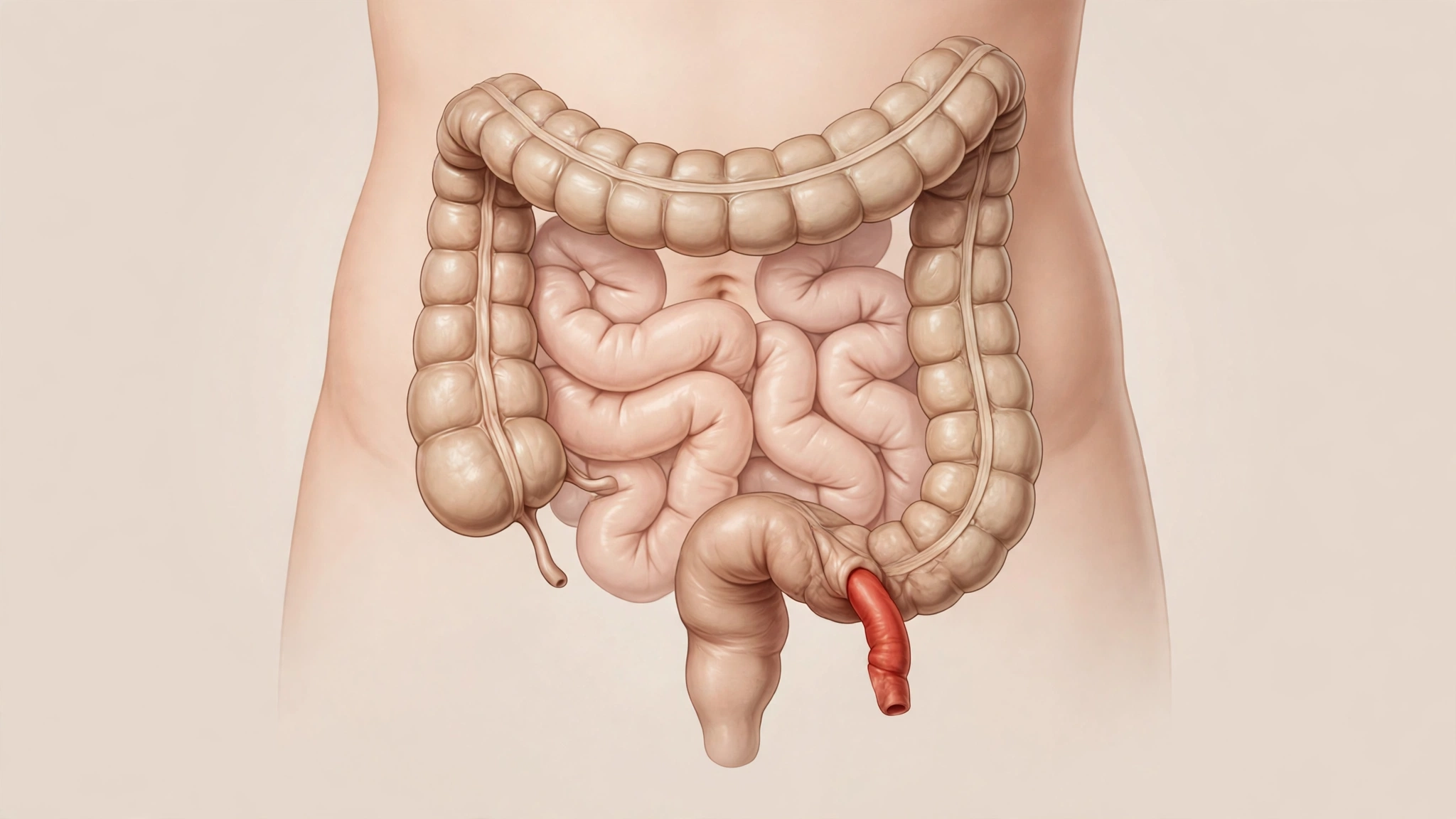
Appendicitis: What It Is, Its Symptoms, Causes and How It Is Treated
Appendicitis is an inflammation of the appendix, a small pouch attached to the large intestine. It usually causes pain that starts near the belly button and moves to the lower right side of the abdomen. This condition needs prompt medical care, because an inflamed appendix can burst, usually within 24 to 72 hours after symptoms begin.
In this guide, you will learn the early symptoms of appendicitis, what causes it, how doctors diagnose it, and how it is treated. You will also find a clear recovery timeline, a comparison with other kinds of stomach pain, and answers to the questions readers ask most.
In this article:
- What Is Appendicitis?
- What Causes It?
- Early Signs and Symptoms
- Symptoms in Children, Pregnant Women and Older Adults
- Appendicitis vs. Other Abdominal Pain
- How Doctors Diagnose It
- Appendicitis Treatment: Surgery or Antibiotics?
- Recovery After Appendectomy
- Can It Go Away on Its Own?
- Can You Prevent It?
- Frequently Asked Questions
What Is Appendicitis?
The appendix is a finger-sized pouch that sticks out from the large intestine in the lower right area of the abdomen. Doctors do not fully understand its job, but many believe it plays a role in the immune system, especially early in life. Appendicitis happens when this pouch becomes inflamed, swollen and filled with pus.
It is one of the most common reasons for emergency abdominal surgery. About 5 to 9 out of every 100 people develop appendicitis at some point in their lives. It is slightly more common in males, and teens and young adults in their 20s get it most often. Even so, appendicitis can strike at any age, from childhood to old age.
What Causes It?
In most cases, appendicitis starts with a blockage inside the appendix. A small piece of hardened stool, called a fecolith, is the most common cause. When the opening gets blocked, bacteria build up inside, and the tissue becomes infected and inflamed.
In some cases, doctors never find the exact cause. Less common triggers include parasites, tumors, or enlarged lymphoid tissue that blocks the opening. Once inflammation starts, pressure builds fast inside the narrow pouch. That rapid build-up is why doctors treat appendicitis as a medical emergency rather than a wait-and-see problem.
The National Institute of Diabetes and Digestive and Kidney Diseases notes that the exact cause of many cases remains unclear, which is one reason early symptoms matter more than guessing the trigger.
Early Signs and Symptoms
The Classic Pain Pattern
The most common first sign is pain around the belly button. Within hours, the pain usually shifts to the lower right side of the abdomen and turns sharper. It often gets worse when you move, cough, sneeze, or press on the area. Many people describe it as a dull ache that slowly becomes constant and intense.
Other Common Symptoms
Most people also lose their appetite and feel nauseous. Vomiting, a low-grade fever, and fatigue can follow. Some people develop constipation, while others have diarrhea. Symptoms usually build over one to two days, but the timeline varies from person to person.

Symptoms in Children, Pregnant Women and Older Adults
This condition does not look the same in everyone. In children, the signs can be harder to spot. A child may not describe the pain clearly, so watch for refusal to eat, restlessness, fever, or crying when hopping or walking.
In pregnant women, the growing uterus pushes the appendix higher in the abdomen. As a result, the pain may sit above the usual lower-right spot, which can delay diagnosis. In older adults, symptoms are often milder and less typical, yet the risk of rupture is higher. For these reasons, anyone in these groups with new abdominal pain should contact a doctor quickly rather than waiting to see if it passes.
Appendicitis vs. Other Abdominal Pain
Lower abdominal pain has many causes, so it helps to compare them side by side:
| Cause | Typical pain | Key difference |
|---|---|---|
| Gas or constipation | Crampy pain that moves around | Eases after passing gas or a bowel movement |
| Stomach bug | Nausea, vomiting, diarrhea, pain all over | Multiple digestive symptoms at once |
| Kidney stones | Sharp pain in the back or side, radiating to the groin | Pain comes in waves; blood may appear in urine |
| Gallbladder problems | Upper right pain after fatty meals | May radiate to the right shoulder |
| Appendicitis | Pain starts near the belly button, then settles in the lower right | Worsens with movement or coughing; fever and loss of appetite are common |
For a broader look at pain on the other side of the abdomen, see our guide to abdominal pain in women.
Go to the emergency room if lower-right abdominal pain lasts more than a few hours, keeps getting worse, or comes with fever and vomiting. Those are classic appendicitis warning signs, and quick action matters.
How Doctors Diagnose It
There is no single test that proves appendicitis. Doctors start with a physical exam, pressing on the abdomen to check for tenderness, especially in the lower right. Blood tests look for signs of infection, and urine tests help rule out urinary infections or kidney stones.
Imaging usually confirms the diagnosis. A CT scan is the most accurate tool, while ultrasound is often used for children and pregnant women to avoid radiation. Even with modern tests, appendicitis can be hard to diagnose, so doctors sometimes observe patients for several hours before deciding. You can read more about how these conditions are described at MedlinePlus.

Appendicitis Treatment: Surgery or Antibiotics?
Appendectomy, the surgical removal of the appendix, is the standard treatment. Surgeons usually perform it laparoscopically, through small incisions. This approach means less pain, smaller scars, and faster recovery than traditional open surgery. Most people go home within a day or two.
Antibiotics alone can treat some uncomplicated cases. However, studies suggest that roughly 20 to 40 percent of people treated with antibiotics alone have a recurrence within a year and later need surgery. Your doctor will recommend the best option based on how severe the inflammation is and your overall health. The Mayo Clinic explains both paths in detail for patients weighing the choice.
Recovery After Appendectomy
Recovery after laparoscopic appendectomy is usually straightforward. Most people return to normal daily activities within one to two weeks. Doctors generally advise avoiding heavy lifting and intense exercise for a few weeks after surgery.
For the first few days, eat light, easy-to-digest foods and drink plenty of fluids. Small, gentle meals and gentle warm drinks while recovering can feel easier on the stomach than heavy food. Watch for warning signs: fever, increasing pain, redness or swelling around the incision, or repeated vomiting. Contact your doctor promptly if any of these appear, since they can signal an infection or another complication.
Can It Go Away on Its Own?
Almost never. Without treatment, an inflamed appendix usually ruptures, often within 24 to 72 hours of symptoms starting. A rupture spreads infection into the abdomen, causing peritonitis, a serious and potentially life-threatening infection.
Sometimes the body walls off the infection into a pocket of pus called an appendiceal abscess. This still needs medical treatment, often with antibiotics and drainage. Because the risk of rupture is so high, doctors do not recommend waiting to see if it improves by itself.
Can You Prevent It?
There is no proven way to prevent it. Some research suggests that diets higher in fiber may lower the risk, but the evidence is limited and not conclusive.
The best step you can take is to act fast. If you notice the classic pattern, pain that starts near the belly button and moves to the lower right, get medical help right away. Quick treatment prevents rupture, which is the most dangerous part of the condition. For general health guidance on a wide range of conditions, browse our Health category.
Frequently Asked Questions
Where exactly is appendix pain?
Appendix pain usually settles in the lower right side of the abdomen, about halfway between the belly button and the right hip bone. Early on, though, it often starts as a dull ache around the belly button and moves lower within hours. Pressing on the spot or moving suddenly can make it worse.
Can it go away on its own?
No, appendicitis almost never resolves without treatment. The inflammation keeps building pressure inside the appendix, and without care it usually ruptures. If you suspect it, seek medical help immediately rather than hoping it passes.
How long before the appendix bursts?
An inflamed appendix can rupture within 24 to 72 hours after symptoms begin, though the timing varies. Because of this short window, doctors treat suspected appendicitis as an emergency. Getting to a hospital early greatly lowers the risk of rupture.
What is recovery like after appendectomy?
Most people recover quickly after laparoscopic appendectomy. You can usually leave the hospital within a day or two and return to normal activities in one to two weeks. Heavy lifting and strenuous exercise should wait a few weeks, based on your surgeon advice.
Can it come back after antibiotics-only treatment?
Yes, recurrence is possible. Studies suggest that roughly 20 to 40 percent of people treated with antibiotics alone have another episode within a year. Many of them end up having the appendix removed later.
Can you live a normal life without an appendix?
Yes. Millions of people live full, healthy lives after appendectomy. The appendix may play a small role in the immune system, but the body adapts well without it. No special diet or lifelong treatment is needed after recovery.
Conclusion
Appendicitis is a medical emergency that starts with a blocked, inflamed appendix and causes pain that moves to the lower right abdomen. Quick diagnosis and treatment, usually with laparoscopic surgery, prevent rupture and lead to a fast recovery. If you or someone you know develops the classic migrating pain with fever or vomiting, do not wait: get to a doctor or emergency room right away.
This article is for general information only and is not medical advice. If you have ongoing abdominal pain or other symptoms, talk to a healthcare professional.