What Is Inositol? Benefits, Uses, and Safety Explained
Inositol is a sugar-like compound that your body makes on its own and also gets from food. It is often called vitamin B8, but inositol is not a vitamin. Instead, it is a type of sugar alcohol that plays a role in how your cells work, how insulin sends signals, and how brain messengers act. An NIH review of myo-inositol explains that the body forms it from glucose and that it serves as a building block for cell signals linked to insulin and other hormones.
If you have seen inositol on a supplement label or in a discussion about mood or hormone health, you may wonder what it actually does. This guide explains inositol in plain language. You will learn what inositol is, where it comes from, what research has found so far, what side effects have been reported, and when to talk to a clinician. This article is general information only. It is not medical advice, and it does not replace guidance from your own healthcare professional.
Contents:
- What inositol is
- How it works in the body
- Food sources
- The two main forms
- Mental health research
- PCOS research
- Metabolic health
- Side effects and safety
- Who should talk to a clinician first
- Choosing a product wisely
- Frequently asked questions
What Inositol Is
Inositol is a naturally occurring compound found in every cell of the body. Chemically, it looks similar to glucose, which is a simple sugar. However, inositol does not act like ordinary sugar in the diet. It forms part of cell membranes, which are the outer layers that protect cells and control what enters and leaves them.
Your body makes inositol mainly in the kidneys, and smaller amounts are made in the liver and brain. In addition, you take in inositol from food each day. A typical varied diet provides a modest amount, mostly from plant foods. As a result, most people get some inositol without thinking about it at all.
Inositol is sometimes sold as a dietary supplement. Supplement products usually contain much larger amounts than food provides. That difference matters, because most of the research on inositol has studied supplement amounts, not the small amounts found in a normal diet. Therefore, food sources and supplements should not be treated as the same thing.
It is also important to be clear about what inositol is not. Inositol is not a vitamin, because your body can make it and no clear deficiency disease has been identified in people. It is not a medicine, and it is not approved as a treatment for any condition. Inositol supplements are sold as dietary supplements, which means they are regulated differently from medicines.
How It Works in the Body
Inositol works mainly as a messenger helper inside cells. When a hormone such as insulin reaches a cell, the cell needs a way to pass that signal inward. Inositol-based compounds help carry such signals. In simple terms, inositol helps cells hear and respond to hormonal messages.
First, inositol supports insulin signaling. Insulin is the hormone that helps move glucose from the blood into cells for energy. When insulin signaling works well, blood sugar stays in a steadier range. When signaling is less efficient, the body may need more insulin to get the same effect. Researchers study inositol partly because it is involved in this signaling chain.
Second, inositol affects brain chemistry. It influences the activity of chemical messengers such as serotonin and dopamine. These messengers affect mood, sleep, appetite, and focus. For example, serotonin is linked to feelings of calm and well-being, while dopamine is linked to motivation and reward. Because inositol interacts with these systems, researchers have studied it in mood-related conditions.
Third, inositol plays a structural role. It is a component of cell membranes and of fat-like molecules in those membranes. This structural role is present in nearly every tissue. In short, inositol is both a building material and a signal helper, which is why it touches so many body systems at once.
Inositol in Food: Natural Sources
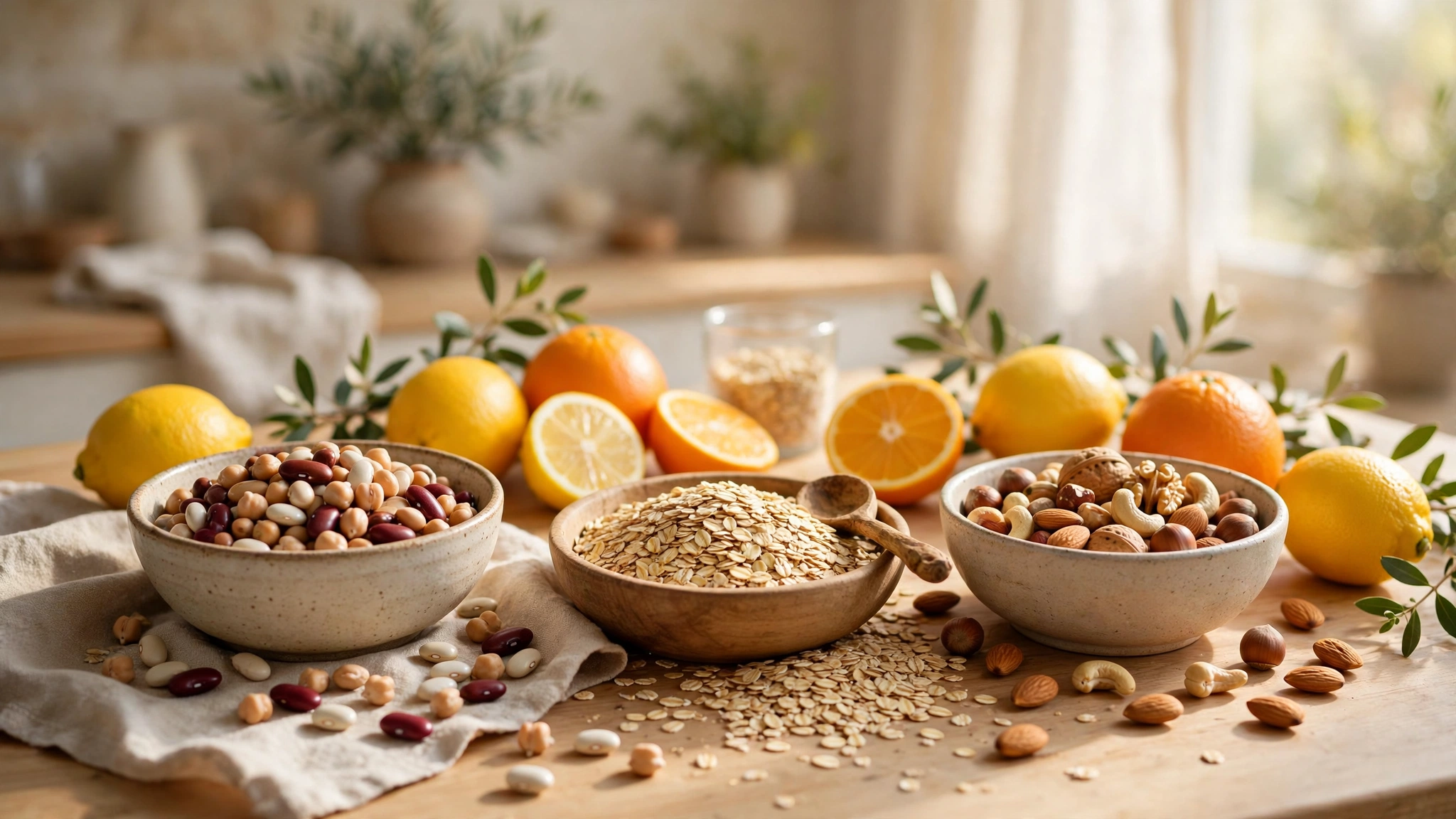
You do not need a supplement to get inositol. Many everyday foods contain it, especially plant foods rich in fiber. The table below lists common sources that people often eat as part of a balanced diet.
| Food group | Examples |
|---|---|
| Fruits | Citrus fruits such as oranges and grapefruit, cantaloupe, and other fresh fruit |
| Beans and legumes | Beans, peas, and lentils |
| Whole grains | Oats, brown rice, wheat bran, and whole grain breads |
| Nuts and seeds | Almonds, walnuts, Brazil nuts, and sesame seeds |
| Vegetables | Corn and other fresh vegetables |
A diet with plenty of whole plant foods will usually provide inositol along with fiber, vitamins, and minerals. In contrast, a diet based mostly on highly processed foods will provide less. However, no single food needs to be eaten in large amounts for inositol alone. A varied diet is the simplest and safest way to cover it.
It is worth noting that food labels rarely list inositol content. Therefore, you cannot easily track your daily intake from labels. Instead, focus on the overall pattern of your diet. If you eat beans, whole grains, nuts, and fruit regularly, you are already getting inositol from food.
The Two Main Forms: Myo-Inositol and D-Chiro-Inositol
There are nine forms of inositol, but two forms matter most in supplements and research. These are myo-inositol and D-chiro-inositol. They are often shortened to MI and DCI.
Myo-inositol is the most common form in the body. It makes up the large majority of inositol inside cells. Most studies of inositol have used myo-inositol, either alone or combined with folic acid. When people talk about inositol in general, they usually mean myo-inositol.
D-chiro-inositol is a second form that the body makes from myo-inositol. It is present in smaller amounts, and its levels differ by tissue. For example, muscle, fat, and liver tissue handle these two forms differently. Some supplement products combine both forms, often with far more myo-inositol than D-chiro-inositol.
A third related compound, inositol hexaphosphate, is sometimes called IP6. It is found in the bran of grains and seeds. It is less commonly used in supplements than myo-inositol. For most readers, the key point is simple. Myo-inositol is the main form studied, and product labels should state clearly which form they contain.
Mental Health Research
One of the most studied areas for inositol is mental health. Researchers have looked at panic disorder, depression, bipolar disorder, and obsessive-compulsive disorder. The results are mixed, and the evidence is still limited. Therefore, inositol should not be seen as a proven treatment for any mental health condition.
In panic disorder, some small early studies found fewer and less severe panic attacks in people who took inositol. However, these studies were small and short. In depression, one early study reported improvement, but later studies did not show a clear benefit. A review of trials found no strong overall effect for depression and anxiety. As a result, the evidence for mood benefits remains uncertain.
In bipolar disorder, research is even more limited. One small study in children combined inositol with omega-3 fats and reported reduced symptoms, but small studies cannot prove a treatment works. In obsessive-compulsive disorder, one small study reported symptom reduction, but again the study was small and needs confirmation in larger trials.
The honest summary is this. Inositol affects brain messengers, so the research interest makes sense. However, interest is not proof. Larger, longer, and better-designed trials are needed before any firm conclusions can be drawn. Anyone with a mental health condition should discuss all options with their clinician rather than replacing prescribed care with a supplement.

PCOS Research
Polycystic ovary syndrome, often shortened to PCOS, is a hormone condition that affects many women. It can cause irregular periods, higher levels of male-type hormones, and difficulty with ovulation. Insulin resistance is also common in PCOS, which means the body responds less well to insulin. Because inositol is involved in insulin signaling, it has been studied closely in this condition.
An NIH review of inositols and PCOS describes how myo-inositol and D-chiro-inositol may support insulin signaling and ovarian function. Some clinical studies reported improved insulin sensitivity, lower triglyceride levels, and more regular ovulation in women with PCOS who took inositol with folic acid. In addition, some studies found fewer stomach side effects than with certain prescription medicines used for PCOS.
However, the evidence has limits. A large review done for international PCOS guidance found possible benefits for metabolic markers and ovulation, but called the overall evidence limited and low in certainty. Another review could not show better pregnancy or live birth rates. In other words, inositol may help some markers in PCOS, but it has not been proven to improve fertility outcomes.
For readers with PCOS, the practical message is cautious. Inositol is an area of active research, not an established treatment. If you have PCOS, talk to your clinician about proven care options first. Do not stop prescribed treatment to try a supplement, and do not assume a supplement will restore ovulation.
Metabolic Health
Metabolic health covers blood sugar, cholesterol, triglycerides, blood pressure, and body weight together. When several of these markers are off at once, clinicians may use the term metabolic syndrome. Because inositol is tied to insulin signaling, researchers have studied it in metabolic syndrome and in blood sugar control.
One year-long study in women with metabolic syndrome reported lower triglycerides and total cholesterol, along with better blood pressure and blood sugar markers. Some participants no longer met the criteria for metabolic syndrome by the end of the study. However, this was a single study with a limited group, so the result needs confirmation in larger trials.
In gestational diabetes, which is high blood sugar during pregnancy, some studies suggest myo-inositol with folic acid may lower risk. Other studies have not shown the same effect. A review of trials in pregnancy found a possible lower risk of gestational diabetes, but rated the certainty of the evidence as low. Therefore, pregnant readers should not take inositol for this purpose without clinician guidance.
In type 2 diabetes, early research also shows mixed results. Some small studies reported better blood sugar markers, while others were less clear. The overall picture is similar across metabolic topics. Inositol shows promise in early research, but the evidence is not yet strong enough to support firm claims.
Inositol Side Effects and Safety
Inositol is generally well tolerated in studies, and side effects tend to be mild. However, mild does not mean absent. The most commonly reported side effects occur mainly at higher supplement amounts. These include nausea, gas, stomach discomfort, headache, dizziness, tiredness, and difficulty sleeping.
Most people in studies had no side effects at lower supplement amounts. Side effects were more likely when amounts were much higher than what food provides. If side effects appear, they are usually digestive in nature and tend to ease when use stops. Still, any new symptom after starting a supplement deserves attention.
Long-term safety is less certain. Most studies lasted a year or less, so safety over many years is not well established. Safety in pregnancy and breastfeeding is also not fully established, even though some pregnancy studies reported no adverse effects. Breast milk naturally contains inositol, but that does not prove supplement safety during breastfeeding.
Inositol may also interact with other health factors. Because it affects insulin signaling, it could matter for people who take diabetes medicines. In addition, people with bipolar disorder should be especially careful, since any compound that affects brain chemistry could in theory affect mood stability. These are reasons to seek clinician advice rather than self-managing.
Who Should Talk to a Clinician First
Supplements are easy to buy, but they are not right for everyone. Talk to a clinician or pharmacist before taking inositol if any of the following apply to you.
- You take prescription medicines, especially for diabetes, mood, or hormone conditions
- You are pregnant, planning pregnancy, or breastfeeding
- You have bipolar disorder or another mental health condition
- You have PCOS, diabetes, or metabolic syndrome and are already under care
- You have kidney disease or another long-term condition
- You take other supplements and want to check for overlap
This list is not complete. A clinician can review your full history and medicines, which a general article cannot do. Bring the product label to the appointment if you already have one. That helps the clinician check the form, the other ingredients, and possible interactions.
Seek prompt medical care if you notice a rash, swelling, trouble breathing, severe stomach pain, or a major change in mood after starting any supplement. These symptoms are uncommon, but they should never be ignored.

Choosing a Product Wisely
If you and your clinician decide to consider inositol, product quality matters. Dietary supplements are not regulated as strictly as medicines in the United States. As a result, quality can vary between brands. The following tips can help you choose more carefully.
First, check the label for the exact form. It should state whether the product contains myo-inositol, D-chiro-inositol, or both. Second, look for third-party testing marks, such as USP or NSF. These marks show that an independent lab checked the product for identity and purity. Third, avoid products that promise cures, rapid weight loss, or guaranteed fertility results. Such claims are red flags.
Fourth, compare the full ingredient list, not just the headline ingredient. Some products add herbs, vitamins, or sweeteners that you may not want. Fifth, store the product as directed and check the expiry date. Finally, keep your clinician informed about any supplement you take. That way, your care team can watch for interactions and side effects over time.
Remember that a supplement cannot replace a balanced diet, regular activity, good sleep, and prescribed care. These foundations matter far more for long-term health than any single compound. Inositol, at most, is a small addition to discuss, not a shortcut.
Frequently Asked Questions About Inositol
Is inositol a vitamin?
No, inositol is not a vitamin, even though it is often called vitamin B8. Your body makes inositol on its own, and no deficiency disease has been identified in people. It is best described as a sugar-like compound with roles in cell signaling and cell structure.
What foods are high in inositol?
Fruits, beans, whole grains, nuts, and seeds are the main food sources of inositol. Citrus fruits, cantaloupe, oats, beans, almonds, and walnuts are common examples. A varied diet rich in whole plant foods will provide inositol naturally.
Does inositol help with anxiety or depression?
The evidence is mixed and limited. Some small early studies reported benefits, but larger reviews found no strong overall effect. Inositol should not replace proven mental health care. Talk to your clinician about treatment options that have stronger evidence.
Does inositol help with PCOS?
Some studies in PCOS reported better insulin sensitivity and more regular ovulation, but reviews rate the overall evidence as limited and low in certainty. Inositol has not been proven to improve pregnancy rates. Women with PCOS should discuss proven care options with their clinician.
Is inositol safe?
Inositol is generally well tolerated, with mostly mild side effects such as nausea, gas, headache, and tiredness. Side effects are more likely at higher supplement amounts. Long-term safety and safety in pregnancy and breastfeeding are not fully established, so clinician guidance matters.
Can I get enough inositol from food alone?
Food provides a modest amount of inositol each day, and most people do not need to track it. Supplements provide much larger amounts than food, and most research studied those larger amounts. Whether a supplement adds value depends on your health situation, so ask your clinician.
Should I take inositol with folic acid?
Many PCOS and pregnancy studies combined inositol with folic acid, but that does not mean everyone should take both. Folic acid needs vary by person, especially around pregnancy. Ask your clinician before combining supplements.
What should I avoid when buying inositol?
Avoid products that promise cures or guaranteed results, and avoid brands that hide the exact form or amount on the label. Choose products with third-party testing when possible, and tell your clinician about any supplement you take.
Conclusion: What to Remember About Inositol
Inositol is a sugar-like compound your body makes and gets from whole plant foods, and it helps cells respond to insulin and brain messengers. Research on inositol is promising in areas such as PCOS and metabolic health, but the evidence remains limited and mixed, especially for mood conditions. If you are considering an inositol supplement, the safest next step is to discuss it with your clinician, who can weigh your health history and medicines.
This article is for general information only and is not medical advice. If you have ongoing health concerns, talk to a healthcare professional.