Grits: What They Are, Their Nutrition and Health Benefits
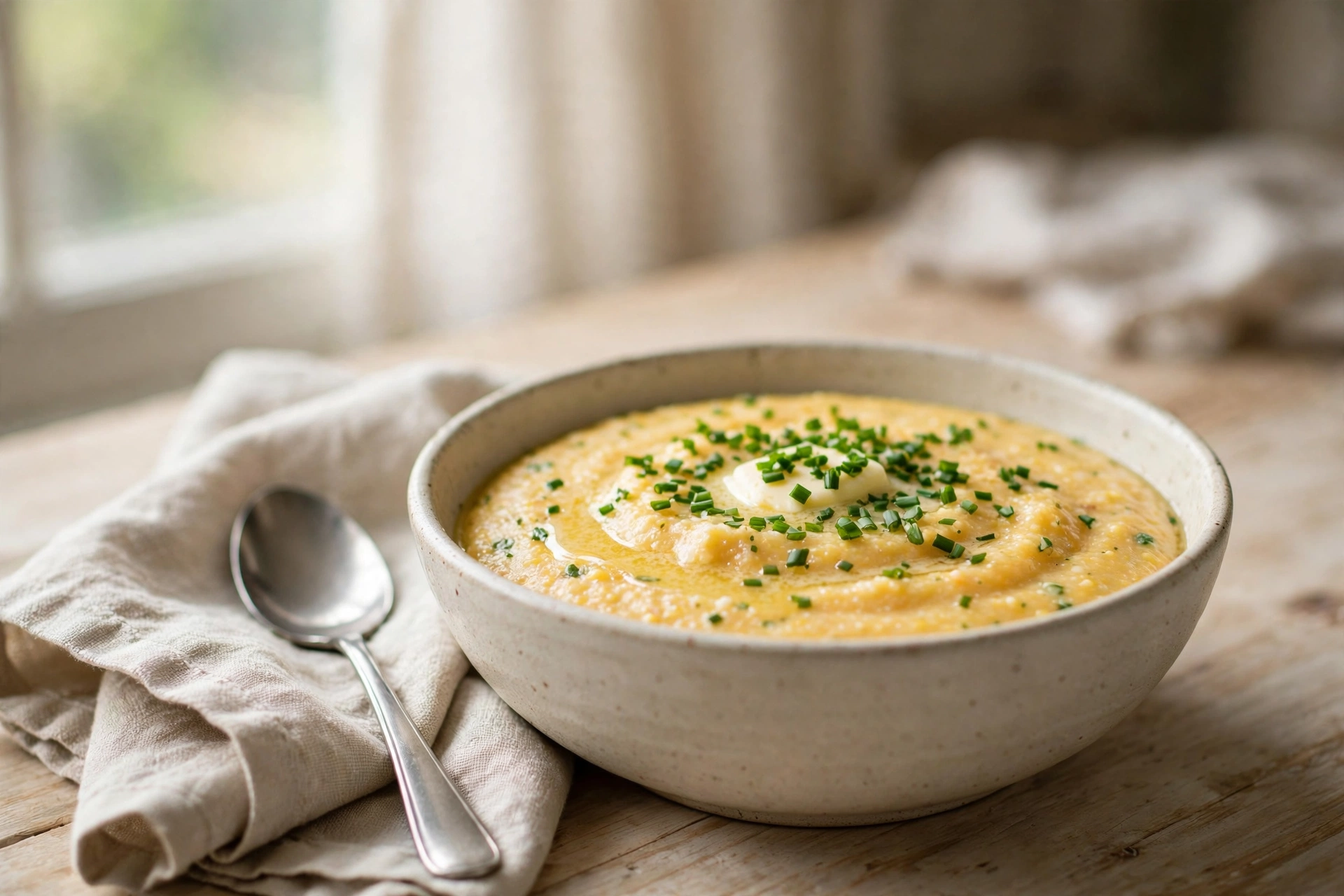
Grits are a warm, creamy porridge made from ground corn, and they have been a breakfast staple in the American South for generations. If you have ever wondered whether this dish is actually good for you, the short answer is yes, it can be, especially when you choose a less processed type and keep the toppings light. This guide explains what it is, the types you can buy, its nutrition facts, the benefits researchers link to it, and the healthiest ways to cook and serve it.
In this article:
- What Are Grits?
- Types of Grits
- Grits Nutrition Facts
- Health Benefits of Grits
- Are Grits Healthy?
- Grits vs Oatmeal and Polenta
- How to Cook Grits
- Healthy Ways to Serve Grits
- Downsides to Keep in Mind
- Frequently Asked Questions
What Are Grits?
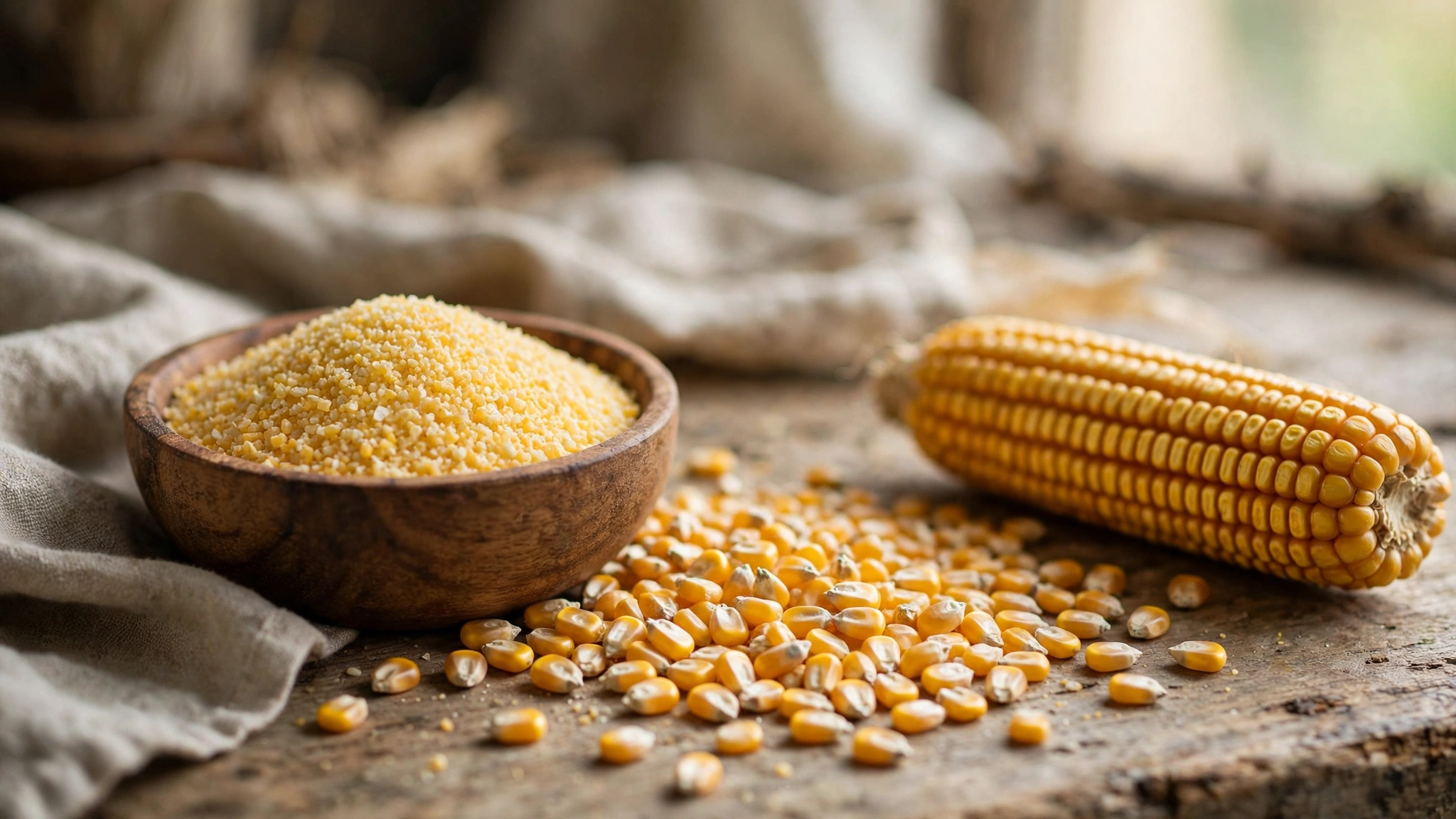
This porridge is made by grinding dried corn, usually a starchy variety called dent corn, into a coarse meal, then boiling it with water, milk or broth until it turns thick and creamy. The result is a mild, comforting dish that takes on the flavor of whatever you cook or serve it with.
Corn porridge has deep roots in the food traditions of Native Americans, and it later became a defining dish of Southern cooking in the United States. Today you will find it on breakfast menus across the country.
The flavor is mild and slightly sweet, much like corn itself, and stone-ground varieties taste richer than more processed kinds. Because the base is so plain, the dish works in a sweet breakfast bowl with fruit or a savory dinner plate with vegetables or fish.
Types of Grits
How the corn kernel is processed changes the flavor, the cooking time and the nutrition. These are the main types you will see in stores.
Stone-Ground Grits
Stone-ground cornmeal, sometimes called old-fashioned, is made by grinding the whole corn kernel, including the germ and the hull. That makes it the most nutritious type, and the only one that counts as a whole grain. It has the most fiber and the fullest flavor, but takes the longest to cook, often 30 to 45 minutes, and spoils faster than refined types, so store it in the freezer to keep it fresh.
Quick and Regular
Quick and regular varieties have the hull and germ removed, leaving mostly the starchy center of the kernel. Without the oily germ, they last much longer on the shelf, but much of the fiber and many nutrients are lost in processing, so these types are often enriched, with vitamins and minerals added back after milling. Quick types are ground finer and cook in about 5 to 10 minutes, while regular types take a little longer.
Instant
Instant types are quick cornmeal that has already been cooked and then dried, so they only need a couple of minutes in hot water. They are the most convenient type, but also the most processed, and many instant packets come flavored with added salt, sugar or artificial flavors, so check the label if you buy them.
Hominy Grits
Hominy types are made from corn soaked in an alkaline solution, a process called nixtamalization. The process removes the hull but keeps the germ, and it makes niacin and amino acids easier for your body to absorb, while the corn gains extra calcium.
Yellow and White
You can buy yellow or white varieties, and the color simply comes from the corn used. Yellow corn contains more lutein and zeaxanthin, the yellow pigments that support eye health, while white corn is milder.
Grits Nutrition Facts
Nutrition depends on the type and on how you cook the dish. Figures from the USDA FoodData Central show that plain corn porridge is low in fat and calories, with most of its energy coming from carbohydrates. Here is what one cup of cooked, regular corn porridge made with water provides, approximately:
| Nutrient | Amount per cup (cooked) |
|---|---|
| Calories | 182 |
| Protein | 4 grams |
| Fat | 1 gram |
| Carbohydrates | 38 grams |
| Fiber | 2 grams |
| Folate | 18% of the Daily Value |
| Thiamine (vitamin B1) | 18% of the Daily Value |
| Niacin (vitamin B3) | 13% of the Daily Value |
| Iron | 8% of the Daily Value |
| Magnesium | 5% of the Daily Value |
Enriched varieties can be an even stronger source of iron, with some brands providing close to 100% of the Daily Value per serving. Stone-ground types offer more fiber, around 3 grams per serving, because the whole kernel stays intact. A quarter cup of dry, unenriched cornmeal makes about a cup cooked, and contains roughly 145 calories, 3 grams of protein and 1 gram of fiber.
Health Benefits of Grits
Because this food is made from corn, it carries many of the nutrients found in whole corn. Here are the main benefits linked to eating it as part of a balanced diet.
Steady Energy
The dish is rich in complex carbohydrates, which your body breaks down slowly, giving you a steady supply of energy through the morning without the sharp rise and fall that sugary breakfast cereals can cause. For active people, or anyone who wants a filling breakfast, it is a practical source of fuel.
Naturally Gluten Free
Corn porridge is made only from corn, so it contains no gluten at all, which makes it a safe grain choice for people with celiac disease or gluten intolerance, as long as the package is labeled gluten free. If you need to avoid gluten, always check the label, since cross-contact can happen in shared mills.
Eye Health
Yellow corn is a good source of lutein and zeaxanthin, two antioxidants that collect in the retina. Research links them with a lower risk of age-related eye problems, including cataracts and macular degeneration, and they also help filter harmful blue light. Frying can reduce the lutein content, since lutein dissolves in hot oil, so boiling or steaming keeps more of it.
Rich in Antioxidants
Corn contains carotenoids and polyphenols, including caffeic acid and syringic acid, which help protect your cells from damage caused by free radicals, unstable molecules linked to aging and chronic disease. Whole-grain varieties keep more of these compounds than refined ones, even after boiling.
Help With Anemia
This food can be a useful source of iron, a mineral your body needs to make red blood cells. Iron deficiency anemia is most common in people who menstruate, children, vegetarians and frequent blood donors, and enriched cornmeal is especially helpful here. The National Institutes of Health notes that iron from plant foods is absorbed better when eaten with vitamin C, so pairing the dish with fruit or vegetables is a smart move. If you want more ideas, see our guide to iron-rich foods.
A Good Source of B Vitamins
The dish provides several B-complex vitamins, including folate, thiamine, niacin, riboflavin and pyridoxine. Folate supports healthy cell growth and helps prevent birth defects during pregnancy, while thiamine and niacin help your body turn food into energy and support normal nerve function. Enriched varieties have these vitamins added back after processing, which is why the label matters.
Are Grits Healthy?
This food can be part of a healthy diet, but the answer depends on two things: the type you choose and what you add to it.
Stone-ground varieties are the healthiest choice, because they keep the whole grain, including fiber and the natural nutrients of the corn kernel. Quick and regular enriched types are still reasonable, since enrichment replaces much of the iron and B vitamins lost in milling. Instant packets are the weakest choice, especially flavored ones with added salt and sugar.
The toppings matter just as much. Plain porridge cooked in water or low-fat milk is low in fat and calories, but the classic Southern way of serving it, loaded with butter, cheese and bacon, adds a lot of saturated fat, salt and calories. The extras, not the corn itself, are what tip the dish from healthy to heavy.
People watching their blood sugar should note that this is a starchy food, so portion size matters: a cup of cooked porridge has about 38 grams of carbohydrates, similar to a cup of cooked rice. Pairing it with protein and fiber, such as eggs, beans or vegetables, slows digestion and helps keep blood sugar steadier. MedlinePlus offers general guidance on building balanced meals with whole grains and vegetables.
Grits vs Oatmeal and Polenta
This porridge is often compared with other porridges, and the differences are worth knowing.
Corn porridge vs oatmeal. Oatmeal usually has more protein and fiber than corn porridge of a similar processing level. For example, a quarter cup of steel-cut oats has about 4 grams of fiber, while the same amount of stone-ground cornmeal has about 3 grams. Oatmeal also contains beta-glucan, a soluble fiber linked to heart health. Corn porridge, on the other hand, is naturally gluten free, while oats can be contaminated with gluten unless labeled gluten free. Both can be healthy breakfast choices.
Corn porridge vs polenta. Polenta is an Italian dish made from a different type of ground corn, usually flint corn, and it has a firmer, less creamy texture. The two are close cousins nutritionally, and they can often be swapped in recipes, though the texture of the finished dish will differ.
How to Cook Grits
Cooking this dish is simple, but the ratio and the patience make the difference between creamy and lumpy. Follow these steps for a basic pot.
- Use the right ratio. A common starting point is 4 cups of liquid for every 1 cup of dry cornmeal. Water works fine, while milk or broth adds flavor and creaminess, though some brands call for a different ratio.
- Bring the liquid to a boil. Add a pinch of salt, then bring the liquid to a steady boil in a medium saucepan.
- Stir the cornmeal in slowly. Pour the cornmeal in a thin stream while whisking constantly, which prevents lumps from forming.
- Lower the heat and cover. Turn the heat down to low, cover the pot, and let it simmer, stirring every few minutes so it does not stick.
- Cook until creamy. Quick types need about 5 to 10 minutes, regular types about 20 minutes, and stone-ground types 30 to 45 minutes. The porridge is done when it is thick, creamy and tender.
- Finish as you like. Stir in a little butter, milk or cheese at the end for a richer texture, or keep it plain and add toppings instead.
Leftovers thicken as they cool, but a splash of water or milk loosens them up again when reheated.
Healthy Ways to Serve Grits
This dish is a blank canvas, and the toppings decide how healthy the meal is. Try these ideas instead of the usual butter, cheese and bacon.
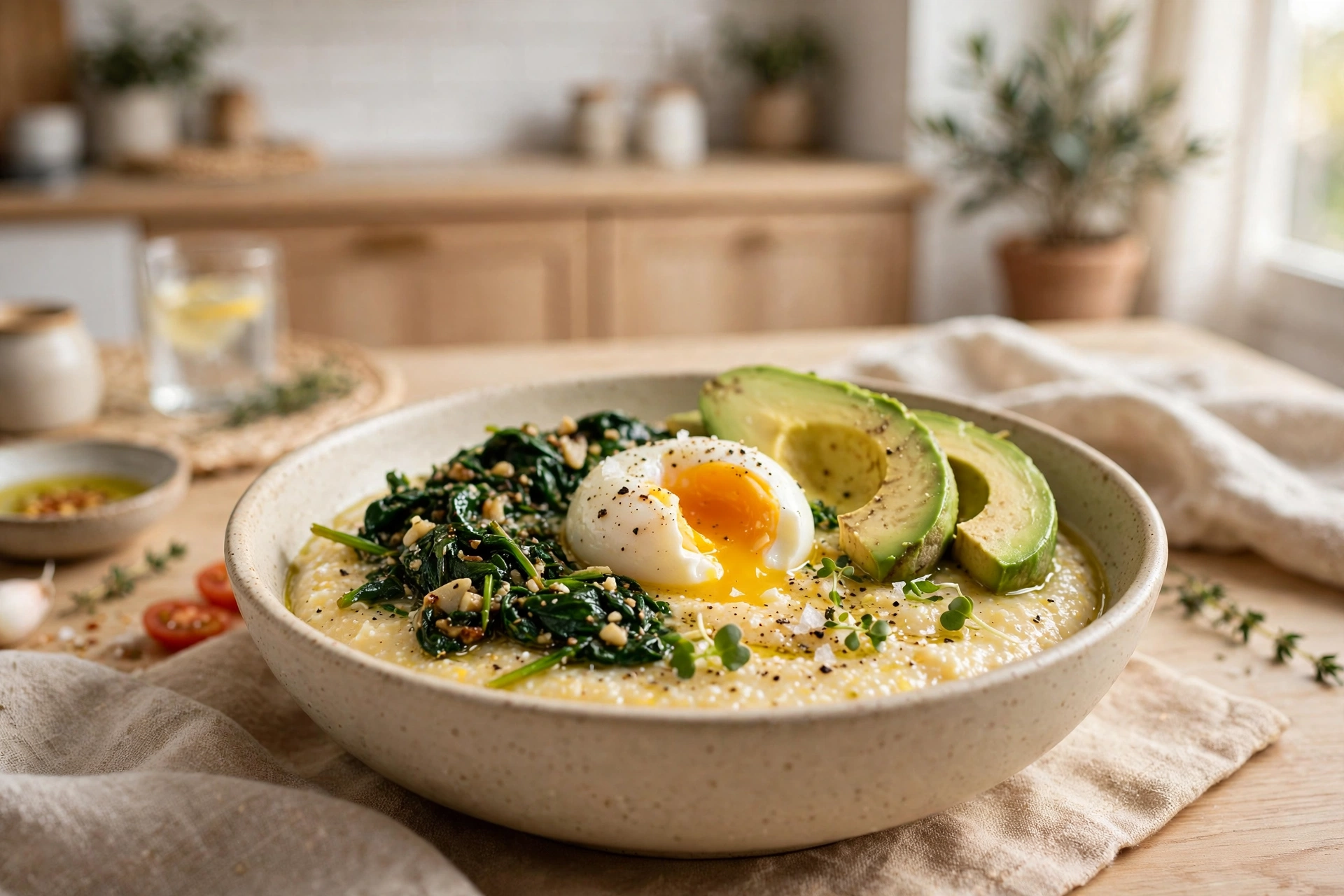
- Breakfast bowl: top plain porridge with a soft-boiled egg, sauteed spinach and sliced avocado.
- Fruit topping: add fresh berries or sliced banana instead of sugar.
- Beans and vegetables: serve the porridge with black beans, roast vegetables and salsa.
- Shrimp and corn porridge, lighter: cook in vegetable broth with a little milk, then top with garlic shrimp and lemon, skipping the heavy cream sauce.
- Cheesy flavor without the cheese: stir in nutritional yeast, which tastes cheesy but adds B vitamins instead of saturated fat.
- Herbs and spice: finish with fresh chives, parsley, black pepper or a dash of hot sauce for flavor without extra calories.
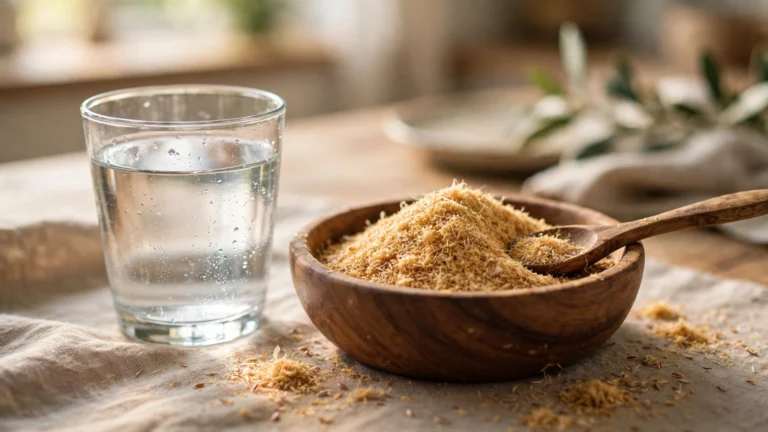
For more fiber, psyllium husk is another simple option, and dragon fruit adds color and nutrients to a breakfast table. If you eat mostly plant-based meals, our list of vitamin B12 foods is worth a look too.
Downsides to Keep in Mind
This food is wholesome, but a few points are worth knowing before you make it a daily habit.
First, refined and instant types are low in fiber, so they may not keep you full for long. Choosing stone-ground cornmeal and adding protein or fiber-rich toppings solves most of that problem.
Second, flavored instant packets can be high in sodium, sometimes several hundred milligrams per serving, so choose plain varieties and season them yourself.
Third, corn porridge is starchy, so large portions can raise blood sugar. This matters most for people with diabetes or prediabetes, so a moderate portion with protein and vegetables is the better approach.
Finally, the dish is not a complete food by itself. It is low in protein and lacks many nutrients found in vegetables, fruit and legumes, so think of it as one part of a balanced plate, not the whole meal.
Frequently Asked Questions
Are grits gluten free?
Yes, because it is made only from corn. People with celiac disease should still buy cornmeal labeled gluten free, since some mills process wheat in the same facility and cross-contact is possible.
Are grits healthier than oatmeal?
It depends on the type. Oatmeal usually has a little more protein and fiber, but corn porridge is naturally gluten free and rich in iron and B vitamins. Both are healthy when cooked plain and served with good toppings.
What are grits made of?
They are made from ground dried corn, usually dent corn, boiled in water, milk or broth until thick and creamy.
Do grits raise blood sugar?
Corn porridge is starchy, so it can raise blood sugar, especially in large portions. A moderate serving with protein and fiber, such as eggs or beans, helps slow digestion and keeps blood sugar steadier.
Are instant grits bad for you?
Instant packets are not harmful, but they are the most processed type and the lowest in fiber, and flavored packets often add salt and sugar. Plain instant cornmeal is fine in a pinch, but stone-ground or regular types are the better everyday choice.
What is the difference between grits and polenta?
Both are made from ground corn, but polenta uses a different corn variety and has a firmer, less creamy texture, while corn porridge is softer and holds its shape less well when cooled.
Conclusion
Grits are a simple, affordable food with real nutrition to offer. Stone-ground varieties bring fiber, iron, B vitamins and eye-friendly antioxidants to the table, and they are naturally gluten free. The healthiest way to enjoy this dish is to choose a less processed type, cook it in water or low-fat milk, and top it with vegetables, beans, eggs or fruit instead of butter, cheese and bacon. Try one of the serving ideas above this week.
This article is for general information only and is not medical advice. If you have an ongoing health concern, talk to a healthcare professional.