Chamomile Tea: What It Is, Its Benefits, and Safety Tips
Chamomile tea is a caffeine-free herbal drink made from dried chamomile flowers. People have enjoyed a warm cup of chamomile tea before bed for thousands of years, and it is still one of the most popular herbal teas in the world today. It is known for its mild, apple-like flavour and its calming reputation.
Research on chamomile tea is still limited, and most studies are small and short. Small studies and reviews suggest it may support sleep quality, ease mild anxiety, and soothe digestion. However, the evidence for sleep is weaker than its reputation suggests, so it is best seen as a gentle nightly habit rather than a proven treatment. WebMD notes that chamomile has a long history of traditional use, while modern research is still catching up.
This guide explains what chamomile tea is, how it may help, how to brew it well, and who should be careful with it. It covers the benefits, the side effects, and the safety facts you need before making it part of your routine.
Contents
- What Is It?
- Benefits for Sleep
- Anxiety and Relaxation
- Digestion and Stomach Comfort
- Other Traditional Uses
- How to Brew It
- How It Compares With Green Tea
- Side Effects
- Safety: Who Should Be Careful
- Frequently Asked Questions
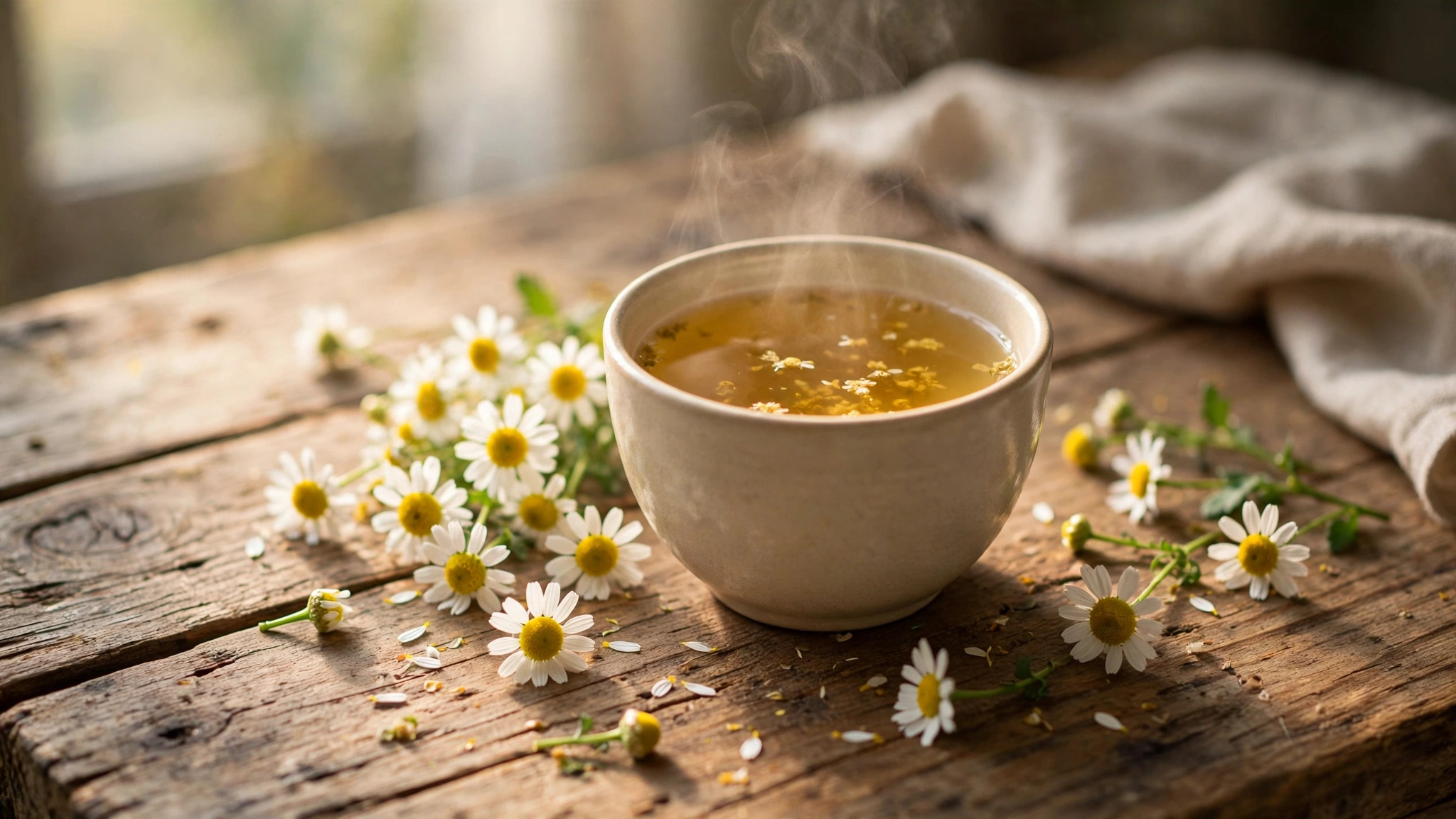
What Is Chamomile Tea?
Chamomile tea is not a true tea, because it does not come from the tea plant. Instead, it is an herbal infusion made by steeping dried chamomile flowers in hot water. As a result, it contains no caffeine at all, which is one reason people drink it in the evening.
Two types of chamomile are used for tea. German chamomile, known as Matricaria chamomilla, is the type most often used for chamomile tea. Roman chamomile, known as Chamaemelum nobile, is the other common type. Both have a soft, floral taste, but German chamomile is the one you will find in most tea bags.
German vs Roman Chamomile
German chamomile is an annual plant with small, daisy-like flowers, and it is the main source of the tea sold in shops. Roman chamomile is a low-growing perennial plant with a slightly bitter taste.
The flowers contain natural plant compounds that give the drink its character. The best known is apigenin, a flavonoid linked to relaxation. Chamomile also contains chamazulene and bisabolol, two compounds studied for their soothing effects. Together, these compounds help explain why the drink has been used as a calming remedy for so long.
A Long History of Use
People have used chamomile as a traditional medicine for thousands of years. Ancient Romans, Greeks, and Egyptians all valued it for calming nerves and settling stomachs. In addition, it was used on the skin to soothe irritation, and it appeared in folk remedies for many common complaints.
This long history is part of its appeal today. However, a long tradition is not the same as strong scientific proof. Modern research is still limited, and many studies used chamomile extract rather than the tea itself. For that reason, it is wise to enjoy the drink for its comfort and flavour while keeping expectations realistic. For more healthy drink and food guides, browse our Nutrition section.
Benefits for Sleep
Many people drink chamomile tea at night because they believe it helps them fall asleep. The idea is simple: a warm, caffeine-free drink can become part of a relaxing bedtime routine. In addition, the ritual itself may signal to the body that it is time to wind down.
Small studies and meta-analyses suggest that it may support better sleep quality. For example, some trials found that people who drank it reported sleeping a little better than those who did not. However, the studies were small, and the effects were modest. The evidence for sleep is weaker than the drink’s reputation, so it should not replace good sleep habits.
What the Research Shows
Most research on sleep used chamomile extract in capsule form, not tea. As a result, it is hard to say how much of the effect comes from the tea itself. The flavonoid apigenin may play a role, because it binds to some of the same brain receptors linked to relaxation. Still, the amount of apigenin in one cup is small, and more research is needed.
Good sleep habits matter more than any single drink. A regular bedtime, a dark and cool room, and less screen time in the evening all help more than tea alone. That said, a cup of tea can be a pleasant part of a calm evening routine. For more ideas, see our guide on how to sleep better naturally.
Anxiety and Relaxation
A cup of this tea is often linked with calm, and many people reach for it when they feel tense. The warm drink, the gentle scent, and the quiet moment of drinking it can all help a person slow down. In this way, the ritual may matter as much as the plant compounds themselves.
Some small studies suggest that chamomile extract may ease mild anxiety. For instance, a few short trials reported lower anxiety scores in people who took chamomile extract. However, these studies were small, and they did not test the tea in the same way. Therefore, the drink should be seen as a relaxing habit, not as a treatment for anxiety.
If anxiety affects your daily life, talk to a doctor or a mental health professional. A calming drink can support proven steps such as therapy, but it cannot replace them.
Digestion and Stomach Comfort
Chamomile tea is a popular choice after meals, and it has a long history as a digestive remedy. Traditionally, people drank it to ease gas, bloating, indigestion, and nausea. The warm liquid itself can feel soothing, and the plant compounds may help relax the muscles of the digestive tract.
Some people find that it eases bloating and mild stomach discomfort after a heavy meal. However, the evidence is mostly traditional, and few large trials have tested the tea for digestion. As a result, it is best to treat it as a gentle comfort drink rather than a proven digestive treatment.
It is worth noting that chamomile tea is not the same as treatments for acid reflux or other digestive conditions. People with ongoing stomach problems, such as GERD, should talk to a doctor for proper care. In addition, simple food choices can help digestion too. For example, our guide to Greek yogurt benefits explains how a probiotic food may support gut health.
Other Traditional Uses
Chamomile tea is sometimes used on the skin, as well as drunk as a beverage. A cooled cup can be used as a compress on irritated skin. In addition, chamomile appears in many skin care products. Early research suggested it may be about 60 percent as effective as certain hydrocortisone cream doses for eczema, but the evidence is limited. Therefore, it should not replace prescribed skin treatments.
The drink is also linked with general relaxation and comfort. Some people drink it when they feel unwell with a cold, because the warm steam and the soothing flavour feel comforting. However, there is no good evidence that it cures colds or other illnesses. It is simply a pleasant, caffeine-free drink that fits well into a restful day.
In short, the traditional uses are wide, but the proof is thin. Enjoy the drink for what it is, a mild herbal infusion, and rely on proven care for real health problems.

How to Brew Chamomile Tea
To brew it well, start with fresh, hot water and good quality tea. Place one tea bag in a mug, then pour about 8 ounces of hot water over it. Cover the mug and let it steep for 5 to 10 minutes. A covered mug keeps the steam in, and the steam carries some of the floral aroma.
If you prefer loose flowers, use a tea infuser instead of a bag. Add about one tablespoon of dried flowers, pour hot water over it, and steep for 5 to 10 minutes. Then remove the infuser and let the drink cool to a safe temperature before sipping.
You can add honey or lemon for flavour if you like. Both are simple additions, and they do not change the drink much. For a stronger cup, steep for the full 10 minutes rather than adding more tea bags. Your chamomile tea is ready to enjoy, and it works well as a calm evening drink.
For more on warm drinks, see our guide to the benefits of drinking hot water.
How It Compares With Green Tea
This drink and green tea are both popular, but they are very different. Green tea comes from the tea plant and contains caffeine, while this one is a caffeine-free herbal infusion. The table below shows the main differences at a glance.
| Feature | Chamomile tea | Green tea |
|---|---|---|
| Caffeine | None | Contains caffeine, about 30 to 50 mg per cup |
| Taste | Mild, floral, slightly apple-like | Grassy, fresh, sometimes slightly bitter |
| Best time to drink | Evening or before bed | Morning or afternoon |
| Main uses | Relaxation, sleep support, digestive comfort | Alertness, antioxidants, daytime energy |
If you want a drink to help you unwind at night, it is the better choice. On the other hand, green tea fits better in the morning, when a little caffeine can help you feel alert. Both can be part of a healthy routine, but they serve different purposes. In addition, some people switch between the two, using green tea by day and this herbal drink at night.
Chamomile Tea Side Effects
Chamomile tea is generally safe for most healthy adults, and side effects are uncommon. When they do happen, they are usually mild. The most common effects are drowsiness and, in large amounts, nausea or vomiting. Because the drink can make some people sleepy, it is best not to drive after drinking several strong cups.
Allergic reactions are the main concern. Some people develop eczema, eye irritation, or a skin rash after drinking or touching chamomile. Rarely, a severe allergic reaction called anaphylaxis can occur. This risk is higher for people who are allergic to ragweed, daisies, marigolds, or chrysanthemums, because these plants belong to the same daisy family.
Long-term safety is not known, because few studies have followed people who drink it every day for years. For that reason, talk to a doctor if you drink more than a cup or two a day on a regular basis. A doctor can help you decide what amount fits your health and your medicines.
Safety: Who Should Be Careful
Chamomile tea can interact with some medicines, so it is important to know the risks. The Merck Manual notes that chamomile may mildly increase bleeding risk when used with blood thinners such as warfarin. This is because it contains small amounts of coumarin, a natural compound linked to blood thinning. It may also interact with antiplatelet drugs, aspirin, and NSAIDs.
In addition, chamomile may add to the effects of sedatives, so it can increase drowsiness when combined with sleep medicines. It may also interact with antidepressants, anti-seizure medicines, cyclosporine, and some medicines processed by the liver. Because of these possible interactions, tell your doctor about all the medicines and supplements you take.
Stop drinking it at least 2 weeks before surgery, because of the bleeding risk. Talk to a doctor before use if you are pregnant or nursing, as safety is not known in those conditions. Ask a paediatrician before giving it to babies or children. The U.S. Food and Drug Administration lists chamomile as Generally Recognised as Safe (GRAS) in food, but that label does not mean it is safe for everyone in every amount.

Frequently Asked Questions About Chamomile Tea
Is chamomile tea good for sleep?
It may help a little, but the evidence is limited. Small studies suggest it may support sleep quality, yet most used extract rather than tea. A warm, caffeine-free drink can still be a useful part of a bedtime routine. Good sleep habits, such as a regular bedtime, matter more.
Does it contain caffeine?
No, it contains no caffeine at all. It is an herbal infusion made from dried flowers, not from the tea plant. That is why many people choose it in the evening. It will not keep you awake like black or green tea can.
Can I drink chamomile tea every night?
Most healthy adults can drink one cup each evening without problems. However, long-term safety is not fully known, so talk to a doctor if you drink more than a cup or two a day. Also, tell your doctor if you take medicines, because interactions are possible.
Does it help with anxiety?
It may ease mild tension for some people, but the evidence is weak. Small studies used extract, not tea, and the effects were modest. It is best seen as a relaxing habit rather than a treatment. If anxiety affects your daily life, talk to a doctor.
Can children drink it?
Ask a paediatrician before giving it to babies or children. Safety in children is not well studied, and children can be more sensitive to allergies. A doctor can advise whether it is suitable and how much is safe. Never give herbal drinks to a baby without medical advice.
Is chamomile tea safe in pregnancy?
Safety in pregnancy is not known, so talk to a doctor before drinking it. The same advice applies while nursing. A doctor can weigh the possible risks and suggest safer options. Do not use herbal products in pregnancy without medical guidance.
Conclusion
Chamomile tea is a gentle, caffeine-free drink with a long history and a mild, pleasant flavour. It may support sleep and digestion a little, but the evidence is limited, so keep your expectations realistic. Enjoy it as part of a calm evening routine, and talk to a doctor first if you take medicines or have health concerns.
This article shares general health information only. If you have ongoing health concerns, talk to a healthcare professional before starting, stopping, or changing any drink, supplement, or medicine.