
How to Sleep Better at Night Naturally
If falling asleep feels harder than it should, you are not alone, and you do not need a complicated fix. Most people sleep better after a handful of small, steady changes to their schedule, their evenings, and their bedroom. If you are looking for how to sleep better at night naturally, this guide walks through the habits that matter most, in the order you can use them. Pick a few tonight, give them a week or two, and let the routine build.
Quick Answer: To sleep better at night naturally, keep the same wake time every day, turn screens off about 60 minutes before bed, keep your bedroom cool, dark, and quiet, stop caffeine about 8 hours before bed, and follow a short, calm wind-down routine each night.
The 12 Tips at a Glance
Here is the whole method on one list, explained in the sections below.
- Wake up at the same time every day, weekends included.
- Get bright light soon after waking, ideally outside.
- Keep naps short, around 20 to 30 minutes, and before 3 p.m.
- Stop caffeine about 8 hours before bedtime.
- Finish dinner 2 to 3 hours before bed, and keep late snacks light.
- Go easy on alcohol in the evening, because the second half of the night often suffers.
- Take a warm shower or bath 1 to 2 hours before bed.
- Start a wind-down routine about an hour before bed.
- Turn screens off about 60 minutes before bed and charge your phone away from the bed.
- Keep the bedroom around 60 to 67 degrees Fahrenheit, dark, and quiet.
- Use a simple relaxation practice, like slow breathing or a body scan, once you are in bed.
- If you are still wide awake after about 20 minutes, get up, do something quiet in low light, and return when you feel sleepy.
Why a Regular Sleep Schedule Matters
Your body runs on an internal clock that works best with a steady pattern. When you go to bed and wake up at roughly the same times each day, that clock learns when to make you feel alert and when to make you feel sleepy. A regular wake time does most of the work, because it anchors everything else. Sleeping in for hours on weekends can leave Monday morning feeling like a mild case of jet lag. It is the same pattern behind CDC sleep guidance, which gives similar general advice about keeping sleep and wake times consistent.
Start by choosing a wake time you can keep seven days a week, then count backward seven to nine hours to find a sensible bedtime. If your current schedule is far from that target, do not try to fix it in one night. Shift it slowly, by 15 to 30 minutes every few days, until you land where you want to be. Steady beats perfect: a mostly regular schedule is far better than a perfect one you only keep twice a week.
A Sample Evening Routine With Times
Advice is easier to follow with clock times on it. Below is a sample evening built for a 10:00 p.m. bedtime. If yours is different, keep the same order and gaps, and move every time earlier or later.
| Time | What to do |
|---|---|
| 8:30 p.m. | Finish work and chores, dim the lights around the house |
| 9:00 p.m. | Take a warm shower or bath |
| 9:15 p.m. | Screens off, phone charging outside the bedroom or across the room |
| 9:20 p.m. | Light stretching and change into sleep clothes |
| 9:35 p.m. | Write down tomorrow’s top tasks and any worries, then close the notebook |
| 9:45 p.m. | Read a paper book or listen to calm music in low light |
| 10:00 p.m. | Lights out |
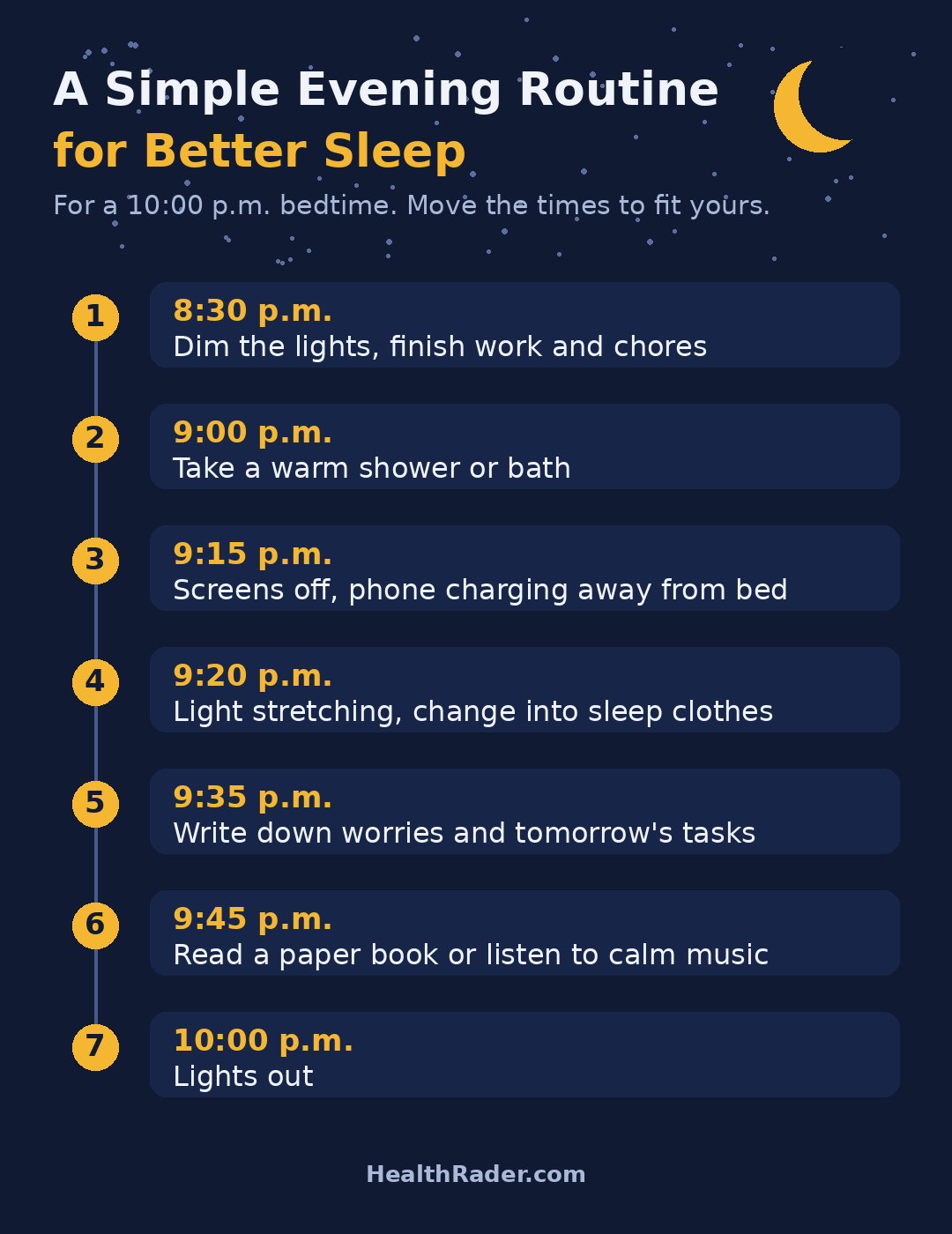
Two notes on this routine. The warm shower works best 1 to 2 hours before bed, not right at lights out, because your body cools afterward and that gentle cooling lines up with natural sleepiness. And the notebook step is not busywork: writing tasks and worries down gives your mind permission to stop rehearsing them. Keep the routine calm, a little boring, and in the same order each night.
Relaxation Techniques, Step by Step
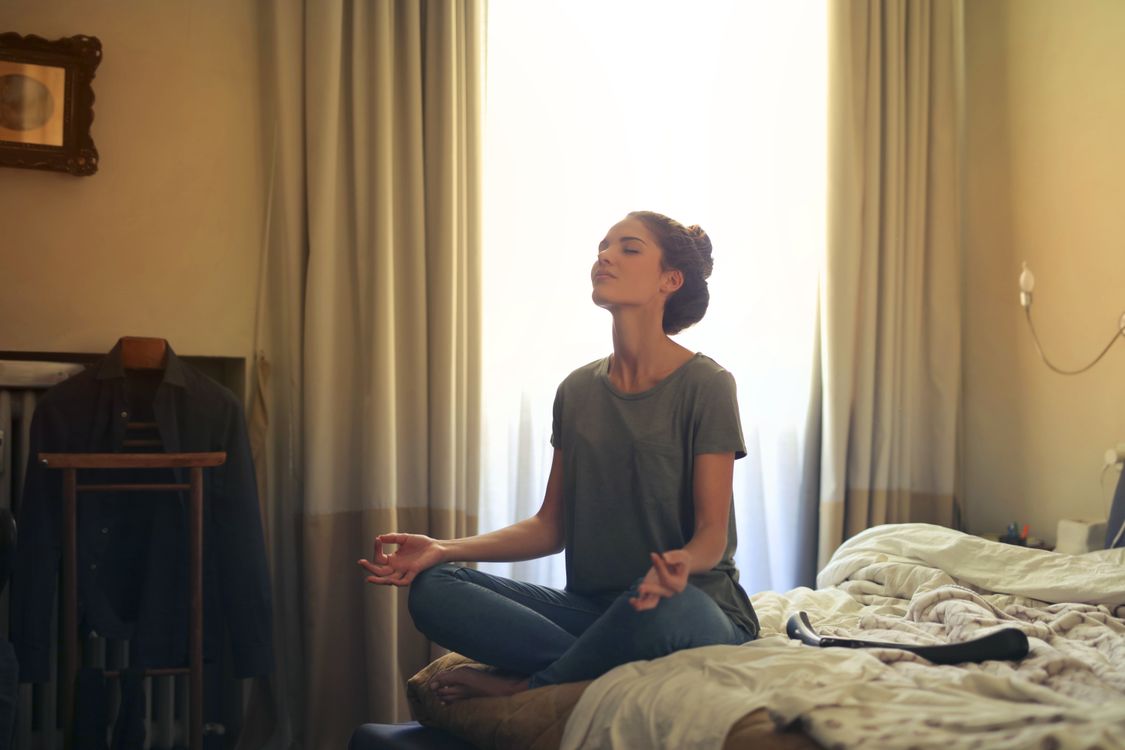
A busy mind is one of the most common reasons people lie awake. These four simple practices give your mind and body something calm to do instead. Try each for a few nights and keep the ones that suit you. None needs any equipment.
Slow Breathing With a Simple Count
- Lie down or sit comfortably and rest one hand on your belly.
- Breathe in slowly through your nose for a count of 4, feeling your belly rise.
- Hold the breath gently for a count of 4. Keep it easy, with no strain.
- Breathe out slowly through your mouth for a count of 6, letting your belly fall.
- Repeat the cycle for 5 to 10 rounds. If your mind wanders, return to the count without judging yourself.
Keeping the out-breath a little longer than the in-breath is the part that tends to feel calming.
Progressive Muscle Relaxation
- Start at your feet. Tighten the muscles in your feet and toes for about 5 seconds.
- Let go all at once and notice the difference for about 10 seconds.
- Move up to your calves and repeat: tense for 5 seconds, then release.
- Continue in the same way through your thighs, stomach, hands, shoulders, and face.
- Finish with three slow breaths, letting your whole body feel heavy on the bed.
The contrast between tight and loose teaches your body what relaxed feels like. Many people find their shoulders and jaw were tense without them realizing it.
Body Scan
- Close your eyes and bring your attention to the top of your head.
- Slowly move your attention down, part by part: forehead, eyes, jaw, neck, shoulders, arms, hands, chest, stomach, legs, and feet.
- At each part, simply notice what you feel, warmth, pressure, tingling, or nothing at all. Nothing needs to change.
- If a spot feels tense, breathe out slowly and picture it softening as you exhale.
- If you reach your feet still awake, start again from the top. It is fine to drift off halfway through.
A Worry Journal Step for a Racing Mind
- Keep a small notebook and pen by the bed.
- Before lights out, write down whatever is looping in your head, in short, plain lines.
- Next to each worry, write one small next step, even if it is only “think about this tomorrow at 10 a.m.”
- Close the notebook and tell yourself the list is handled for the night.
- If a new thought pops up in bed, jot it down in low light and return to your breathing.
Bedroom Setup for Better Sleep
Your bedroom should send one clear message: this room is for sleep. A few changes to light, temperature, noise, and screens make the room work in your favor.
Light
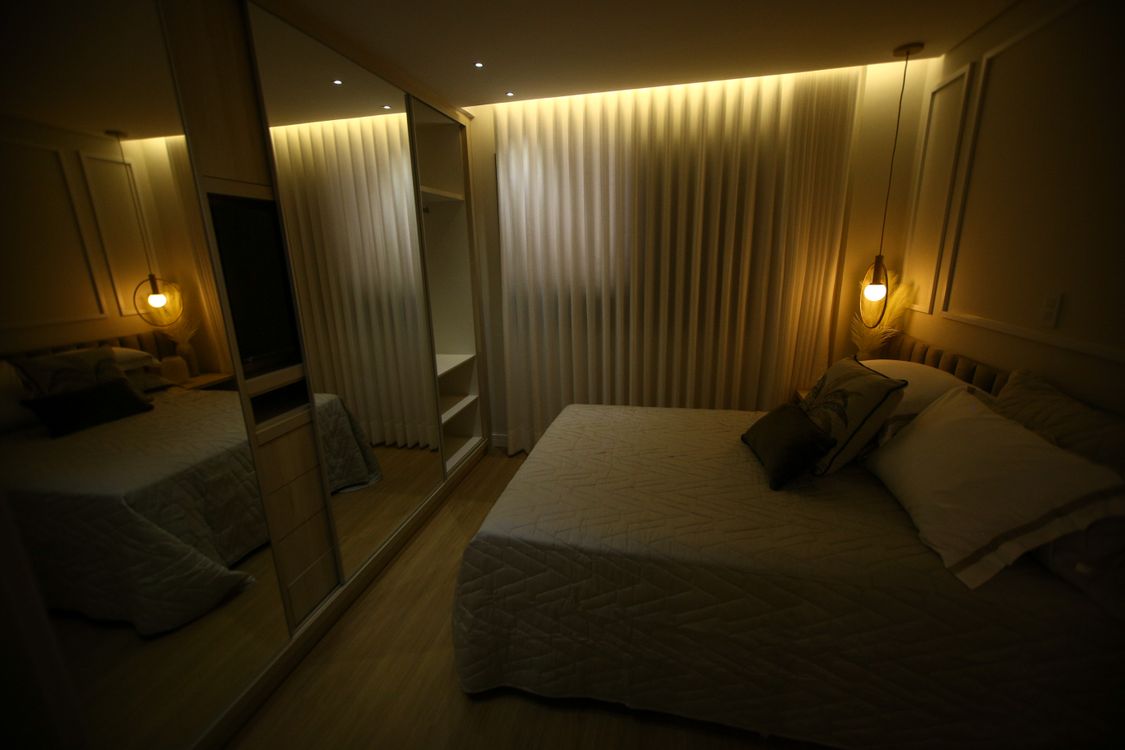
Keep the room as dark as you reasonably can. Light from hallway gaps, street lamps, or small glowing chargers can make sleep lighter without fully waking you. Blackout curtains fix most outside light. Cover tiny standby lights with a bit of tape, and turn the clock away from the bed so you are not watching the minutes pass.
Temperature
Most people sleep best in a cool room, and common sleep hygiene guidance puts the sweet spot at around 60 to 67 degrees Fahrenheit. If you wake up hot or sweaty, try lighter bedding, breathable sleep clothes, or a fan. If you run cold, add a layer you can kick off easily.
Noise
A quiet room is ideal, but complete silence is not possible in every home. A steady, low background sound, like a fan or a white noise machine at a modest volume, can smooth over sudden sounds from traffic or neighbors. Earplugs help some people in noisy buildings. What matters most is that the sound stays steady all night.
Screens and Phone Habits
Phones are among the biggest sleep stealers. Bright light, breaking news, messages, and endless scrolling all keep your brain switched on. A clear rule helps: screens off about 60 minutes before bed. Charge your phone outside the bedroom if you can, or at least across the room, and use a simple alarm clock instead of your phone alarm. When the phone stays out of the bed, your mind starts to link the bed with sleep again, which is exactly the habit you want. We have a full guide on how technology affects your sleep health if you want the deeper picture.

Daytime Habits That Affect Night Sleep
How your night goes is partly decided hours earlier. These daytime habits are easy to overlook, but they often matter as much as anything you do in the evening.
Get Morning Light
Bright light early in the day helps set your body clock. Open the curtains as soon as you wake, and try to get outside for a short morning walk. Even 15 to 30 minutes of daylight can help you feel more alert in the day and sleepier at the right time at night. Outdoor light still counts on cloudy days.
Exercise, but Time It Well
Regular movement during the day is linked with deeper, more restful sleep for many people, but timing matters. Finish hard exercise at least 2 to 3 hours before bed, because a vigorous workout close to bedtime can leave some people feeling wired. Gentle stretching or an easy evening stroll is fine closer to bed.
Keep Naps Short and Early
Naps are not the enemy, but long or late naps can steal sleep from the night. If you nap, keep it short, around 20 to 30 minutes, early in the afternoon, and avoid napping after about 3 p.m.

Food, Caffeine, and Alcohol in the Evening
What you eat and drink, and when, has a quiet but real effect on the night. This section pulls those choices into one place so you can set simple cut-off times.
Caffeine Has a Long Tail
Coffee, tea, energy drinks, and some sodas hold caffeine that stays in your system for many hours. A useful rule from standard sleep hygiene guidance is to stop caffeine about 8 hours before bedtime. For a 10:00 p.m. bedtime, that means your last coffee lands around 2:00 p.m. Afternoon caffeine can make falling asleep harder even in people who swear it does not affect them, so try the cut-off for a week and judge by your nights.
Time Your Last Meal
Heavy, spicy, or very large meals close to bedtime can leave you uncomfortable when you lie down. Try to finish dinner 2 to 3 hours before bed. If you get hungry later, choose a small, light snack, like a small bowl of yogurt, a banana, or a handful of nuts, instead of a second full meal.
Be Honest About Alcohol
A nightcap can make you feel drowsy, and that part is real. The catch is that sleep later in the night is often more broken after drinking, so you may wake more and feel less rested in the morning. Less alcohol in the evening, or none on weeknights, usually leads to steadier sleep.
Fluids and the Warm Shower
Go easy on large drinks in the last hour before bed if nighttime bathroom trips often wake you, but do not go to bed thirsty either.

What to Do When You Cannot Fall Asleep
Even with good habits, some nights just go slowly. Lying in bed watching the clock builds frustration, and frustration keeps you awake. If you have been in bed for about 20 minutes and still feel wide awake, get up calmly instead of fighting it. Go to another room with dim light and do something quiet, like reading a few pages. Keep your phone put away. When you feel sleepy, heavy eyes, slower thoughts, go back to bed.
Try not to keep checking the time. Turn the clock around and remind yourself that one short night is not a disaster. The next day, hold your normal wake time and get morning light, even if the night was short. Protecting the schedule after a bad night makes the following night easier.
A Simple 7-Night Starter Plan
You do not need to change everything at once. This plan adds one small change per night for a week, so the full routine is in place by the end of the week.
| Night | One change to add |
|---|---|
| Night 1 | Set a fixed wake time and keep it, even on the weekend days that follow |
| Night 2 | Add morning light: a short walk or breakfast by a bright window |
| Night 3 | Set your caffeine cut-off, about 8 hours before bed |
| Night 4 | Start the wind-down hour and put screens away 60 minutes before bed |
| Night 5 | Fix the bedroom: cool it to around 60 to 67 degrees, darken it, steady the sound |
| Night 6 | Try one relaxation practice in bed, breathing, muscle relaxation, or a body scan |
| Night 7 | Put it all together as one routine and note what helped most this week |
If a night goes badly, do not restart the plan. Pick up the next night where you left off, and judge the plan by your whole week of sleep, not by a single night.
Frequently Asked Questions
How can I sleep better at night naturally?
Start with the basics: keep the same wake time every day, get morning light, stop caffeine about 8 hours before bed, and finish dinner 2 to 3 hours before bed. In the evening, dim the lights, turn screens off about 60 minutes before bed, and keep your bedroom cool, dark, and quiet. Add one change at a time and give it a week or two.
How long does it take for sleep habits to work?
Most people notice a difference within one to two weeks of keeping new habits consistently. Your body clock adjusts gradually, so judge a change by a full week of sleep, not one night.
What temperature is best for sleep?
Common sleep hygiene guidance suggests a cool bedroom, around 60 to 67 degrees Fahrenheit, works best for most adults. If you wake up hot, use lighter bedding or a fan.
What should I do if I cannot fall asleep after 20 minutes?
Get up and go to another room with low light. Do something calm, like reading, and avoid your phone. Return to bed only when you feel sleepy, and keep your usual wake time the next morning.
How many hours of sleep do most adults need?
Most adults do well with about 7 to 9 hours a night. The right amount for you is the amount that leaves you feeling rested and able to get through the day without struggling to stay alert.
Is it okay to read in bed?
Yes, reading a printed book in bed is fine for many people, as long as the book is not so gripping that you stay up for hours. Keep the light soft and stop when you feel sleepy.
Should I exercise in the morning or in the evening for better sleep?
Either can work, but many people sleep best when hard workouts end at least 2 to 3 hours before bed. Morning or afternoon exercise is a safe bet.
Why am I tired but still cannot fall asleep?
Feeling tired but lying awake is common. It usually means your body is ready for sleep but your mind is not, often because of late caffeine, bright screens close to bed, a racing mind, or an irregular schedule. The habits in this guide target exactly those causes: stop caffeine about 8 hours before bed, turn screens off 60 minutes before bed, and use the slow breathing or worry journal steps to quiet a busy mind.
What should I do if I wake up in the middle of the night?
Do not stare at the clock. Turn it around instead, because clock-watching builds frustration and keeps you awake. If you are wide awake for about 20 minutes, get up, go to a dim room, and read or do something calm until you feel sleepy again. The next morning, keep your normal wake time and get daylight. Protecting the schedule after a broken night makes the next night easier.
Is there a breathing trick to fall asleep faster?
Slow breathing with a longer out-breath is the simplest one, and it is already in this guide: breathe in through your nose for a count of 4, hold gently for 4, and breathe out through your mouth for a count of 6. The longer out-breath is the part that feels calming. Repeat for 5 to 10 rounds, and if your mind wanders, return to the count.
Conclusion
Better sleep is mostly about rhythm, not willpower. Keep a steady schedule, give your evenings a calm shape, make the bedroom cool, dark, and quiet, and back it all up with smart daytime habits. Start with the starter plan, one small change a night, and keep whatever helps. Within a week or two, bedtime can feel like a calm, ordinary part of your day again. For more guides like this one, browse our sleep health guides.
Disclaimer: This article is for general information only and is not medical advice. If you have ongoing sleep problems that do not improve, please talk to a healthcare professional.