Oil of Oregano: What It Is, What It May Do, and How to Use It Safely
Oil of oregano is a concentrated extract made from the leaves of the oregano plant, and it is best known for two plant compounds, carvacrol and thymol. In lab tests, these compounds can kill or slow bacteria, fungi, and some viruses. In people, though, the proof is far thinner, and no health authority has approved oil of oregano to treat or prevent any disease. It may help in small, specific ways, but it is not a cure for infections, and it is not a replacement for medical care.
That gap between lab results and human proof matters most before you buy a bottle. Most of the excitement comes from test tube and animal studies, while large, well run human trials are missing. The MedlinePlus guide to oregano rates the evidence as insufficient for every claimed use.
This guide gives you the honest picture: what the oil is, what its compounds do in the lab, which benefits have any human evidence at all, the real side effects and interactions, and how to use it safely if you choose to try it. It also covers who should avoid it, how to read a label, and the myths that sell the most bottles.
Contents
- What Is Oil of Oregano?
- What Is in Oil of Oregano?
- What Are the Possible Benefits of Oil of Oregano?
- Oil of Oregano vs Oregano Essential Oil vs Fresh Oregano
- How Do People Use Oil of Oregano?
- What Are the Side Effects of Oil of Oregano?
- Who Should Avoid Oil of Oregano?
- How to Read an Oil of Oregano Label: A Quick Checklist
- Oil of Oregano: Myths vs Facts
- Frequently Asked Questions About Oil of Oregano
What Is Oil of Oregano?
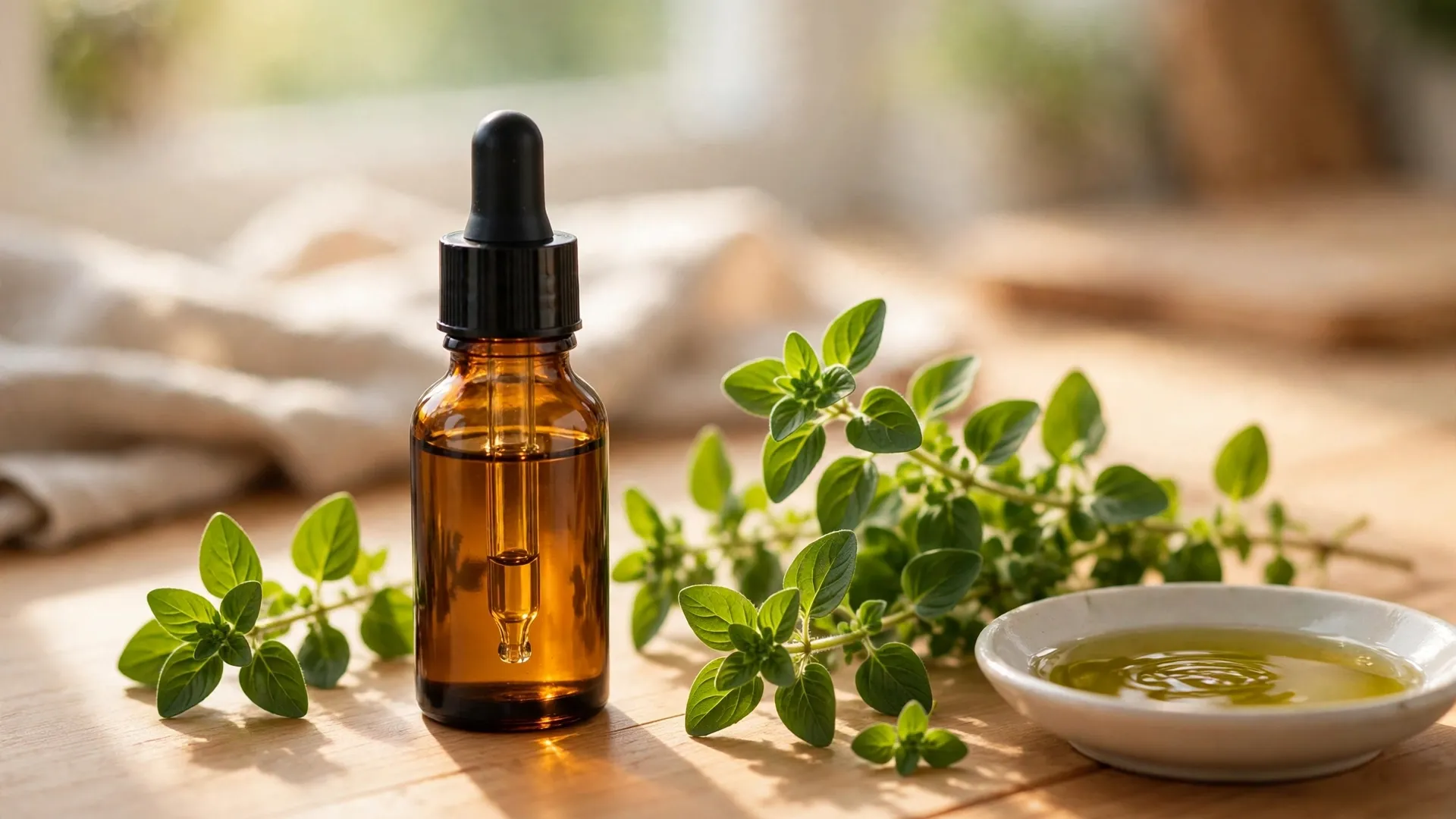
Oil of oregano is an extract of the herb Origanum vulgare, the same plant used as a cooking spice across the Mediterranean. The oil is usually made by steam distilling the leaves and flowers, which pulls out the strong smelling volatile compounds. The result is a dark, sharp tasting liquid that is far more concentrated than the dried herb you sprinkle on pizza.
People have used oregano in folk medicine for centuries, with one source putting that history at about 2,500 years. Traditional uses covered coughs, stomach upset, skin problems, and infections. Today the oil is sold as capsules, liquid extracts, and essential oil, marketed for immune support, gut health, skin care, and fighting germs. None of those uses is proven in people, and supplements are not tested for safety and effectiveness the way medicines are.
The name also covers different products. Some bottles hold oregano oil diluted in olive oil for oral use. Others hold pure oregano essential oil, meant for scent only and never to be swallowed undiluted. The label matters more than the brand name, and a later section explains how to tell them apart.
What Is in Oil of Oregano?
The power of oil of oregano comes from its chemistry, not from one magic ingredient. Oregano leaves contain more than 60 identified compounds, including polyphenols, flavonoids, and volatile oils. Two of them get most of the attention.
Carvacrol is the main active compound, behind most of the antibacterial effects seen in lab studies. Thymol is the second key compound, best known for antifungal activity, including against Candida species. Together, they give the oil its sharp smell and its strong effect on microbes in a test tube. Other compounds, including rosmarinic acid, ursolic acid, and triterpenes, also have antioxidant activity in lab settings.
The exact mix changes with the plant variety, where it grew, and how the oil was extracted. Wild Mediterranean oregano, often sold as Origanum vulgare subsp. hirtum, tends to carry more carvacrol than common garden oregano. That variation is why results differ from bottle to bottle, and why a label that states the carvacrol content is more useful than one that does not.
As a food, plain oregano is modestly nutritious: one teaspoon of dried leaves holds about 2.65 calories and 0.42 grams of fiber, and it is a good source of iron and an excellent source of vitamin K. Those nutrients come from the herb itself, not from the concentrated oil.
What Are the Possible Benefits of Oil of Oregano?
Here is the honest summary first: the benefits below are possible, not proven. Lab and animal studies look promising, human studies are small or missing, and no benefit is strong enough to replace standard care.
Antibacterial effects. This is the best studied property of the oil, and it is also the most misunderstood. In lab tests, carvacrol and thymol can slow or kill common bacteria, including Staphylococcus aureus, Escherichia coli, and Salmonella species. In one comparison of essential oils, oregano oil was the strongest at stopping bacterial growth, even against antibiotic resistant strains. Still, killing bacteria in a dish is very different from curing an infection in a person, and no human trial has shown that oil of oregano cures a bacterial infection.
Antifungal effects. Thymol works against fungi in the lab, including Candida, the yeast behind oral thrush, athlete’s foot, and vaginal yeast infections. Early research on oregano oil vapor for yeast infections looks interesting, but human trials are small and early. It is not a proven treatment, and a stubborn or spreading fungal infection needs a clinician, not a home remedy.
Antioxidant effects. Carvacrol, thymol, and the other phenols in the oil can neutralize free radicals in lab tests. Antioxidants protect cells from oxidative stress, which is linked to long term health problems. Eating antioxidant rich foods, including oregano as a spice, is a sound habit. Swallowing concentrated oil for its antioxidants is a different choice, and there is no human evidence that it lowers disease risk.
Digestive comfort. The oil is often used for bloating, cramps, and general gut discomfort. Some lab work suggests carvacrol can act against bacteria linked to digestive upset, and one small study looked at it for small intestinal bacterial overgrowth, where colon bacteria overpopulate the small intestine. The evidence is early, and the oil itself can irritate the stomach, so it can make digestion worse as easily as better.
Cholesterol support. One small study gives this claim its only human numbers: 48 people with mildly high cholesterol, of whom the 32 who took oregano extract after each meal ended with lower LDL cholesterol and higher HDL cholesterol than the 16 who made lifestyle changes alone. That is a real result, but it comes from one small, short study, and it is not enough to recommend the oil for cholesterol.
Colds and breathing. The oil is often sold for colds, coughs, and sore throats. One small study found that people with upper respiratory viruses who used a spray containing oregano oil and other herbs felt better about 20 minutes later, a modest, short term finding, not proof of a cure. The National Center for Complementary and Integrative Health states plainly that there is no strong evidence that oregano oil prevents or treats colds, and its NCCIH review of cold remedies reaches the same conclusion for garlic and eucalyptus oil.
Skin and wound care. Because of its antibacterial and anti-inflammatory action in the lab, the diluted oil is sometimes applied to minor skin problems such as acne, athlete’s foot, and small wounds. One animal study found that it reduced skin inflammation. Human evidence is thin, and the oil can burn or irritate skin if it is not diluted well, so any skin use needs a patch test first.

Other claims with weak evidence. Sellers also link the oil to weight loss, menstrual regulation, parasite treatment, and even cancer prevention, based on animal work, one small parasite study, and lab studies on human cancer cells in a dish. None of these is proven in people.
Oil of Oregano vs Oregano Essential Oil vs Fresh Oregano
Confusion between these three products causes most of the safety problems with the oil. They share a plant, but they are not the same thing, and they are not interchangeable.
| Product | What it is | Typical use | Safety note |
|---|---|---|---|
| Oil of oregano (supplement) | Oregano extract, often diluted in olive oil | Capsules or drops, taken by mouth | Follow the label, talk to a clinician first |
| Oregano essential oil | Highly concentrated steam distilled oil | Aromatherapy, diffusers, diluted skin use only | Never swallow undiluted, never apply neat to skin |
| Fresh or dried oregano | The whole herb, as food | Cooking, teas | Safe in normal food amounts for most people |
The key rule is simple: essential oil is not food. It is far stronger than the supplement form, and swallowing it or putting it on skin undiluted can cause burns, stomach upset, and allergic reactions. If a bottle says “essential oil” and “for aromatic use only,” treat it as a scent product, not a supplement.
How Do People Use Oil of Oregano?
The oil is sold in several forms, and each one is used differently. Knowing the forms helps you avoid the most common mistakes, especially confusing the essential oil with the oral supplement.
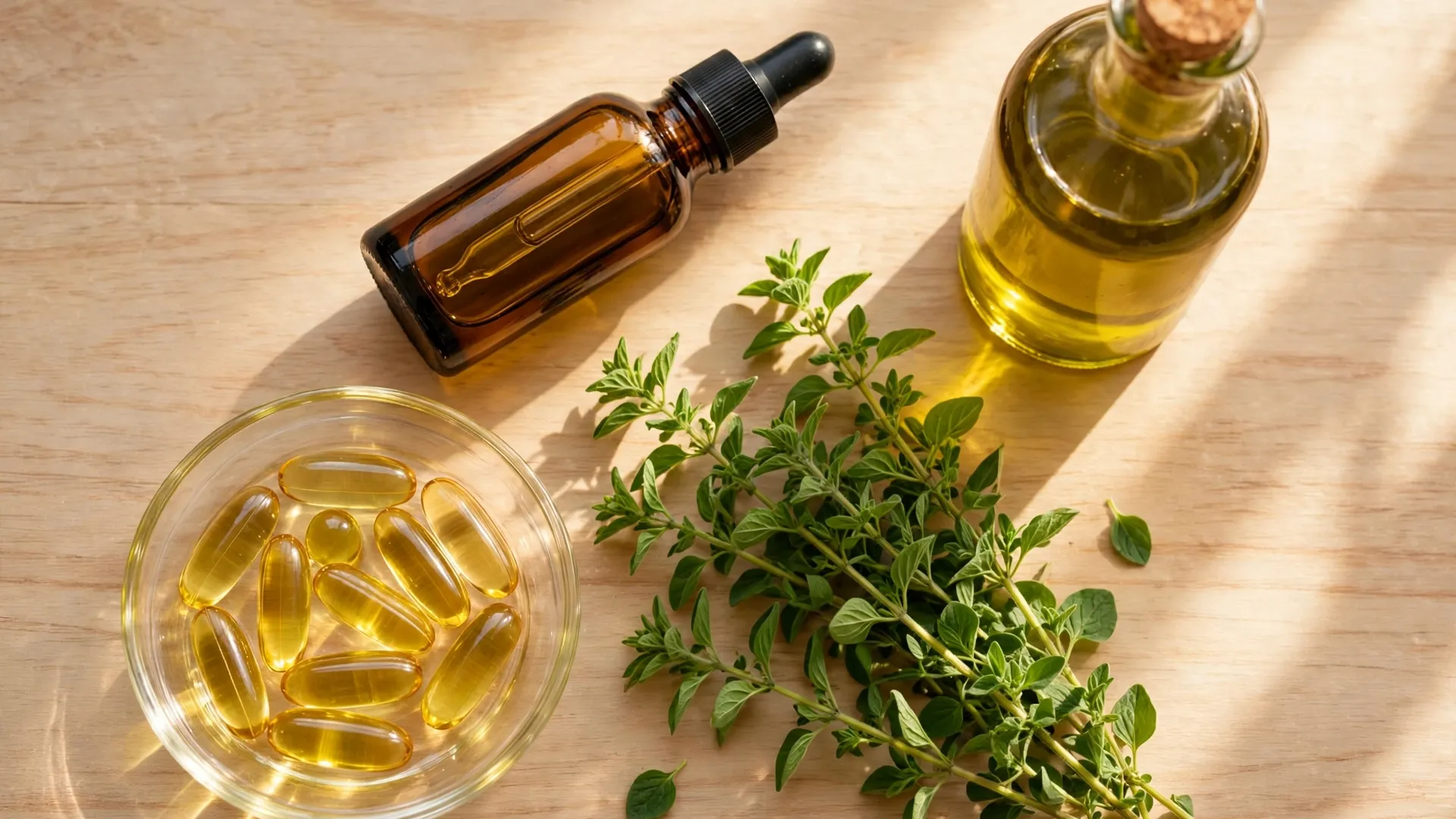
Capsules are the most common oral form, holding a measured amount of oil, usually diluted in a carrier oil, inside a soft gel. Liquid extracts are taken by mouth as drops, often mixed into water or juice because the taste is very strong. Tinctures hold the active compounds in alcohol and are also taken by mouth in drops. Sprays are inhaled or sprayed into the mouth for colds and sore throats. For skin use, a few drops of oil are mixed into a carrier oil such as coconut or olive oil and applied to a small area.
There is no standard dose for the oil, because no authority has set one and supplement quality varies widely. If you decide to try it, follow the label on the product you bought, use the smallest amount, and talk to a clinician or pharmacist first, especially if you take other medicines.
Use this short checklist before you start:
- Check the form. Make sure the bottle is a supplement for oral use, not an essential oil.
- Patch test skin use. Apply the diluted oil to a small area first and wait a day.
- Dilute every time. Never put undiluted oil on skin, and keep skin products at or below a 1 percent concentration.
- Keep it short. Do not take it daily for weeks without a break or a clinician’s advice.
- Tell your clinician. Mention it alongside every medicine and supplement you take.
- Stop if something feels wrong. Nausea, stomach pain, rash, or trouble breathing are reasons to stop and seek care.
What Are the Side Effects of Oil of Oregano?
The oil is powerful, and powerful plant extracts have side effects. Most are mild, but some are serious enough to matter, especially in large amounts or over long periods.
Mild side effects are the most common: stomach upset, nausea, vomiting, diarrhea, heartburn, constipation, dizziness, headache, fatigue, muscle pain, and excessive salivation. Large amounts can irritate the stomach and the mucous membranes of the mouth and throat. Some people also notice a bitter taste that lingers, and skin use can cause redness, burning, or a rash.
Allergic reactions are possible, especially for people allergic to plants in the mint family, such as basil, mint, lavender, marjoram, sage, hyssop, or thyme. A reaction can show up as a rash, itching, swelling, or trouble breathing. Stop using the oil and seek medical help if any of these appear.
Bleeding risk is the side effect that surprises most people. Oregano can slow blood clotting, so it may raise the risk of bleeding, especially in people who take blood thinning medicines or who have a bleeding disorder. MedlinePlus advises stopping oregano in medicinal amounts at least two weeks before surgery, and anyone on a blood thinner should check with a clinician before using the oil.
Blood sugar is another concern. Oregano may lower blood sugar, which can push sugar too low in people who take diabetes medicines. Diuretics, the water pills used for blood pressure, can also interact, since oregano itself has mild diuretic effects. Lithium is a third interaction, because oregano may change how the body handles it.
In very large doses, the oil can be toxic. MedlinePlus notes that its safety in large amounts is not known, and high doses have caused serious harm. Treat it like a medicine, not like a food, and respect the amount on the label.
Who Should Avoid Oil of Oregano?
Some people should not use the oil at all, or only after a clinician says it is safe.
Pregnant or breastfeeding. Oregano in medicinal amounts is possibly unsafe in pregnancy: MedlinePlus warns that larger than food amounts might cause miscarriage, and a National Library of Medicine review notes that oregano in supplement doses can act as an abortifacient. It should not be used in pregnancy or by women of childbearing age who are not using effective contraception. Breastfeeding safety is also unproven, while food amounts in cooking are generally considered fine.
People with bleeding disorders or upcoming surgery. Because oregano slows clotting, anyone with a bleeding disorder or anyone scheduled for surgery should avoid medicinal amounts, and stop at least two weeks before a planned procedure.
People on blood thinners, diabetes medicines, lithium, or diuretics. Each of these medicines can interact with the oil: blood thinners plus oregano raise bleeding risk, diabetes medicines plus oregano can push blood sugar too low, and lithium and diuretics have their own interaction concerns. A pharmacist can check your medicines in a minute, so ask before you buy.
People with mint family allergies. If basil, mint, lavender, sage, or marjoram gives you a reaction, assume oregano may too.
Children. There is no established safe use for children, and the concentrated oil is too strong for small bodies. Do not give it to a child without a pediatrician’s advice.
How to Read an Oil of Oregano Label: A Quick Checklist
This is where buyers actually get hurt: supplement labels vary wildly, and the FDA does not test these products before they reach the shelves. A good label answers five questions before you pay.
- Does it name the plant? Look for Origanum vulgare, ideally with the subspecies, such as subsp. hirtum for wild Mediterranean oregano.
- Does it state the carvacrol content? A useful label gives a percentage or a milligram amount of carvacrol, often 60 to 80 percent for strong oils. No number means no way to compare products.
- Is it a supplement or an essential oil? Oral supplements say so and give directions for taking them. Essential oils say “for aromatic use” and are not meant to be swallowed.
- What is the carrier oil? Most oral products dilute the extract in olive oil. The carrier should be named, and it should be a food grade oil you recognize.
- Is there third party testing? Look for a seal or a batch test from an independent lab.
If a product promises to cure infections, boost immunity, or replace antibiotics, treat that as a warning sign, not a selling point.
Oil of Oregano: Myths vs Facts
| Claim | What the evidence says |
|---|---|
| Oil of oregano cures colds and flu | No strong human evidence. Lab studies show antimicrobial action, but the NCCIH finds no proof it prevents or treats colds in people. |
| Oil of oregano is a natural antibiotic | It kills bacteria in lab tests, including some resistant strains, but no human trial shows it cures a bacterial infection. |
| Oil of oregano boosts immunity | There is no direct human evidence that it changes immune function. Sleep, food, movement, and stress management do far more. |
| Oil of oregano is safe because it is natural | It can irritate skin and stomach, raise bleeding risk, lower blood sugar, and harm a pregnancy in medicinal amounts. Natural does not mean harmless. |
| You can take it every day without a break | There is no established safe daily use. Short, limited use with breaks is the cautious approach, and a clinician should be involved. |
| Oregano essential oil and oil of oregano are the same | They are not. Essential oil is far more concentrated and is not meant to be swallowed or applied undiluted. |
Frequently Asked Questions About Oil of Oregano
What is oregano oil good for?
The oil is most often used for its possible antibacterial, antifungal, and antioxidant effects, and for digestive comfort and skin care. The evidence comes mainly from lab and animal studies, and MedlinePlus rates it as insufficient for every claimed use.
Can you take oregano oil every day?
Daily use is not established as safe. The oil is potent, and long daily use raises the risk of stomach upset, bleeding problems, and interactions with medicines. Many clinicians advise short, limited use only, so talk to a clinician first if you want to use it regularly.
Is oregano oil safe for skin?
It can be, but only when it is properly diluted. Skin products should stay at or below a 1 percent concentration, and you should patch test first. Undiluted oil can burn, irritate, or cause an allergic rash. Never use the pure essential oil directly on skin.
Does oregano oil help with colds?
There is no strong evidence that it prevents or treats colds. One small study found that a spray with oregano oil and other herbs eased symptoms for about 20 minutes. The NCCIH states that no strong evidence supports the oil for colds.
Who should not take oregano oil?
Pregnant or breastfeeding women should avoid it in medicinal amounts, as should people with bleeding disorders, people taking blood thinners, diabetes medicines, lithium, or diuretics, people with mint family allergies, and anyone scheduled for surgery within two weeks. Children should not use it without a pediatrician’s advice.
Conclusion
The oil is a strong plant extract with real antimicrobial chemistry and a long folk history, but its human benefits are still unproven. It may have a place in small, careful, short term use, especially as a diluted skin product or a cooking herb, yet it carries real risks for pregnancy, bleeding, blood sugar, and drug interactions. If you try it, choose a clearly labeled supplement, dilute it properly, keep the use short, and tell your clinician. For everyday health, the proven habits still win: good food, sleep, movement, and a clinician when you are ill. To explore more everyday health topics, visit our general health section, or read our guides to chamomile tea and Greek yogurt for gentler, food based options.
This article is general health information only, not medical advice. Oil of oregano is not proven to treat, prevent, or cure any illness. If you have an ongoing health concern, talk to a healthcare professional.