Freckles: What They Are, Why They Appear, and When to Get Checked
A freckle is a small, flat spot of extra color on the skin. It forms when skin cells make more melanin, the pigment that gives skin its color, in one tiny area. Most of these spots are harmless, and many people have them from childhood. Yet a new or changing spot can look like one while being something else, so it helps to know the difference.
This guide explains what these spots are, the two main types, what causes them, and how to tell one from a mole. It also covers sun protection, removal options, and the warning signs that mean a spot should be checked by a doctor.

Table of Contents
- What It Is
- Types
- What Causes Them
- Freckle vs Mole
- Are They Harmful?
- Removal and Lightening
- Sun Protection
- When to See a Doctor
- Frequently Asked Questions
- Conclusion
What Is a Freckle?
A freckle is a small patch of skin that holds more melanin than the skin around it. Melanin is the pigment that gives your skin, hair, and eyes their color. Skin cells called melanocytes make melanin, and it helps protect the skin from ultraviolet light from the sun.
Each spot is flat, not raised, and it is usually tan, red, light brown, or dark brown. Most are tiny, about 1 to 2 millimeters across, which is roughly the size of a pinhead. They show up most often on sun-exposed skin, such as the face, arms, chest, neck, and shoulders.
These marks are very common, and they are not a sign of poor health. People with fair skin and light or red hair get them most often, but they can appear on any skin tone. Many fade in winter and darken again in summer, because sun exposure drives melanin production up and down through the year.
The medical word for one of these spots is ephelis, and the plural is ephelides. Doctors use that term for the classic kind that appears in childhood. For a wider look at skin topics, see our skin and hair guides.
Types of Freckles
There are two main types, and they form in different ways. Knowing which type you have helps you understand whether it may fade, and how much sun care it needs.
Ephelides
Ephelides are the spots most people picture when they hear the word freckle. They are flat, small, and red, tan, or light brown in color. They often first appear when a child is 2 to 3 years old, usually after time in the sun.
This type is linked to genes, so the spots often run in families. They tend to increase during the teen years, and they may fade with age. They also fade in winter and darken in summer. Their borders are often soft and not sharply defined.
Solar Lentigines
Solar lentigines are larger, darker patches of skin, and they are also called age spots, liver spots, or sun spots. They usually appear in adults over 40, after many years of sun exposure. Unlike ephelides, a solar lentigo does not fade in winter, and it does not go away on its own.
A solar lentigo can be yellow, red, brown, or dark brown, and it may be larger than a classic freckle. It forms where the skin has had repeated ultraviolet exposure over time, such as the face, the backs of the hands, the forearms, the chest, and the shoulders.
Freckles on the Eyes
A freckle can also appear on the eye, and doctors call it a nevus. An iris freckle is a small dark spot on the colored part of the eye, while a choroidal nevus sits at the back of the eye. These eye spots are usually harmless, but an eye doctor should check any new spot during a routine eye exam. The Cleveland Clinic freckles guide explains the types in more detail.
What Causes a Freckle to Form?
A freckle forms when melanocytes make extra melanin in one small area of skin. Sunlight is the main trigger, but genes set the stage. Here are the main causes.
Genetics. These spots run in families. Several genes are linked to freckling, and the best known is MC1R, the gene also linked to red hair and fair skin. If your parents have them, you are more likely to have them too.
Sun exposure. Ultraviolet light from the sun tells melanocytes to make more melanin. In fair skin, that extra melanin often shows up as spots instead of an even tan. A sunburn in childhood can also bring out new ones.
Fair skin. People with light skin, blond hair, or red hair develop these marks more easily. Their melanocytes respond to sun by making spots of pigment rather than a smooth tan. Still, they can form on any skin tone after enough sun exposure.
Age and time in the sun. Solar lentigines build up slowly over decades. Each summer adds a little more ultraviolet damage, and the pigment collects in patches. That is why these spots are common after age 40.
Rare conditions. A rare inherited condition called xeroderma pigmentosum makes skin extremely sensitive to ultraviolet light, and it can cause heavy freckling from a young age. This condition is uncommon, and it needs specialist care.
Freckle vs Mole: How to Tell Them Apart
A freckle and a mole can look similar at first glance, but they are different. One is flat and made of extra pigment in the skin. A mole is a cluster of pigment cells, and it is often raised, darker, and rounder.
| Feature | Freckle | Mole |
|---|---|---|
| Shape | Flat, small, often irregular | Round or oval, often raised |
| Color | Tan, red, or light brown | Brown, dark brown, or black |
| Size | Usually 1 to 2 millimeters | Often 6 millimeters or larger, but can be small |
| Change with seasons | Fades in winter, darkens in summer | Stays the same through the year |
| Age it appears | Childhood for ephelides, after 40 for age spots | Childhood or adult life |
| Number | Often many, in sun-exposed areas | Usually fewer, can appear anywhere |
A single new dark spot that looks different from your other marks deserves attention. Dermatologists call this the ugly duckling sign, and it simply means one spot stands out from the rest. When in doubt, have a doctor look at it in person, because photos and online guides cannot replace an exam.
Are They Harmful?
A freckle is almost always harmless. These spots themselves do not turn into skin cancer, and they do not need treatment. Most people keep theirs for life without any problem.
Still, freckled skin tells you something useful. It shows that your skin reacts strongly to the sun. People who develop these spots easily also tend to burn more easily, and sunburns raise the lifetime risk of skin damage. So these marks are a good reminder to protect your skin every day.
They also need watching. A spot that changes in size, shape, or color is no longer a simple mark until a doctor checks it. That is why a quick skin self-check every few months is a sensible habit for anyone with many spots.
Can You Remove or Lighten a Freckle?
A freckle does not need to be removed, since it is harmless. Some people still want lighter marks for cosmetic reasons, and there are options. Evidence for creams is limited, so results vary, and no product can promise full removal.
Sunscreen first. Daily sunscreen stops these spots from getting darker, and it may let some fade over time. This is the simplest step, and it also protects the skin in general.
Skin-lightening creams. Over-the-counter creams with ingredients such as vitamin C, niacinamide, or azelaic acid may lighten pigment slowly over weeks. Stronger prescription creams exist, but they can irritate the skin, so they should only be used with a doctor’s guidance.
Laser and light treatments. A dermatologist can use laser or intense pulsed light to break up pigment in a spot. These treatments can work well on solar lentigines, but they carry a risk of irritation, scarring, or color change, and they are not right for every skin tone.
Chemical peels. A light chemical peel removes the top layer of skin, which may fade surface pigment. Peels should be done by a trained professional, and sun protection after the peel is essential.
What to avoid. Home remedies such as lemon juice, vinegar, or harsh scrubs can irritate the skin and make pigment worse. They are not proven to remove one of these spots safely. If you want a mark removed, talk to a dermatologist first, and ask about the risks for your skin type.
How to Protect Your Skin
Good sun care keeps these marks from darkening, and it protects the skin around them. These steps are simple, and they work for everyone, but they matter most for skin that marks easily.
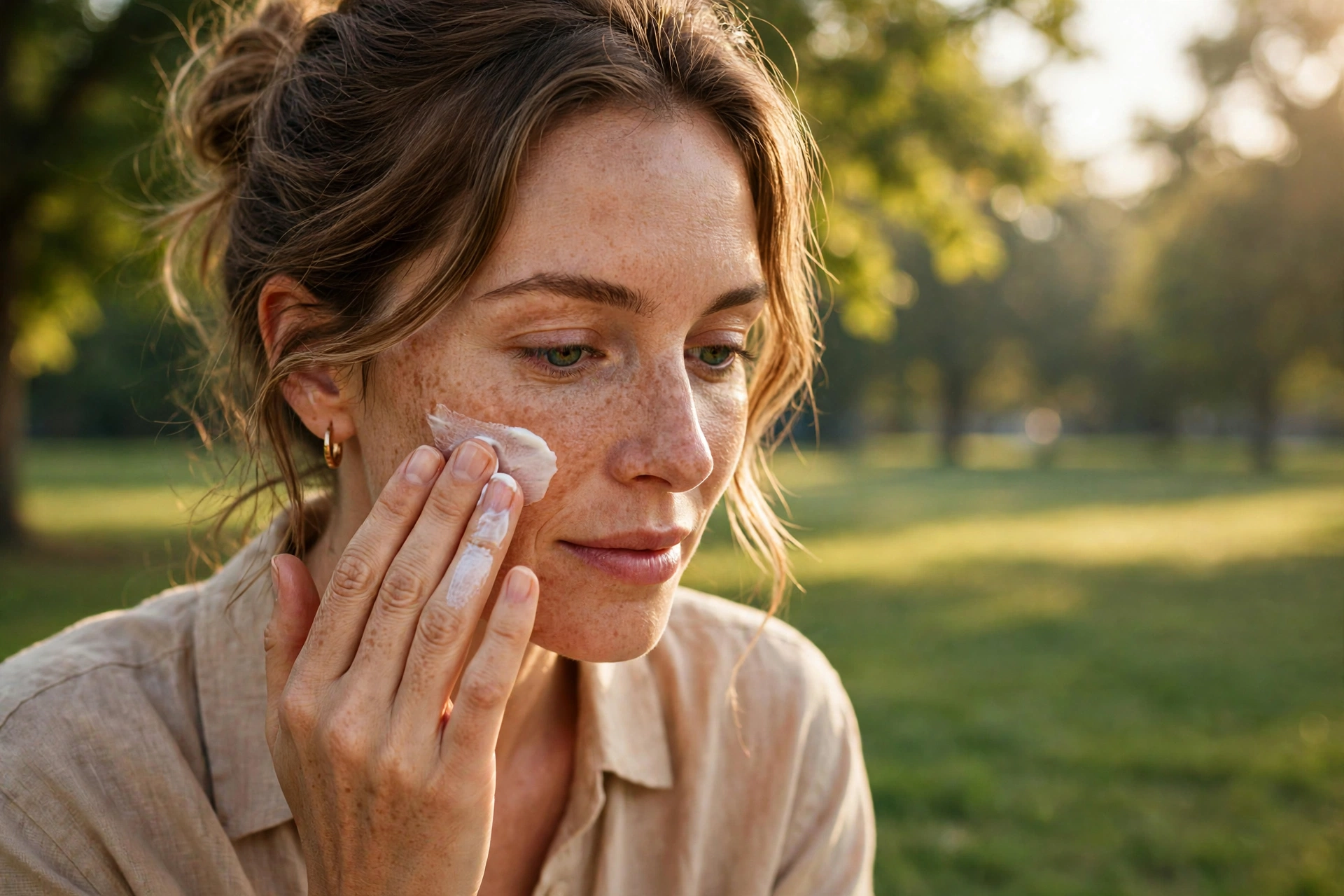
Wear sunscreen every day. Use a broad-spectrum sunscreen with SPF 30 or higher on your face and other exposed skin. Apply it 15 minutes before going outside, and reapply every two hours, or after swimming or sweating.
Cover up in strong sun. A wide-brimmed hat, sunglasses, and long sleeves block ultraviolet light better than sunscreen alone. Shade is your friend between late morning and mid-afternoon, when the sun is strongest.
Skip tanning beds. Tanning beds use ultraviolet light, and they can darken these spots and damage skin. They offer no health benefit, and dermatologists advise against them.
Check your skin regularly. Look at your marks every few months, and note any spot that changes. A phone photo taken in the same light can help you compare over time. For more skin care ideas, our microneedling guide covers another popular skin treatment, and our skincare brand guide looks at daily skin care routines.
When to See a Doctor About a Freckle
See a doctor or dermatologist promptly if a freckle or any other skin spot shows one of these warning signs:
- It changes in size, shape, or color
- Its border becomes jagged or poorly defined
- It is asymmetrical, so one half does not match the other
- It becomes raised above the skin
- It has dark areas or several colors in one spot
- It becomes sore, itchy, or starts to bleed
- It is larger than 6 millimeters, about the size of a pencil eraser
- It looks different from all your other freckles
A new spot that grows fast also needs a prompt check. Most changing spots turn out to be harmless, but only an in-person exam can tell for sure. The WebMD freckles guide lists the same warning signs, and it advises a doctor visit when any of them appear.
It is also wise to book a full skin check if you have many spots, a family history of skin cancer, or a past of frequent sunburns. A dermatologist can map your spots and tell you which ones to watch. Bring a short list of the spots that worry you, so nothing gets missed in the visit.
Frequently Asked Questions
What is a freckle?
A freckle is a small, flat spot of extra melanin on the skin. It is usually tan, red, or light brown, and it appears most often on sun-exposed skin. Most of these spots are harmless and need no treatment.
Why do I have so many?
Genes and sun exposure are the main reasons. If your family freckles easily, you are likely to as well. Sunlight then brings out more spots and makes the ones you have darker, especially in summer.
Can a freckle go away on its own?
Some of these spots fade with age or in winter, when sun exposure drops. Ephelides often fade over time, while solar lentigines, or age spots, usually stay. Sunscreen helps stop new ones from forming.
Are freckles a sign of skin cancer?
No, a freckle itself is not skin cancer, and these spots do not turn into cancer. But a changing spot can be a warning sign, so any mark that grows, changes color, itches, or bleeds should be checked by a doctor.
Can you remove a freckle permanently?
Laser treatment can remove or lighten one of these spots, but new ones can form later with sun exposure. Creams may lighten a mark slowly, yet results vary. Daily sunscreen is the best way to keep them from coming back or darkening.
Should I avoid the sun?
You do not need to avoid the sun completely, but you should protect your skin. Skin with these marks burns more easily, so sunscreen, hats, and shade matter. Short, protected time outdoors is fine for most people.
What is the difference between these spots and an age spot?
A freckle, or ephelis, appears in childhood and may fade, while an age spot, or solar lentigo, appears after 40 and stays. Both come from sun exposure, but age spots are larger, darker, and do not fade in winter.
Conclusion
A freckle is a small, harmless spot of extra pigment, shaped by your genes and the sun. Most of these spots need no treatment, just daily sun protection and a regular check for changes. Learn your own pattern of marks, protect your skin, and see a doctor promptly if any spot changes. For more everyday health reading, visit our HealthRader health guides.
This article is general health information only and is not medical advice. If a skin spot worries you or keeps changing, talk to a healthcare professional.