
Calcium Rich Foods for Women: A US-Focused Master Table With Dairy-Free Options
Quick Answer: If you are looking for calcium rich foods for women, start with the number that matters most: milligrams of calcium per serving. A cup of plain yogurt gives you about 415 mg, a cup of milk about 300 mg, and a 3 ounce serving of canned sardines with bones about 325 mg. Dairy-free eaters are not stuck either. Calcium-set tofu, fortified soy milk, fortified orange juice, collard greens, and canned salmon with bones all deliver 180 mg or more per serving. The general reference target in the United States is 1,000 mg per day for women ages 19 to 50 and 1,200 mg per day for women 51 and older. This guide ranks 22 foods by calcium per serving, explains absorption, and finishes with a sample day near 1,000 mg plus a dairy-free day plan. Figures here draw on USDA FoodData Central and the NIH Office of Dietary Supplements.
How Much Calcium Do Women Need Each Day?
Calcium is a mineral your body uses to build and maintain bones and teeth, and it also plays a role in muscle function and nerve signaling. Your body cannot make it, so the full amount has to come from food and drinks. That is why a simple list of “good sources” is not enough: you need to know how much each food actually contributes.
The general reference figures used in the United States come from the National Academies and are published by the NIH Office of Dietary Supplements. They are group reference figures, not personal targets.
| Group | General daily reference |
|---|---|
| Women ages 19 to 50 | 1,000 mg |
| Women ages 51 and older | 1,200 mg |
The jump at 51 is why guides quote two targets, and this article uses both: the sample day is built around 1,000 mg, with a note on reaching 1,200 mg. There is also a published upper limit for total daily calcium: 2,500 mg for adults 19 to 50 and 2,000 mg for adults 51 and older. Ordinary food days rarely come close, but more is not automatically better.
One more practical point: your body handles calcium better in smaller amounts spread across the day, ideally roughly 500 mg or less per meal.
Why Women Need More After 50
Bone loss speeds up after menopause, which is why the reference rises from 1,000 mg to 1,200 mg at 51. Food calcium plus vitamin D plus weight-bearing exercise is the core trio, and bone density screening is recommended from age 65. For the exercise part, see our Pilates workout at home and home workout without equipment guides.
The Master Table: 22 Calcium Rich Foods Ranked by Calcium per Serving
Here is the table most ranking articles do not give you in one place: dairy and dairy-free foods together, ranked by the same measure. Amounts are approximate, from USDA FoodData Central values and manufacturer labels. Fortified foods and tofu vary most by brand, so check the label.
| Rank | Food | Serving | Calcium (about) | Type |
|---|---|---|---|---|
| 1 | Plain yogurt | 1 cup (8 oz) | 415 mg | Dairy |
| 2 | Fortified orange juice | 1 cup | 350 mg | Fortified |
| 3 | Low-fat cottage cheese | 1/2 cup | 340 mg | Dairy |
| 4 | Part-skim ricotta | 1/2 cup | 335 mg | Dairy |
| 5 | Canned sardines with bones | 3 oz | 325 mg | Fish |
| 6 | Cheddar cheese | 1.5 oz | 305 mg | Dairy |
| 7 | Milk | 1 cup | 300 mg | Dairy |
| 8 | Fortified soy milk | 1 cup | 300 mg | Fortified |
| 9 | Collard greens, cooked | 1 cup | 270 mg | Greens |
| 10 | Calcium-set tofu | 1/2 cup | 250 mg | Soy |
| 11 | Mozzarella cheese | 1 oz | 200 mg | Dairy |
| 12 | Canned salmon with bones | 3 oz | 180 mg | Fish |
| 13 | Kale, cooked | 1 cup | 180 mg | Greens |
| 14 | Blackstrap molasses | 1 tbsp | 170 mg | Sweetener |
| 15 | White beans, cooked | 1 cup | 160 mg | Beans |
| 16 | Bok choy, cooked | 1 cup | 160 mg | Greens |
| 17 | Chia seeds | 2 tbsp | 150 mg | Seeds |
| 18 | Dried figs | 1/2 cup | 120 mg | Fruit |
| 19 | Edamame | 1 cup | 100 mg | Soy |
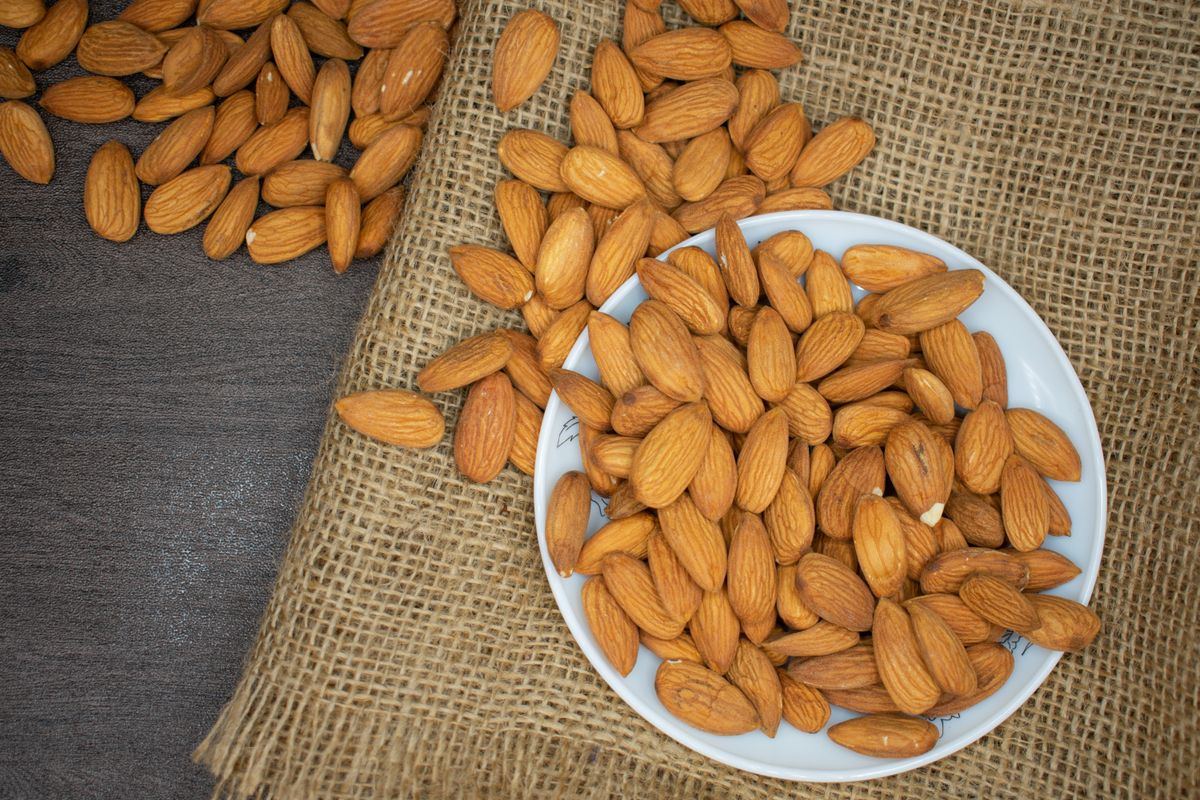
| 20 | Almonds | 1 oz (about 24 nuts) | 75 mg | Nuts |
| 21 | Tahini | 1 tbsp | 65 mg | Seeds |
| 22 | Broccoli, cooked | 1 cup | 60 mg | Vegetable |
Read the table like a budget. The top does the heavy lifting: one cup of yogurt alone covers more than 40 percent of the 1,000 mg reference. The bottom will not carry a day on its own, but almonds, tahini, and broccoli still help, because they add calcium to meals you already eat.
Dairy Foods That Carry the Most Calcium
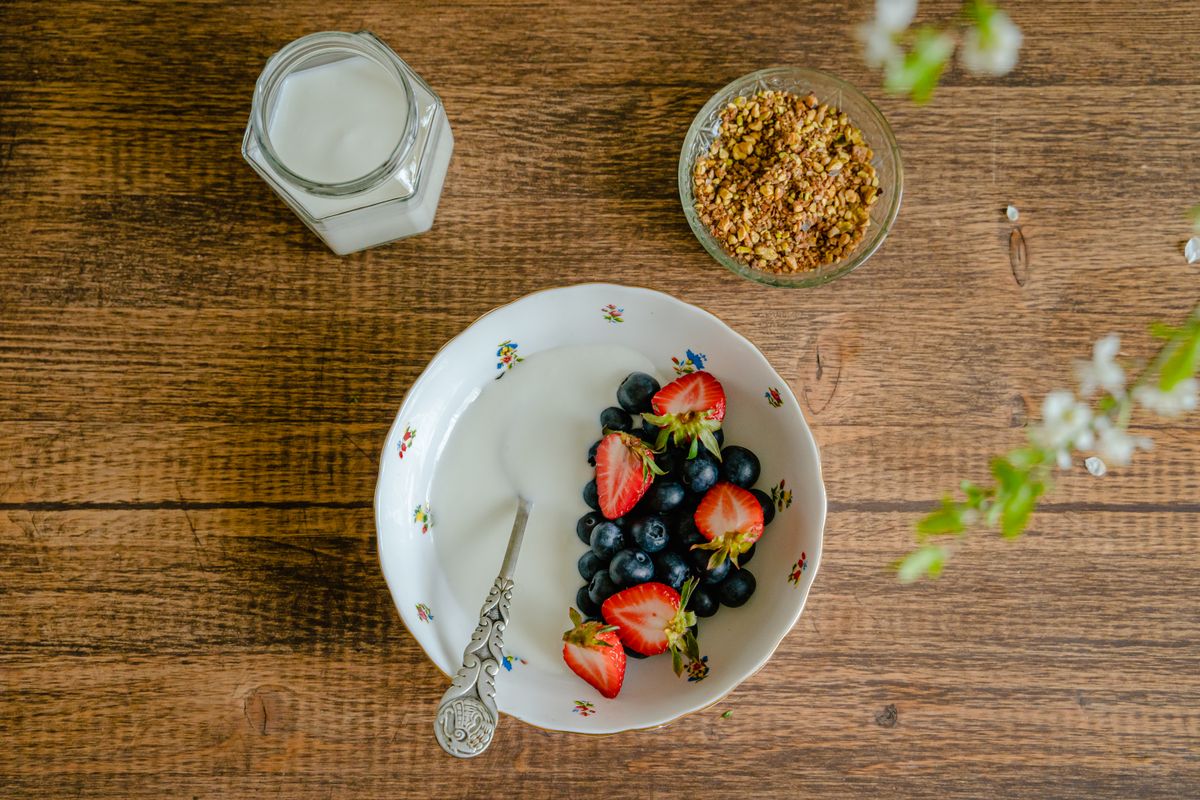
If you eat dairy, yogurt is the single strongest everyday choice. A cup of plain yogurt at about 415 mg beats milk. Greek yogurt has a number worth knowing: 1 cup of low-fat plain Greek yogurt has about 260 mg, compared with 415 mg for regular plain yogurt, because straining removes some whey. Plain nonfat or low fat yogurt is usually the better pick for calcium.
Milk is the steady workhorse at about 300 mg per cup, and it often shows up as an ingredient rather than a drink: in oatmeal, smoothies, sauces, and cereal. One cup over cereal in the morning is already nearly a third of the 1,000 mg reference.
Cheese is concentrated, which cuts both ways. An ounce and a half of cheddar gives you about 305 mg, and an ounce of mozzarella about 200 mg, but cheese also brings more calories and sodium per bite than milk or yogurt. Treat cheese as a flavor accent, not your main calcium strategy.
Dairy foods also pair well with protein. If protein is on your mind too, our guide to foods high in protein ranks protein sources the same way, by grams per serving.
Dairy-Free Calcium: The Foods That Actually Deliver
Dairy-free calcium works, but it takes one extra habit: reading labels. One cup of fortified soy milk typically gives you about 300 mg, roughly matching dairy milk, but unfortified plant milks give you almost nothing, sometimes as little as 20 mg per cup. Look for “calcium fortified” on the carton and around 300 mg or more per cup on the Nutrition Facts panel. The same rule applies to fortified orange juice, at about 350 mg per cup one of the strongest servings on this list.
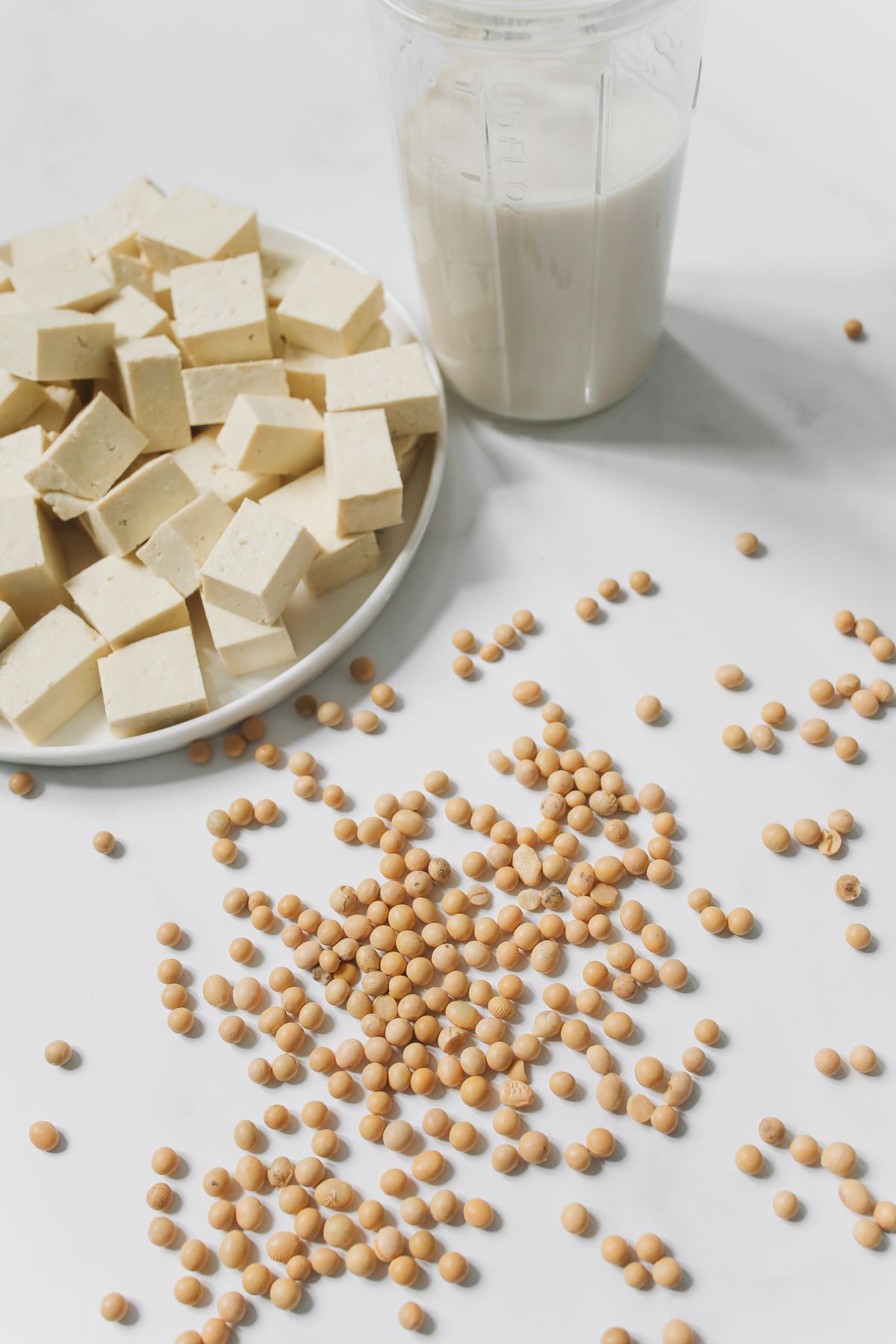
Tofu is the other label-dependent food. Tofu set with calcium sulfate gives you about 250 mg per half cup, but some firm brands go much higher, and tofu set with other coagulants gives you far less. Look for calcium sulfate in the ingredients. If it is not there, do not count that tofu toward your calcium total.
Then there are the foods that need no label at all. Canned sardines with bones are the strongest dairy-free whole food here at about 325 mg per 3 ounce serving, and the bones are the whole point: soft, edible, and where the calcium lives. Canned salmon with bones works the same way at about 180 mg per 3 ounces and is milder if sardines feel like a leap.
Greens and beans round out the dairy-free plate. White beans at about 160 mg per cup plus edamame at about 100 mg per cup add calcium to meals already on your table. None of this requires a special shopping trip, and a plan built on foods you already buy is a plan you will actually follow.
The Greens Trap: Why Spinach Looks Better on Paper
Here is the mistake in almost every short calcium list: ranking spinach as a top source. On paper, a cup of cooked spinach carries about 245 mg of calcium, which looks better than kale. In practice, spinach is high in oxalates, natural plant compounds that bind calcium and keep your body from absorbing most of it. In absorption studies, people absorbed only about 5 percent of spinach calcium, versus about 28 percent from milk, turning a 245 mg serving into roughly 12 mg your body can use.
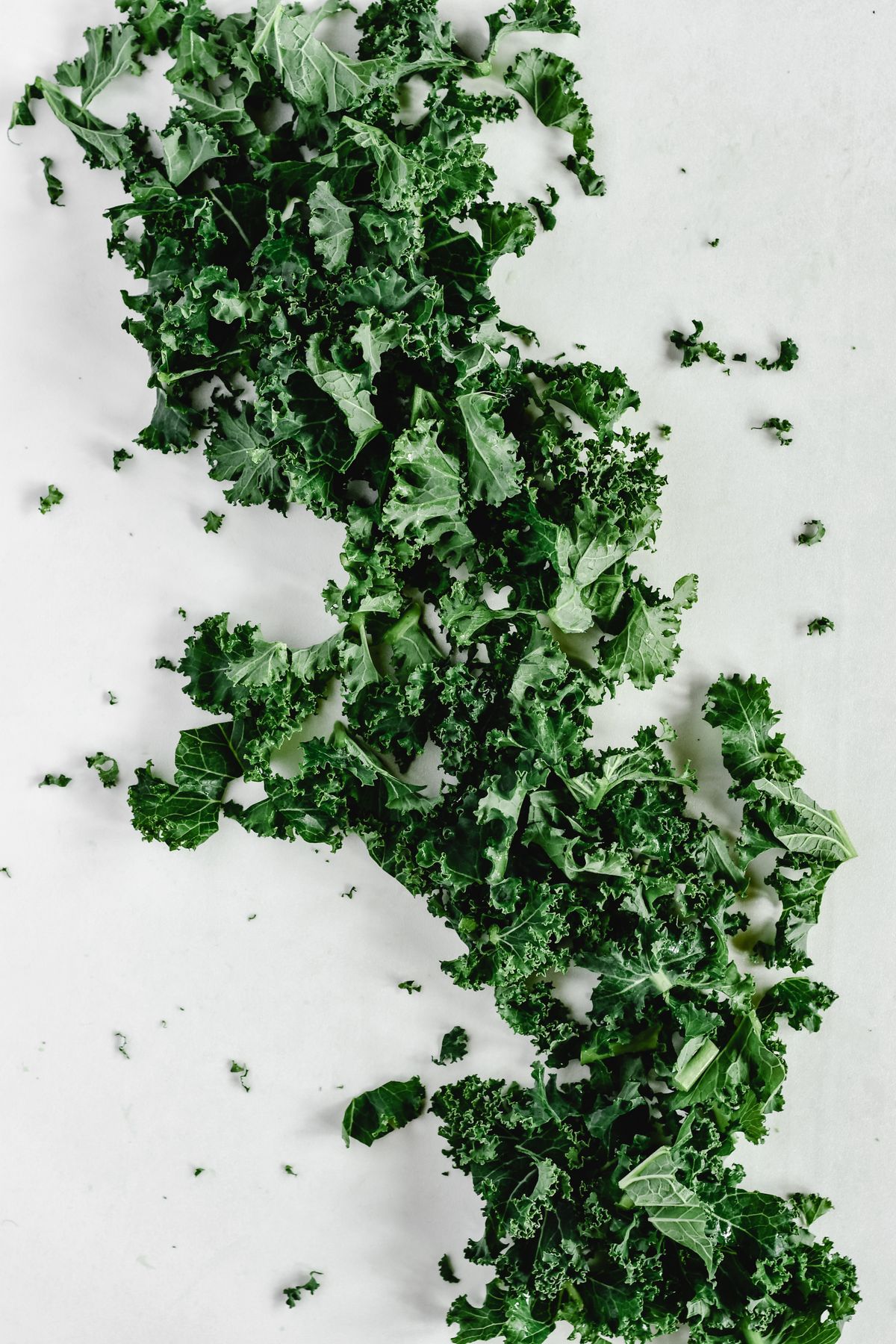
Kale tells the opposite story. A cup of cooked kale carries about 180 mg, less than spinach on paper, but its absorption rate in the same kind of study was about 41 percent, better than milk. That works out to roughly 72 mg usable calcium, about six times what the spinach serving delivers. Collard greens and bok choy behave the same way.
This does not make spinach a bad food, but it should not be the green you count on for calcium. Get your green calcium from kale, collards, bok choy, or broccoli instead. Cooking greens helps a little with oxalates.
Absorption: How to Get More Calcium From the Same Foods
A few serving habits raise what you absorb from the foods you already eat.
First, vitamin D is calcium’s working partner. Your intestines need vitamin D to move calcium into your bloodstream. General guidance puts absorption at roughly 30 to 40 percent of dietary calcium with adequate vitamin D, versus roughly 10 to 15 percent when it is low. For most adults, the reference is at least 600 IU a day (Harvard Health). Food sources include fatty fish like sardines and salmon, egg yolks, and fortified milk and plant milks.
Second, spread calcium across meals. Your body processes roughly 500 mg at a time most efficiently, so three meals with 300 mg each beat one meal with 900 mg. Milk or yogurt at breakfast, a tofu or bean dish at lunch, greens or cheese at dinner, and you are already spread out.
Third, cook your greens and soak your beans. Cooking reduces oxalates in greens, and soaking dried beans for several hours, then draining and cooking in fresh water, reduces phytates, another compound that can interfere with mineral absorption.
Fourth, keep the brakes in mind. Very high sodium intake increases calcium loss in urine, and large amounts of alcohol and caffeine can interfere with absorption. You do not need to give up coffee, but a day built on salty takeout and several strong coffees works against the foods you are counting on.
If you take thyroid medication or antibiotics, ask your pharmacist how far apart to keep them from calcium-rich foods and fortified drinks.
This article covers food only. If food alone is not covering your needs, that decision belongs with your clinician.
A Sample Day Near 1,000 mg
Here is a simple day built from the master table, adding up to about 1,085 mg.
| Meal | Food | Calcium (about) |
|---|---|---|
| Breakfast | 1 cup fortified soy milk in oatmeal or a smoothie | 300 mg |
| Breakfast | 1 oz almonds as a topping or snack | 75 mg |
| Lunch | 1/2 cup calcium-set tofu in a stir-fry | 250 mg |
| Lunch | 1 cup cooked bok choy alongside | 160 mg |
| Snack | 1/2 cup dried figs | 120 mg |
| Dinner | 1 cup cooked kale | 180 mg |
| Total | About 1,085 mg |
To reach the 1,200 mg reference for women 51 and older, add one more serving from the top of the table, for example a cup of milk (300 mg) or a cup of plain yogurt (415 mg).
If you eat dairy, swapping is easy. Trade the fortified soy milk for dairy milk and the tofu lunch for a yogurt-based meal, and the totals land in the same place.
A Full Dairy-Free Day Plan
If dairy is fully off your plate, here is a day that still clears 1,000 mg without a single dairy food, built on fortified drinks, calcium-set tofu, and low-oxalate greens.
| Meal | Food | Calcium (about) |
|---|---|---|
| Breakfast | 1 cup fortified orange juice | 350 mg |
| Lunch | 1/2 cup calcium-set tofu | 250 mg |
| Lunch | 1 cup cooked collard greens | 270 mg |
| Snack | 1 oz almonds | 75 mg |
| Dinner | 1 tbsp tahini drizzled over vegetables or grains | 65 mg |
| Total | About 1,010 mg |
Check the tofu label for calcium sulfate and the orange juice carton for fortification, because unfortified versions are far weaker. Swapping the dinner tahini for 3 ounces of canned sardines with bones jumps the day to about 1,270 mg, which also covers the 1,200 mg reference. Canned salmon with bones is a milder swap at dinner.
Calcium and iron compete for absorption, so if you’re working on both, keep your biggest calcium servings and your iron-rich meals at different times of day. Our guide to iron rich foods for women covers the iron side.
Shopping and Label Tips
A few label habits avoid most calcium mistakes.
For plant milks, the front of the carton matters less than the back. “Almond milk” or “oat milk” on the front tells you nothing about calcium. Turn the carton over: around 300 mg per cup, or about 25 to 30 percent of the Daily Value, matches dairy milk. Below 100 mg per cup, that carton is not a calcium food.
For tofu, read the ingredients, not the health claims. Calcium sulfate in the ingredient list marks calcium-set tofu. If the list shows nigari or magnesium chloride instead, that tofu will have far less calcium, even if the package looks identical.
For yogurt, plain beats flavored for calcium per cup, because flavored yogurts are often sold in smaller tubs. Compare the serving size on the label: a 5.3 ounce single-serve tub and an 8 ounce cup are not the same serving.
For cheese, harder cheeses generally pack more calcium per ounce, and Parmesan is among the strongest, but cheese labels also carry sodium, so a small amount for flavor is the right frame. For greens, fresh or frozen both work, and frozen kale and collards keep for weeks.
Frequently Asked Questions
How much calcium do women need per day?
The general reference figures in the United States are 1,000 mg per day for women ages 19 to 50 and 1,200 mg per day for women 51 and older, published by the NIH Office of Dietary Supplements. These are group reference figures, not personal targets, so treat them as planning numbers for meals.
What are the best calcium rich foods for women?
By milligrams per serving, the strongest everyday foods are plain yogurt (about 415 mg per cup), fortified orange juice (about 350 mg per cup), low-fat cottage cheese (about 340 mg per half cup), part-skim ricotta (about 335 mg per half cup), canned sardines with bones (about 325 mg per 3 ounces), cheddar cheese (about 305 mg per 1.5 ounces), milk (about 300 mg per cup), and fortified soy milk (about 300 mg per cup).
Can you get enough calcium without dairy?
Yes, with a little label reading. Fortified soy milk and fortified orange juice each give you about 300 to 350 mg per cup, calcium-set tofu about 250 mg per half cup, and sardines, collard greens, kale, and bok choy add more. The dairy-free day plan above reaches about 1,010 mg with ordinary groceries.
Does spinach count as a good source of calcium?
Spinach contains calcium, about 245 mg per cooked cup, but it is high in oxalates, which bind calcium and keep your body from absorbing most of it. Studies found people absorbed only about 5 percent of spinach calcium, versus about 41 percent from kale. Spinach is still nutritious, but it should not be the green you rely on for calcium.
Do you need vitamin D to absorb calcium?
Vitamin D helps your intestines absorb calcium, and absorption is much lower when vitamin D is low: roughly 10 to 15 percent versus roughly 30 to 40 percent with adequate vitamin D. Food sources include fatty fish like sardines and salmon, egg yolks, and fortified milk and plant milks.
What has more calcium than milk?
Several foods beat the 300 mg in a cup of milk: plain yogurt (about 415 mg per cup), fortified orange juice (about 350 mg per cup), canned sardines with bones (about 325 mg per 3 ounces), and cheddar (about 305 mg per 1.5 ounces). Collard greens (about 270 mg per cooked cup) and calcium-set tofu (about 250 mg per half cup) come close.
Is calcium-set tofu a good source of calcium?
Yes, when the label confirms it. Tofu set with calcium sulfate gives you about 250 mg per half cup, and some firm brands go higher. Tofu set with other coagulants can have far less, so check the ingredient list for calcium sulfate first.
How can I add more calcium to my diet without changing everything?
Add calcium to meals you already eat. Pour milk or fortified plant milk over cereal, stir yogurt into a smoothie, sprinkle cheese over pasta, toss beans into soup, and keep almonds or dried figs as a snack. Each move adds 60 to 400 mg without a new recipe.
Does coffee reduce calcium absorption?
Very high caffeine intake can interfere with calcium absorption. An ordinary cup or two alongside calcium foods is not the same as heavy intake all day. If you drink a lot of coffee, space it away from your most calcium-rich meal.
Should I spread calcium across meals instead of one big serving?
Yes. Your body processes calcium most efficiently in amounts of roughly 500 mg or less at a time, so three meals with 300 mg each beat one meal with 900 mg.
Do pregnant women need more calcium?
No, the adult RDA does not rise in pregnancy: it stays at 1,000 mg. Pregnant teens are the exception, at 1,300 mg. Both figures come from the NIH table.
Can eating calcium cause kidney stones?
Calcium from food is generally linked to lower stone risk, not higher. Supplements are a separate question, and that one belongs with your clinician.
What if I’m lactose intolerant?
Lactose-free milk has the same calcium as regular milk, and hard cheeses and yogurt are often better tolerated. The dairy-free day plan above also clears 1,000 mg without any dairy at all.
Sources
- NIH Office of Dietary Supplements, Calcium fact sheet for consumers: https://ods.od.nih.gov/factsheets/calcium-consumer/
- USDA FoodData Central, Food nutrient database: https://fdc.nal.usda.gov/
- MyHealthFinder, Guidance on getting enough calcium: https://odphp.health.gov/myhealthfinder/healthy-living/nutrition/get-enough-calcium
- MedlinePlus, Patient instructions on calcium: https://medlineplus.gov/ency/patientinstructions/000490.htm
- Harvard Health, Essential nutrients including vitamin D guidance: https://www.health.harvard.edu/blog/4-essential-nutrients-are-you-getting-enough-2021031622124