
Humoral Immunity: How Your Body’s Antibody Defense Works
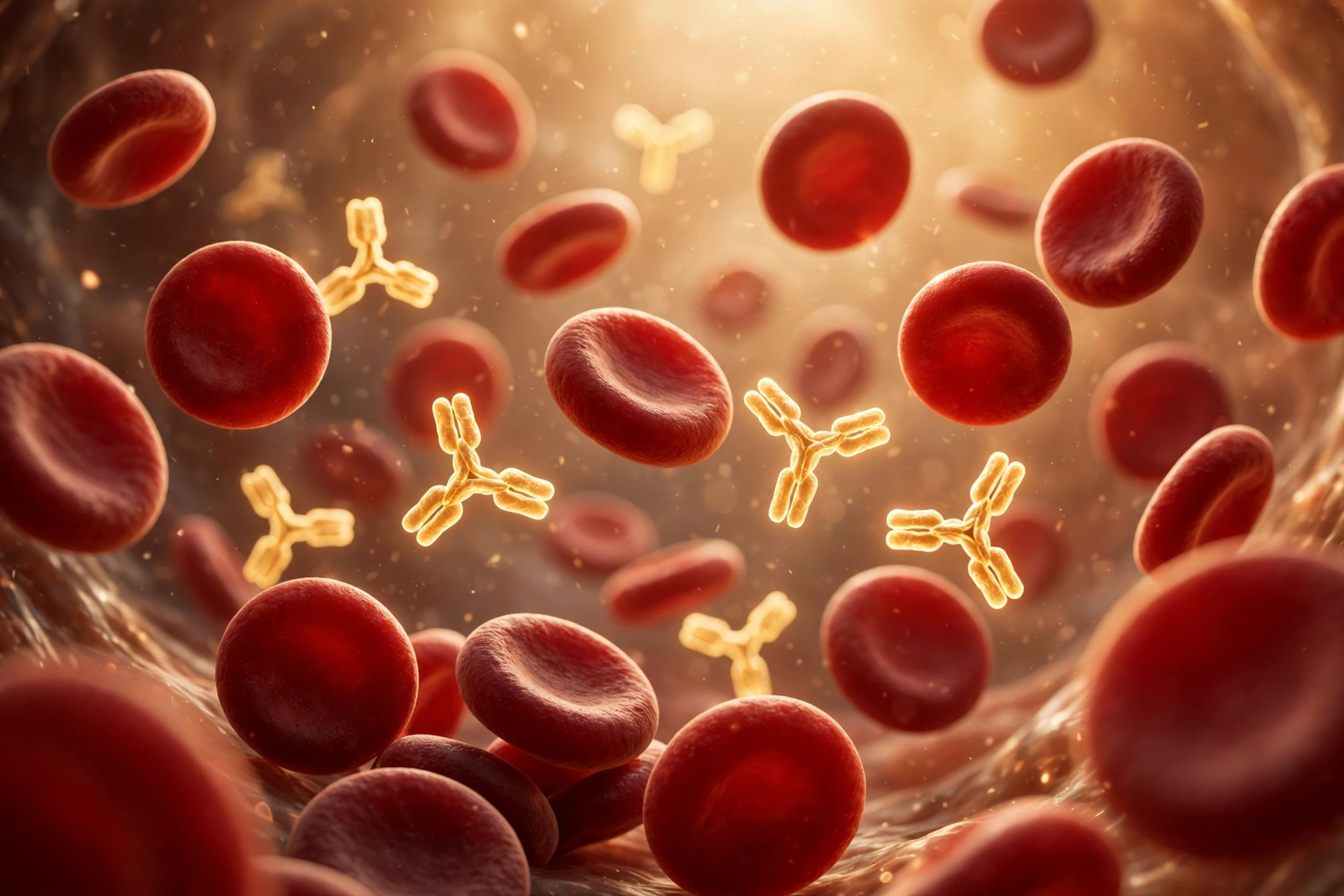
Every day, you breathe in thousands of microbes. Most of them never make you sick. The reason isn’t luck — it’s a silent army of proteins patrolling your bloodstream, built to recognize specific invaders and neutralize them on sight. These proteins are called antibodies, and the part of your immune system that makes them is called humoral immunity.
You’ve probably heard “humoral” only in a biology class and immediately forgotten it. But understanding it matters: humoral immunity is why vaccines protect you, why some people get allergies, and why babies are shielded in their first months of life. Here’s how it actually works — in plain language.
What Is Humoral Immunity?
Humoral immunity is the branch of your adaptive immune system that defends you with antibodies — also called immunoglobulins. The word “humoral” comes from the old medical term “humors,” meaning body fluids, because antibodies travel through your blood, lymph, and tissue fluids to hunt down threats.
It’s one of the two great arms of adaptive immunity. The other is cell-mediated immunity, where T cells directly attack infected or abnormal cells. They work as partners, not rivals: humoral immunity handles threats floating in your fluids — bacteria in the bloodstream, toxins, and viruses before they’ve slipped inside your cells — while cell-mediated immunity cleans up enemies that are already hiding inside cells.
So here’s the key picture: antibodies can’t chase a virus that’s already inside one of your cells. But they can intercept the same virus while it’s traveling between cells, tag bacteria for destruction, and mop up toxins before they do damage. That’s the job humoral immunity does best.
The Cells Behind It: B Cells
Antibodies don’t appear from nowhere. They’re manufactured by specialized white blood cells called B cells (the “B” originally stood for the bursa of Fabricius, where they were first discovered in birds; in humans they mature in your bone marrow).
Your body makes millions of different B cells, each one equipped with a slightly different surface receptor — essentially a unique molecular antenna. Between them, these antennas can recognize an enormous variety of foreign shapes, from flu viruses to bacterial toxins.
When a B cell’s receptor locks onto its matching target — called an antigen — the B cell wakes up and starts dividing rapidly. This cloned army then takes on two fates, and both matter enormously:
Plasma Cells: The Antibody Factories
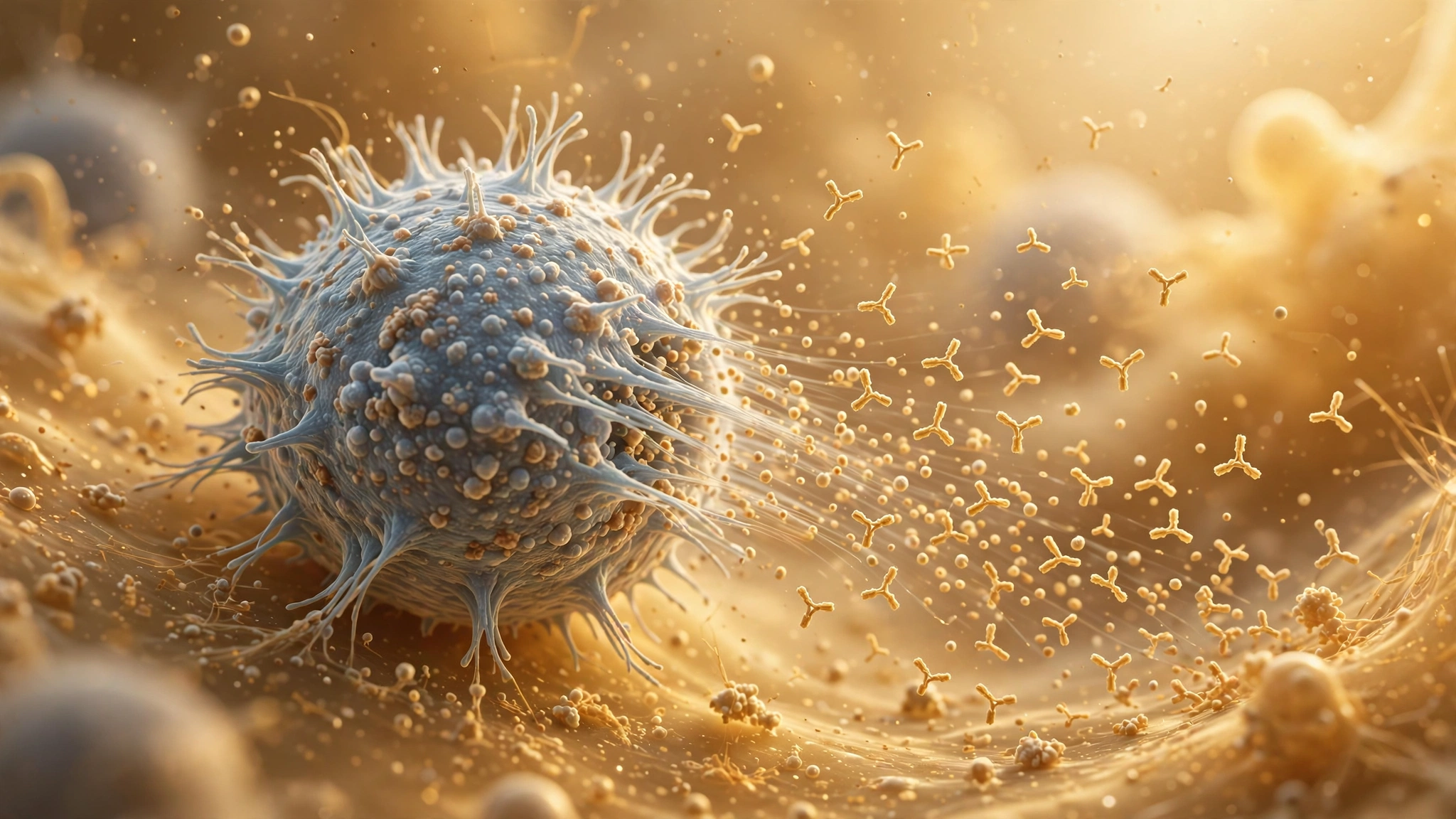
Some of the activated B cells transform into plasma cells. These are the factories. A single plasma cell can pump out thousands of antibody molecules every second, and the antibodies they release are exact copies of the receptor that recognized the original invader.
These antibodies flood into your blood and lymph, where they patrol for the specific antigen that triggered their production. This is the effector phase — the actual attack — of humoral immunity.
Memory B Cells: The Long-Term Watch
Other activated B cells become memory B cells, which stay in your body for years or even decades after the threat is gone. They don’t fight right now; they watch and wait.
If the same antigen ever shows up again, memory B cells trigger a response that’s faster, larger, and more precise than the first one. This is the whole principle behind vaccines: introduce a harmless version of the antigen so your body builds memory B cells without you having to suffer the actual disease. When the real thing arrives later, your humoral response is already warmed up.
The Five Types of Antibodies
Not all antibodies are identical. They come in five classes, each shaped for a different job. Scientists call them Ig (for immunoglobulin) followed by a letter:
- IgM — the first responder. This is the first antibody made during a new infection. It’s large and especially good at calling in the complement system, a set of blood proteins that helps destroy pathogens.
- IgG — the workhorse. The most abundant antibody in your blood. It neutralizes toxins, tags germs for destruction, and — uniquely — can cross the placenta, giving newborns their mother’s temporary protection.
- IgA — the mucosal guard. Found in your saliva, tears, breast milk, and the lining of your gut and airways. It’s the first line of defense where germs typically try to enter.
- IgE — the allergy antibody. It drives defenses against parasites, but it also triggers allergic reactions — when IgE overreacts to pollen or peanuts, you get sneezing, itching, or worse.
- IgD — the quiet one. Mostly found on the surface of immature B cells, where it helps them recognize antigens. It circulates in very small amounts.
Your B cells start out making IgM and IgD. After activation — often with help from T helper cells — they can “class-switch” to making IgG, IgA, or IgE, tailoring the antibody to the situation. Inside lymph nodes, they also fine-tune their aim through a process called affinity maturation, producing antibodies that grip their target ever more tightly.
How Antibodies Actually Defeat Invaders
Antibodies rarely kill a pathogen directly. Instead, they work through four clever mechanisms:
1. Neutralization. An antibody can block a virus or toxin from attaching to your cells — like putting a cap on a key so it no longer fits the lock. The threat is still there, but it can’t do damage.
2. Opsonization. This is a fancy word for a simple idea: antibodies coat the pathogen, marking it for destruction. Immune cells called phagocytes (the “eaters” of the immune system) have receptors that grab the coated germ and swallow it whole.
3. Complement activation. Certain antibodies trigger the complement cascade — a chain reaction of blood proteins that punches holes in the membranes of bacteria, bursting them open. Complement also releases chemical alarms that summon more immune cells to the area.
4. Antibody-dependent cellular cytotoxicity (ADCC). Natural killer cells recognize antibodies bound to infected cells and destroy those cells, combining humoral tagging with cellular firepower.
Notice the pattern: antibodies are coordinators and taggers as much as fighters. They identify, mark, and amplify the rest of the immune system.
Humoral vs. Cell-Mediated Immunity: A Clear Comparison
These two branches confuse a lot of people, so here’s the cleanest way to keep them apart:
- Humoral immunity = B cells + antibodies. Acts mainly in body fluids. Best against extracellular threats: bacteria in blood, toxins, and free virus particles.
- Cell-mediated immunity = T cells. Acts on cells directly. Best against infected cells, cancer cells, and intracellular pathogens that antibodies can’t reach.
A quick test: if antibodies are the main weapon, it’s humoral. If T cells are doing the killing or directing the attack, it’s cell-mediated. In real infections, both fire at once — for example, in a flu infection, antibodies intercept free virus particles while killer T cells destroy lung cells the virus has already invaded.
There’s one important nuance: most strong antibody responses actually need help from CD4+ helper T cells. So the two arms aren’t independent — helper T cells signal B cells to activate fully, switch antibody classes, and form good memory. Weak helper T cell function (as in untreated HIV) means weak humoral immunity too.
Where Humoral Immunity Shows Up in Your Life
This isn’t abstract biology. Humoral immunity touches your everyday health constantly:
Vaccines. Nearly every vaccine you’ve received works largely by training humoral immunity. The COVID, flu, tetanus, and measles vaccines all aim to build memory B cells and high-quality antibodies so your body is ready before the real pathogen arrives. Booster shots exist because antibody levels and memory naturally fade over time — the booster re-arms the response.
Newborn protection. Before a baby’s own immune system matures, maternal IgG antibodies cross the placenta and provide several months of borrowed protection. Breast milk adds IgA, guarding the infant’s gut and airways. This is why the first vaccines are scheduled at a few months of age, not at birth — maternal antibodies can interfere with the baby’s own response early on.
Allergies. When humoral immunity misfires, the same machinery causes trouble. IgE antibodies made against harmless things like pollen or food proteins trigger mast cells to release histamine — hence the sneezing, itching, and swelling of allergies.
Recovery from infections. When you catch a cold and recover, the antibodies your plasma cells produced stay elevated for weeks to months, which is one reason you rarely catch the exact same cold twice in a row.

Can You Strengthen Your Humoral Immunity?
No pill or superfood will “boost” your antibodies beyond their healthy function, and any product claiming to do so deserves skepticism. But your B cells and antibodies work best when the basics are in place:
- Stay current on vaccinations. Vaccines are the single most effective, evidence-based way to build targeted humoral protection. Talk to your doctor about which ones you need.
- Sleep well. Research consistently links short sleep to weaker antibody responses — in one well-known study, people who slept less than six hours produced fewer antibodies after a flu vaccine than those who slept more.
- Eat a balanced diet. B cells need protein, zinc, vitamin A, vitamin D, and other micronutrients to divide and make antibodies. A varied diet with enough protein covers most of this; deficiency — not “extra” supplements — is the real enemy.
- Manage chronic stress. Prolonged stress hormones can suppress antibody production and immune memory. Regular exercise, time outdoors, and genuine rest all help.
- Avoid smoking and limit alcohol. Both measurably impair B cell function and antibody quality.
When Humoral Immunity Goes Wrong
The same system that protects you can cause disease when it targets the wrong thing:
- Autoimmune diseases like lupus and rheumatoid arthritis involve antibodies attacking your own tissues — autoantibodies.
- Allergies and asthma are IgE responses to harmless substances.
- Primary immunodeficiencies, such as common variable immunodeficiency, mean the body can’t make enough antibodies, leaving people prone to repeated bacterial infections.
These conditions are diagnosed with antibody blood tests and managed by doctors — not by internet remedies.
The Bottom Line
Humoral immunity is your body’s antibody defense — B cells recognizing invaders, plasma cells flooding your fluids with tailored antibodies, and memory B cells keeping watch for the next encounter. It excels against threats in your blood and tissue fluids, powers your vaccines, and protects newborns before their own defenses mature.
You can’t supercharge it, but you can support it: sleep, nutrition, exercise, stress management, and staying up to date on vaccines are the real, evidence-backed levers. And now, the next time someone mentions “antibodies” or “humoral immunity,” you’ll know exactly what’s going on inside you — a remarkably elegant system, working around the clock, that you’ve never had to think about until now.
This article is for general information only and isn’t medical advice. If you have concerns about your immune health, allergies, or vaccinations, talk to your healthcare provider.