Lunch Ideas for Kids: Easy, Healthy Lunchbox Plans for School Days
Quick answer: A good school lunch has four parts: a protein, a whole grain, a fruit or vegetable, and water. Rotate five simple lunchboxes across the week so mornings stay calm and nothing gets boring. This guide gives you a 5-day plan, age-wise ideas, picky eater tips, and the food safety basics that matter.
Why a planned lunchbox works better
Mornings are the hardest part of the school day for most families. A lunchbox planned the night before removes the morning rush, and it means your child eats a real lunch instead of whatever is left in the fridge.
A planned lunch also helps your child eat better. Studies of school lunches find that packed lunches from home often beat cafeteria trays on fruits and vegetables, but only when parents plan them. A lunchbox thrown together in two minutes usually ends up as crackers and a juice box.
The plan below takes about ten minutes the night before. It uses foods most families already buy, and it repeats the same five boxes each week so shopping stays simple.
The 5-day lunchbox plan
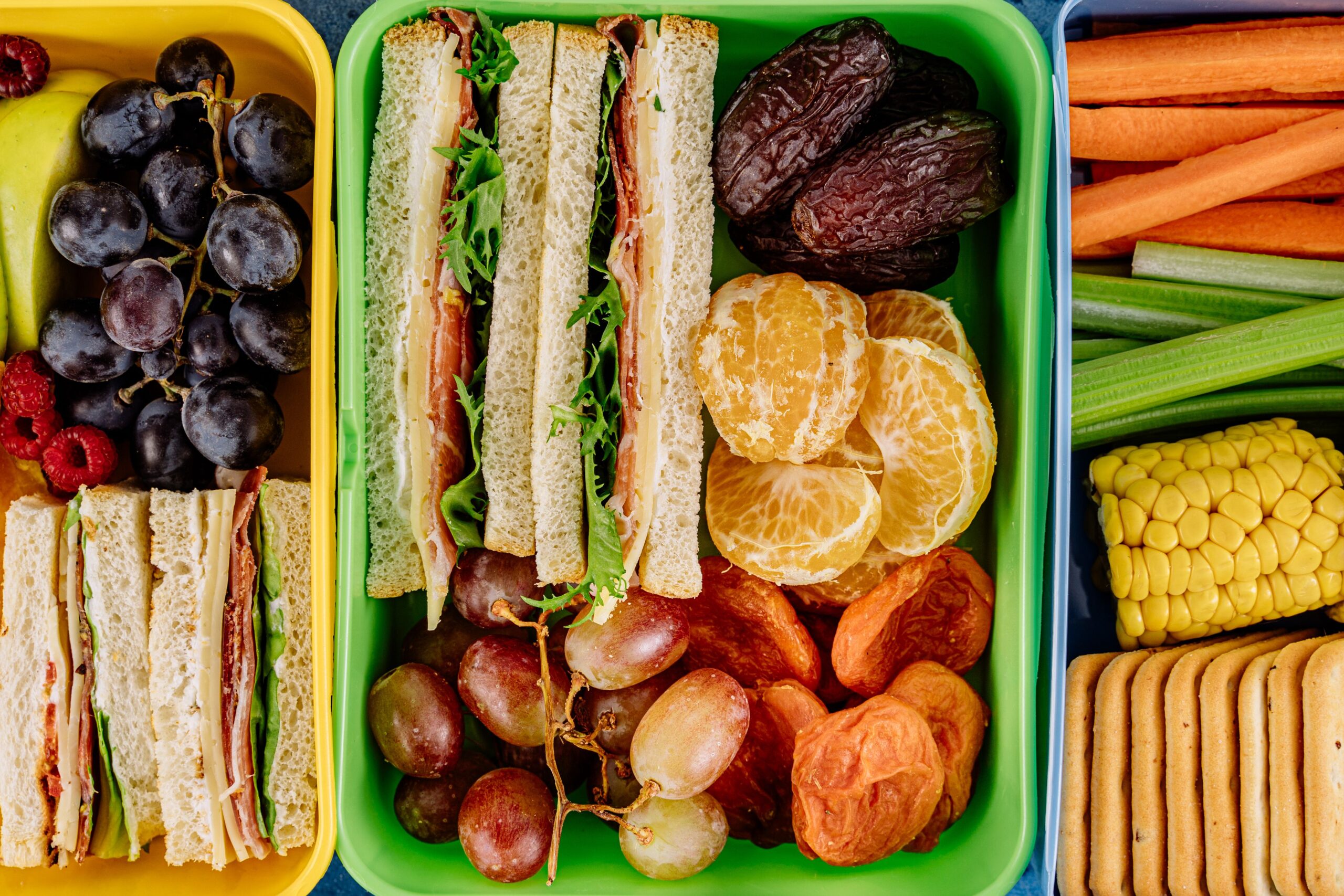
Each day follows the same formula: protein + whole grain + fruit or vegetable + water. Swap any item your child dislikes for another from the same group.
| Day | Main | Side | Fruit / Veg |
|---|---|---|---|
| Monday | Turkey and cheese sandwich on whole wheat | Pretzels | Apple slices |
| Tuesday | Pasta with tomato sauce and parmesan | Cucumber sticks | Grapes, cut in half |
| Wednesday | Chicken quesadilla triangles | Black beans | Orange segments |
| Thursday | Peanut butter and banana sandwich | Yogurt tube | Carrot sticks |
| Friday | Homemade pizza bagel | Cheese cubes | Strawberries |
Water is the drink every day. Juice boxes and flavored milk add sugar without adding nutrition, and they crowd out the food.
Ideas by age
What works depends on how old your child is. Younger children need smaller pieces and softer foods. Older children can handle more variety and bigger portions.
Ages 2 to 3 (toddlers)
Toddlers eat small amounts, so keep portions tiny and cut everything small. Good choices: soft pasta shapes, shredded chicken, banana slices, avocado cubes, cheese cubes, and cooked peas. Avoid whole grapes, whole nuts, popcorn, and hard raw vegetables. Cut grapes and cherry tomatoes into quarters, and cut other round foods in half lengthwise.
Pack a small lunchbox with just three or four items. Too many choices overwhelm a toddler, and most of it comes home uneaten.
Ages 4 to 5 (preschool)
Preschoolers can eat most foods if they are cut safely. Add finger foods they can hold: mini sandwiches, cheese sticks, cucumber rounds, and berries. Let them help choose between two options (“apple or grapes today?”), which makes them more likely to eat what you pack.
Keep the lunchbox fun but simple. A single small surprise, like a sticker or a funny note, works better than five different snacks.
Ages 6 to 8 (early school)
School-age children can eat a full sandwich, a whole fruit, and a larger portion. This is the age to introduce variety: wraps, pasta salads, and leftovers from dinner. They can also open their own containers, so use boxes they can manage without help.
Ask them what they actually ate. Children this age trade food, throw food away, or skip lunch to play. A quick “what did you eat today?” at pickup tells you more than the empty lunchbox does.
Ages 9 to 12 (older kids)
Older children eat nearly adult portions and care about what their friends eat. Pack foods that look normal at the lunch table: sandwiches, wraps, pasta, and fruit. Let them build their own lunchbox from a list of approved foods, which builds independence and means they eat what they chose.
This is also the age to teach food safety basics, like keeping cold foods cold and washing hands before eating.
What lunches can kids make themselves?
Children who help make lunch are far more likely to eat it. Start small and build up.
- Ages 3 to 4: wash fruit, tear lettuce, put items into containers you hold.
- Ages 5 to 6: spread peanut butter or cream cheese, peel a banana, choose the fruit.
- Ages 7 to 8: make a simple sandwich, fill a water bottle, pack the lunchbox with your list.
- Ages 9 and up: plan the whole week from the 5-day plan, with you checking the food safety steps.
Keep a low shelf in the fridge with lunchbox foods so children can reach what they need. A small step stool in the kitchen helps younger children reach the counter safely.
Picky eater tips that actually work
Almost every child goes through a picky phase. The goal is not to win every meal, it is to keep offering variety without turning lunch into a battle.
- Offer, do not force. Put a small amount of the new food next to foods your child already likes. Pressure makes picky eating worse.
- Repeat exposure. A child may need to see a food 10 to 15 times before trying it. Keep offering it in small amounts without comment.
- Let them dip. Dips make new foods fun. Hummus, yogurt dip, and guacamole turn vegetables into something children want to try.
- Keep portions small. A tiny portion feels less scary than a full serving. Your child can always ask for more.
- Do not make a second lunch. If your child refuses the packed lunch, that is the lunch. Making a replacement teaches them that refusing works.
Food safety basics for school lunches
A lunchbox sits for hours before it is eaten, so food safety matters more than most parents think. The rules are simple.
Keep cold foods cold. Use an insulated lunch bag with two cold sources, like a frozen water bottle and a gel ice pack. Milk, yogurt, cheese, meat, and cut fruit must stay cold until lunch.
Keep hot foods hot. Use a vacuum flask for soup, pasta, or rice dishes. Fill the flask with boiling water for five minutes first, then empty it and add the hot food. The food should still be steaming when the flask is closed.
Follow the two-hour rule. Perishable food left at room temperature for more than two hours should be thrown away. On hot days above 90 degrees Fahrenheit, the limit is one hour. Throw away leftovers from the lunchbox, do not save them for the next day.
Wash hands before eating, and teach your child to do the same. Pack a small hand wipe if the school has no sink nearby.
The danger zone for bacteria is between 40 and 140 degrees Fahrenheit. Food in that range for too long can grow bacteria that cause food poisoning. Hot food should stay at 140 degrees or above, and cold food at 40 degrees or below.
Allergy notes: the big nine
Schools take allergies seriously, and so should lunchboxes. The nine major food allergens in the United States are milk, eggs, fish, shellfish, tree nuts, peanuts, wheat, soybeans, and sesame. Sesame became the ninth major allergen in 2023.
If your child’s school is nut-free, do not pack peanut butter, nuts, or foods made with nuts. Sunflower seed butter is a common substitute that looks and tastes similar.
Always read labels. Foods can contain allergens you do not expect, especially sauces, baked goods, and snacks. If your child has an allergy, tell the teacher and the school nurse in writing at the start of the year.
Ideas Bank: 35 lunch ideas in 7 groups
Use this bank when the 5-day plan gets boring. Pick one idea from each group to build a lunch.
Sandwiches and wraps
- Turkey and cheese on whole wheat
- Peanut butter and banana
- Cream cheese and cucumber
- Chicken salad wrap
- Egg salad sandwich
Pasta and grains
- Pasta with tomato sauce
- Macaroni and cheese
- Rice and beans
- Couscous with vegetables
- Noodle soup in a flask
Protein mains
- Chicken nuggets, homemade
- Hard-boiled egg
- Cheese quesadilla
- Mini meatballs
- Tuna salad
Fruits
- Apple slices with lemon
- Grapes, cut in half
- Orange segments
- Strawberries
- Banana
Vegetables
- Carrot sticks
- Cucumber rounds
- Cherry tomatoes, quartered
- Bell pepper strips
- Edamame
Snacks and sides
- Yogurt tube
- Cheese cubes
- Pretzels
- Popcorn, plain
- Crackers with hummus
Dips and extras
- Hummus
- Guacamole
- Yogurt dip with herbs
- Salsa, mild
- Sunflower seed butter
“The food you eat can be either the safest and most powerful form of medicine or the slowest form of poison.” — Ann Wigmore
Wigmore’s line is a reminder that everyday lunchbox choices add up. The foods in this guide are ordinary foods, and choosing them most days is what makes the difference.
Frequently Asked Questions
What is a good lunch for a picky eater?
Pack foods your child already likes plus one small new food beside them. Dips help: hummus, yogurt dip, and guacamole make new foods fun. Do not force it, and do not make a second lunch if they refuse.
How do I keep a school lunch cold until lunchtime?
Use an insulated lunch bag with two cold sources, like a frozen water bottle and a gel ice pack. Milk, yogurt, cheese, meat, and cut fruit must stay cold until lunch.
How long can a packed lunch sit out safely?
Perishable food left at room temperature for more than two hours should be thrown away. On hot days above 90 degrees Fahrenheit, the limit is one hour.
What should I pack for a nut-free school?
Do not pack peanut butter, nuts, or foods made with nuts. Sunflower seed butter is a common substitute. Always read labels, because sauces and snacks can contain nuts you do not expect.
Can my child make their own school lunch?
Yes, with your guidance. Ages 5 to 6 can spread and choose fruit. Ages 7 to 8 can make a simple sandwich and pack the box. Ages 9 and up can plan the whole week from the 5-day plan, with you checking the food safety steps.
What is the best drink for a school lunch?
Water is the best drink. Juice boxes and flavored milk add sugar without adding nutrition, and they crowd out the food.
How much food should I pack for a 6-year-old?
A sandwich or main, one fruit or vegetable, and one small snack is enough for most 6-year-olds. Packing too much food usually means most of it comes home uneaten.
Are Lunchables a healthy school lunch?
They are convenient but usually high in sodium and low in fresh food. A homemade version with cheese, crackers, turkey, and fruit gives your child the same fun with better nutrition.
What foods should never go in a toddler lunchbox?
Whole grapes, whole nuts, popcorn, hard raw vegetables, and hot dogs cut into rounds are choking hazards for toddlers. Cut grapes and cherry tomatoes into quarters, and cut other round foods in half lengthwise.
How do I stop lunchbox food from coming home uneaten?
Ask your child what they actually ate, and pack less of what comes home. Let them choose between two options, keep portions small, and let them help make the lunch. Children eat more of what they helped choose.
Sources
- USDA Agricultural Research Service, AgLab: Build Your Own Healthy Plate — https://aglab.ars.usda.gov/the-nutrition-corner/build-your-own-healthy-plate
- USDA: USDA Reminds Families to Pack Food Safety with Back-to-School Lunches (August 5, 2025) — https://www.usda.gov/about-usda/news/press-releases/2025/08/05/usda-reminds-families-pack-food-safety-back-school-lunches
- American Academy of Pediatrics, HealthyChildren.org: Choking Prevention — https://www.healthychildren.org/English/health-issues/injuries-emergencies/Pages/Choking-Prevention.aspx
This article is for general information only and is not medical advice. If you have a health concern, talk to a healthcare professional.