
Dragon Fruit: Nutrition, Health Benefits, Risks and How to Eat It
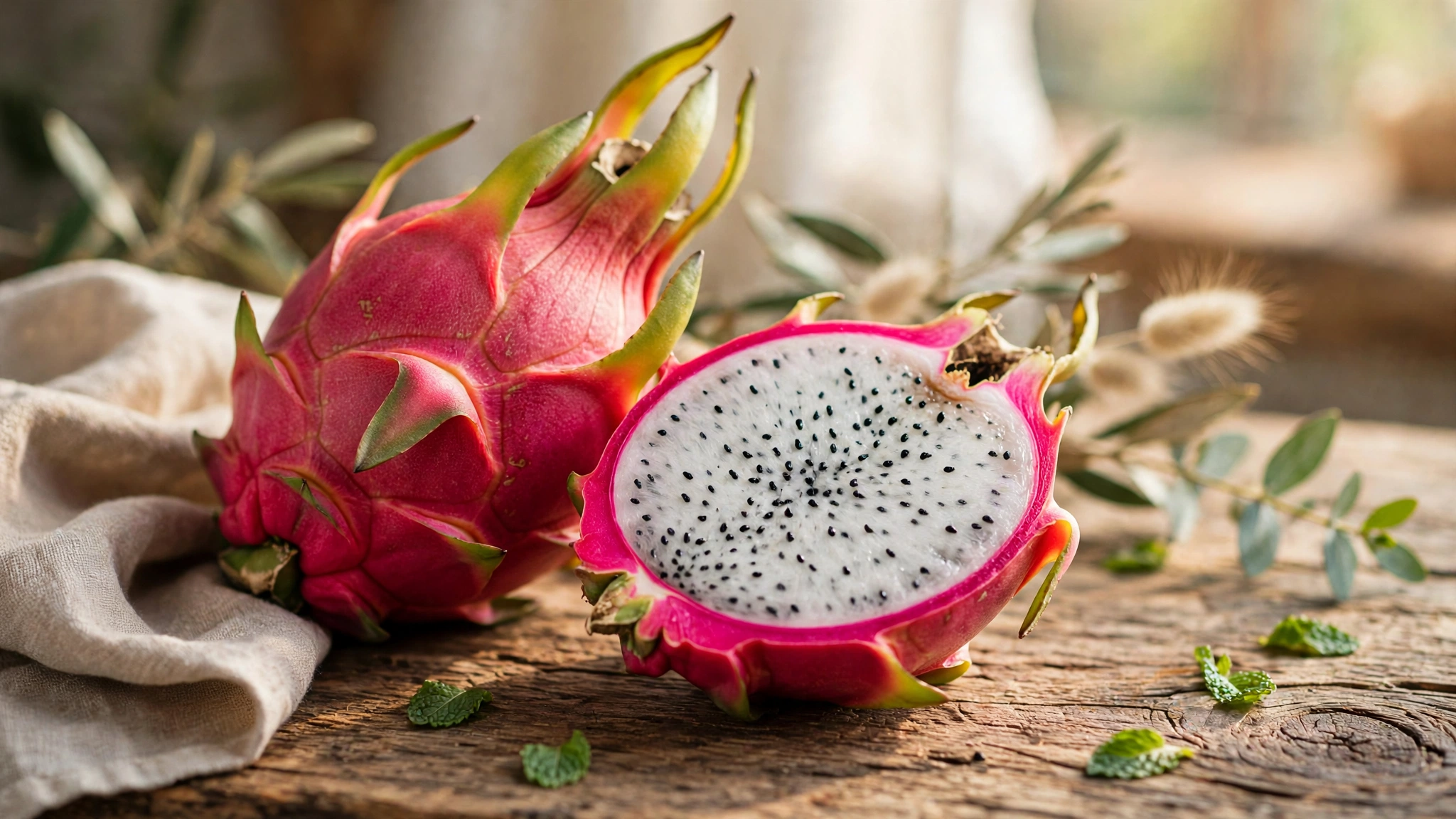
Dragon fruit, also called pitaya, is a bright pink tropical fruit with white or red flesh dotted with tiny black seeds. It tastes mildly sweet, a little like a mix of kiwi and pear. This colorful cactus fruit has become a favorite in smoothie bowls and fruit salads, and for good reason.
In this guide, you will learn about dragon fruit nutrition, its real health benefits, possible side effects, and how blood sugar responds to it. You will also learn how to choose a ripe one, cut it, store it, and enjoy it in everyday meals.
In this article:
- What Is Dragon Fruit?
- Dragon Fruit Nutrition Facts
- Health Benefits
- White vs. Red vs. Yellow
- Dragon Fruit and Blood Sugar
- Side Effects and Risks
- How to Choose, Cut and Store It
- How Much Should You Eat?
- Is Dragon Fruit Safe in Pregnancy and for Children?
- Frequently Asked Questions
What Is Dragon Fruit?
It grows on a climbing cactus and is native to Mexico and Central America. Today it is grown across Southeast Asia, South America, and other warm regions. The fruit is easy to recognize: bright pink or yellow scaly skin that gives it its dragon-like name.
Cut one open and you will find soft flesh filled with tiny edible black seeds, much like a kiwi. The flavor is mild and refreshing rather than overpowering, which makes it easy to pair with other foods.
Types of Dragon Fruit
There are a few main varieties, and they differ in looks and taste:
- White-fleshed (Hylocereus undatus): the most common type, with pink skin and white flesh. Mild and slightly sweet.
- Red or pink-fleshed (Hylocereus polyrhizus): pink skin with deep red or pink flesh. Slightly sweeter, with more of the red antioxidant pigments.
- Purple-fleshed (Hylocereus guatemalensis): a cross with vivid purple flesh and a richer flavor.
- Yellow (Hylocereus megalanthus): yellow skin with white flesh. Often described as the sweetest of the four.
Dragon Fruit Nutrition Facts
This fruit is light in calories but packed with useful nutrients. According to USDA data, one cup (about 180 grams) contains roughly:
| Nutrient | Amount per 1 cup (180 g) |
|---|---|
| Calories | 103 |
| Carbohydrates | 27.4 g |
| Fiber | 5.6 g |
| Protein | 1.3 g |
| Iron | about 8% of the daily value |
| Magnesium | about 18% of the daily value |
| Vitamin C | about 9% of the daily value |
It also contains vitamin E and plant compounds with antioxidant activity, including polyphenols, carotenoids, and betacyanins (the pigments that color the red-fleshed types). For a deeper look at how individual nutrients support the body, our guide to vitamin B12 foods explains another key nutrient in plain language.

Health Benefits
It fits well into a balanced diet, and its benefits come mostly from fiber, vitamins, minerals, and antioxidants working together.
It is nutrient-dense and low in calories. At about 100 calories per cup, it delivers fiber, iron, magnesium, and vitamin C without a heavy calorie load. That makes it an easy swap for higher-calorie snacks.
It supplies antioxidants. The fruit contains polyphenols, carotenoids, and betacyanins. Antioxidants help the body manage free radicals, unstable molecules linked to cell damage. Eating a variety of colorful fruits is one of the simplest ways to get more of them.
It supports digestion. With 5.6 grams of fiber per cup, it helps keep digestion regular. Fiber adds bulk to stool and feeds the friendly bacteria in the gut.
It may support gut bacteria. It contains prebiotics, fibers that feed beneficial gut microbes. A well-fed gut microbiome is linked to smoother digestion and better overall gut health.
It supports immune function. Vitamin C and carotenoids both play roles in normal immune function. The Office of Dietary Supplements explains how vitamin C supports the body’s defenses.
It provides iron. Iron helps the body make hemoglobin, the protein that carries oxygen in the blood. See the NIH iron fact sheet for why steady iron intake matters.
It provides magnesium. Magnesium is involved in hundreds of enzyme systems in the body, including those that manage energy and muscle function. The NIH magnesium fact sheet has the details.
These are supportive, general benefits of eating fruit as part of a varied diet. It is not a treatment for any disease, and no single fruit can replace balanced eating.
White vs. Red vs. Yellow: Which Is Healthiest?
All types are healthy, but they have small differences worth knowing.
Red and pink-fleshed types contain betacyanins, the red pigments with antioxidant activity. If you want the most antioxidants, the red-fleshed type is the stronger pick. Just know that it can temporarily tint urine or stool reddish, which is harmless (more on that below).
The yellow type is often described as the sweetest, and some clinics describe it as having a lower glycemic index than the white and red types. However, published data on this is limited, so treat the claim as tentative rather than proven.
The white-fleshed type is the most widely available and usually the most affordable. Its mild flavor makes it the most versatile for smoothies, salads, and breakfast bowls. Speaking of breakfast, its cubes work beautifully in our healthy breakfast ideas.
For most people, the healthiest choice is the variety you enjoy enough to eat regularly.
Dragon Fruit and Blood Sugar: Is It Good for Diabetics?
This fruit contains natural sugars, about 27 grams of carbohydrates per cup, so people watching blood sugar should pay attention to portions. That said, its fiber slows how quickly those sugars are absorbed, which is gentler than drinking fruit juice.
Evidence on its glycemic index is limited. The yellow variety is sometimes described as lower on the glycemic scale, but this comes from clinic claims rather than strong published studies. The whole fruit is a better choice than juice, which removes the fiber and concentrates the sugar.
If you have diabetes, a reasonable approach is to eat a modest portion, pair it with protein or healthy fat (for example, in yogurt), and check how your blood sugar responds. When in doubt, ask your doctor or a registered dietitian.
Side Effects and Risks
It is safe for most people, but a few side effects are worth knowing about, and almost no competitor guides mention them.
Red stool or urine. The red and pink-fleshed types contain natural pigments that can harmlessly turn urine or stool reddish for a day or two. This often alarms first-time eaters who mistake it for blood. If the color comes from dragon fruit you recently ate and you feel fine, it is almost certainly the fruit.
Allergic reactions. Rare, but possible. Signs include itching, swelling of the lips or tongue, hives, or trouble breathing. Get medical help right away if any of these occur.
Digestive discomfort. Eating a large amount at once can cause bloating or stomach discomfort because of the fiber. If you are new to dragon fruit, start with a small portion and see how you feel.
Oxalates. Dragon fruit contains oxalates, compounds that can contribute to kidney stones in sensitive people. If you have a history of kidney stones, enjoy it in moderation and talk to your doctor.
How to Choose, Cut and Store It
How to Choose a Ripe Dragon Fruit
Look for bright, even-colored skin with fresh-looking scales. The fruit should feel firm with a slight give when pressed, similar to a ripe avocado. Avoid fruit with many dark blotches or dried, wilted scales. A mostly green fruit is unripe; let it ripen on the counter for a few days.
How to Cut It
Cutting dragon fruit is simple:
- Rinse the outside under running water.
- Slice the fruit in half lengthwise.
- Scoop the flesh out with a spoon, or peel the skin back and cut the flesh into cubes.
- Use it right away, or chill it for later.
How to Eat It
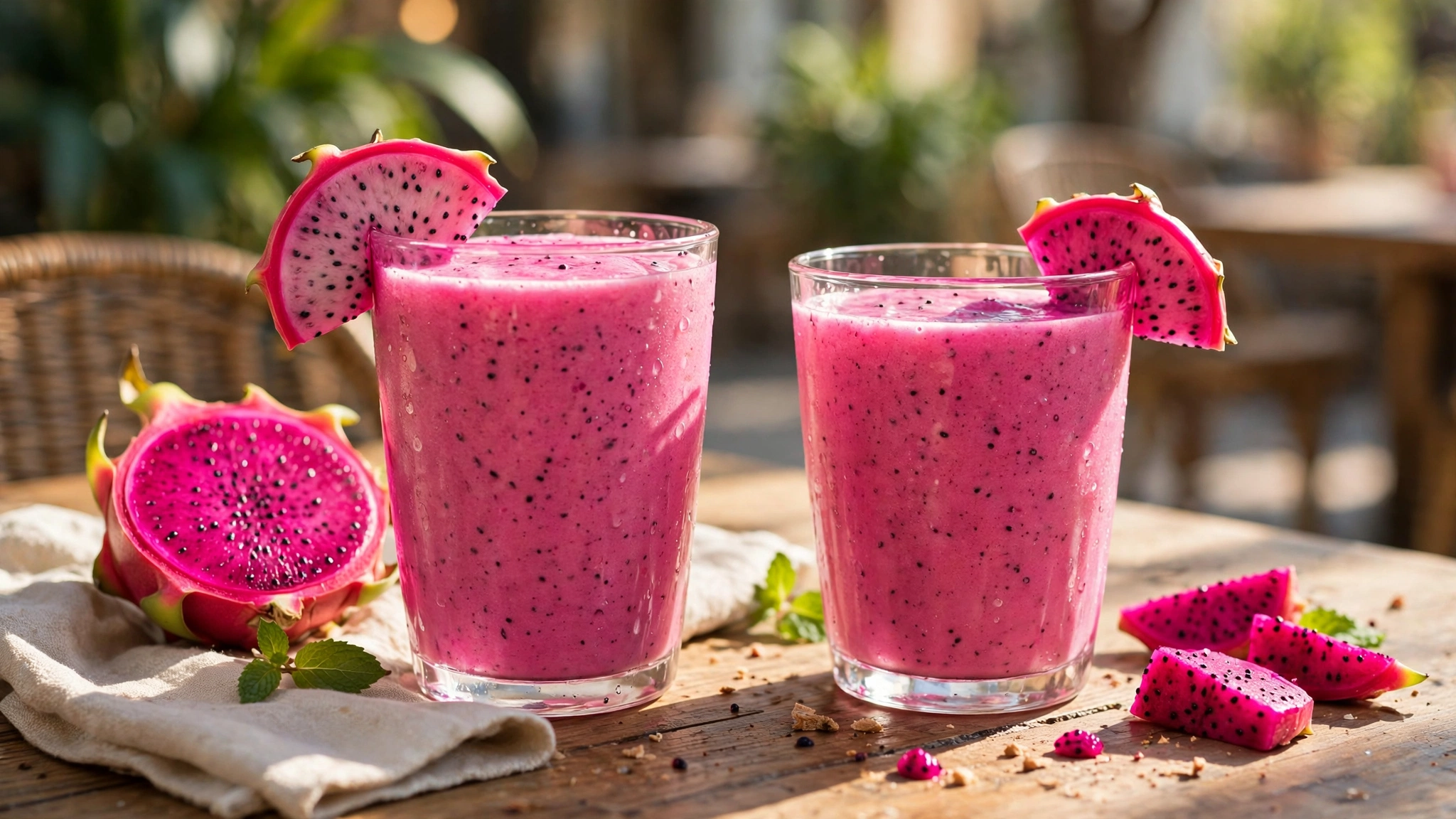
Eat the cubes on their own, add them to smoothies, fruit salads, or yogurt, or freeze them for desserts. Frozen cubes blend into thick, colorful smoothies. You can also explore drink ideas in our guide to immunity shots benefits and recipes.
How to Store It
A whole, uncut dragon fruit keeps at room temperature for a few days. Once cut, refrigerate it in a sealed container and eat it within five days. For longer storage, freeze the cubes on a tray, then transfer them to a freezer bag. They keep well for several months and go straight into the blender.
How Much Should You Eat?
There is no official daily limit for it. One cup (about 180 grams) is a common serving and fits easily into a day’s fruit intake. Like any fruit, it works best as part of a varied diet rather than the only fruit you eat.
Frozen dragon fruit is worth considering too. It is picked ripe, often costs less than fresh, and is available year-round. Nutritionally it is very close to fresh, which makes it a practical everyday option.
Is Dragon Fruit Safe in Pregnancy and for Children?
There are no established safety concerns with eating normal amounts during pregnancy or giving it to children. It is simply a nutritious fruit. Still, follow basic food safety: buy fresh fruit, wash the skin before cutting, and avoid anything overripe or spoiled. If you have a specific medical condition or food allergy history, check with your doctor first.
Frequently Asked Questions
Can it turn your stool red?
Yes, the red and pink-fleshed types can temporarily turn urine or stool reddish. The natural pigments pass through the body in a day or two. It is harmless, though it often worries first-time eaters who mistake it for blood.
Is it good for weight loss?
Dragon fruit can support weight-loss efforts as part of a balanced diet. It is low in calories, high in fiber, and filling, which helps control hunger. However, no single food causes weight loss on its own; overall eating patterns and activity matter most.
Is it good for diabetics?
It can fit into a diabetes-friendly diet in modest portions, thanks to its fiber. The yellow variety is sometimes described as having a lower glycemic index, but evidence is limited. Pair it with protein or fat, watch your portion, and check with your doctor about what works for you.
White vs. red dragon fruit: which is healthier?
Both are healthy. Red-fleshed dragon fruit contains more betacyanin antioxidants, while white-fleshed dragon fruit is milder and usually cheaper. The yellow type is sweetest. Choose the one you enjoy most, since regular eating matters more than the variety.
Is it safe in pregnancy?
Yes, in normal amounts. Dragon fruit is a regular fruit with no known pregnancy contraindications. Wash it well, eat it fresh, and skip anything spoiled. If you have allergies or a medical condition, ask your doctor first.
How do you store it?
Keep a whole dragon fruit at room temperature for a few days. Refrigerate cut fruit in a sealed container for up to five days. For longer storage, freeze cubes on a tray and move them to a freezer bag; they last months and blend well from frozen.
Conclusion
This tropical fruit is nutritious and low in calories, and it is rich in fiber, vitamin C, magnesium, and antioxidants. Red-fleshed types offer extra betalain pigments, while the yellow type is sweetest. A few cautions apply, mainly the harmless red-stool effect and rare allergies, but for most people it is a safe and tasty addition to the diet. Next time you see one at the market, pick a ripe one and try it in a smoothie or fruit salad. For more fruit and food guides, explore our Nutrition & Diet category.
This article is for general information only and is not medical advice. If you have ongoing health problems or dietary concerns, talk to a healthcare professional.