
High Protein Low Carb Foods: 30 Best Picks Ranked by Net Carbs
If you want foods that are high in protein and low in carbs, the protein number alone does not tell you enough. A food can be rich in protein and still carry a large amount of carbohydrate, and that is exactly where most lists go wrong. This guide fixes that by ranking 30 foods by a different number: net carbs, which is total carbs minus fiber, per 100 grams.
Think of this page as the net carbs companion to our full guide to foods high in protein, which ranks foods by protein per serving and per 100 grams. That guide answers “where is the protein.” This one answers “where is the protein without the carbs.” Every figure below is approximate and based on standard entries in USDA FoodData Central, so check your own label for the exact product you buy.
Quick Answer: The strongest high protein low carb foods are the ones with plenty of protein and almost zero net carbs: chicken breast (31g protein, 0g net carbs per 100g), turkey breast (30g, 0g), tilapia and pork tenderloin (26g, 0g), canned tuna and sardines (25g, 0g), and shrimp (24g, 0g). Eggs, cheese, Greek yogurt, tofu, tempeh, and seeds follow close behind with only 1 to 9g of net carbs per 100g. A useful rule of thumb: a food earns its place on this list when it gives at least 10g of protein per 100g and no more than 10g of net carbs per 100g.
What Counts as High-Protein and Low-Carb?
There is no official legal definition, so this guide uses two clear rules that you can check on any label.
First, protein: a food counts as high in protein here when it gives at least 10 grams of protein per 100 grams. That is why milk and most vegetables do not appear in the master table, even though they are healthy. They are helpers, not anchors.
Second, carbs: a food counts as low carb here when it has no more than 10 grams of net carbs per 100 grams. Net carbs are calculated as total carbohydrates minus fiber, because fiber is not digested into glucose the way other carbs are. This is the number that matters for carb control, and it is the number this whole guide is sorted by.
Two common definitions help put the numbers in context. Research and nutrition guides commonly describe a low carb diet as under about 130 grams of carbs per day, while a strict keto diet is usually described as under about 20 to 30 grams of net carbs per day. These are general descriptions of how the terms are used, not a prescription for any person. One food never makes a whole diet low carb or keto on its own. What matters is your total across the day, which is why the snack and plate sections below show full portions, not just per 100 gram figures.
Meat, fish, eggs, and dairy are complete proteins, supplying all nine essential amino acids in useful amounts. Most plant foods are lower in one or two amino acids, but a varied day of eating covers this easily. The same variety advice appears in the USDA MyPlate protein foods group guidance: rotate meats, seafood, eggs, dairy, beans, soy, nuts, and seeds across the week.
About these numbers: All values are rounded estimates based on standard entries in USDA FoodData Central. Cut, brand, and cooking method move the figures a little. All meat, fish, and poultry values are for cooked weight, and raw meat weighs about 25 percent more before cooking.
The Master Table: 30 Foods Ranked by Net Carbs
Here is the full list in one place, sorted from the lowest net carbs to the highest. Inside each net carb level, foods are ordered by protein, highest first. The last column gives a realistic serving so you can see what the numbers mean on a plate.
| Food | Protein per 100g | Total carbs per 100g | Fiber per 100g | Net carbs per 100g | Typical serving |
|---|---|---|---|---|---|
| Chicken breast, cooked | 31g | 0g | 0g | 0g | 1 medium breast (120g) |
| Turkey breast, cooked | 30g | 0g | 0g | 0g | 4 oz (113g) |
| Ground turkey (93% lean), cooked | 27g | 0g | 0g | 0g | 4 oz (113g) |
| Tilapia, cooked | 26g | 0g | 0g | 0g | 4 oz (113g) |
| Pork tenderloin, cooked | 26g | 0g | 0g | 0g | 4 oz (113g) |
| Lean ground beef (90%), cooked | 26g | 0g | 0g | 0g | 4 oz (113g) |
| Canned tuna in water, drained | 25g | 0g | 0g | 0g | 1 can drained (113g) |
| Sardines, canned, drained | 25g | 0g | 0g | 0g | 1 small tin (92g) |
| Cheddar cheese | 25g | 0g | 0g | 0g | 1 oz (28g) |
| Shrimp, cooked | 24g | 0g | 0g | 0g | 4 oz (113g) |
| Cod, cooked | 23g | 0g | 0g | 0g | 4 oz (113g) |
| Salmon fillet, cooked | 22g | 0g | 0g | 0g | 4 oz (113g) |
| Eggs, whole | 13g | 1g | 0g | 1g | 2 large eggs (100g) |
| Egg whites | 11g | 1g | 0g | 1g | About 3 whites (100g) |
| Swiss cheese | 27g | 2g | 0g | 2g | 1 oz (28g) |
| Mozzarella cheese | 22g | 2g | 0g | 2g | 1 oz (28g) |
| Firm tofu | 10g | 2g | 0g | 2g | 3 oz (85g) |
| Parmesan cheese | 36g | 3g | 0g | 3g | 1 oz (28g) |
| Seitan | 25g | 4g | 1g | 3g | 3 oz (85g) |
| Cottage cheese, 2% | 11g | 3g | 0g | 3g | 1/2 cup (113g) |
| Ricotta cheese, whole milk | 11g | 3g | 0g | 3g | 1/2 cup (124g) |
| Skyr (Icelandic yogurt) | 11g | 4g | 0g | 4g | 1 tub (170g) |
| Edamame, shelled | 11g | 9g | 5g | 4g | 1 cup (155g) |
| Greek yogurt, plain 0% | 10g | 4g | 0g | 4g | 1 tub (170g) |
| Hemp seeds | 32g | 9g | 4g | 5g | 3 tbsp (30g) |
| Pumpkin seeds | 30g | 11g | 6g | 5g | 1 oz (28g) |
| Tempeh | 19g | 9g | 4g | 5g | 3 oz (85g) |
| Walnuts | 15g | 14g | 7g | 7g | 1 oz (28g) |
| Chia seeds | 17g | 42g | 34g | 8g | 1 oz (28g) |
| Almonds | 21g | 22g | 13g | 9g | 1 oz (28g) |
Three patterns stand out. First, plain meat, poultry, and fish sweep the zero net carb rows, because animal foods contain essentially no carbohydrate. Second, cheese looks strong on protein but is eaten in small portions, so treat it as a helper, not an anchor. Third, nuts and seeds only qualify because their fiber is high: almonds carry 22 grams of total carbs per 100 grams, but 13 grams of that is fiber, which leaves 9 grams of net carbs. That fiber is also why a small handful of nuts is far more filling than the same calories of bread.
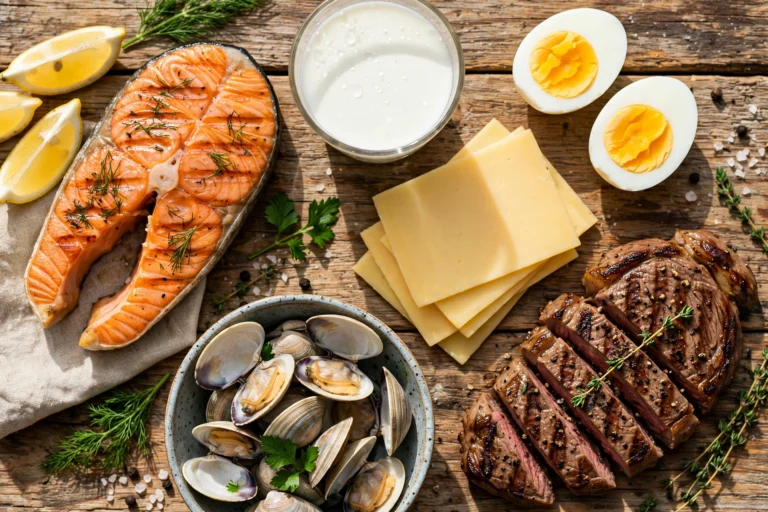
Meat, Poultry, and Seafood: The Zero Net Carb Core
Every food in this group has essentially zero net carbs, which is why it forms the core of a low carb plate. The differences between them are about protein, fat, cost, and taste, not carbs.
Chicken breast (31g protein, 0g net carbs). The benchmark of this guide. Skinless breast is far leaner than thigh meat, so check the cut a recipe uses.
Turkey breast (30g, 0g). Just as lean as chicken and often cheaper around holidays. Ground turkey swaps well for ground beef, but some packs include skin and extra fat, so read the label.
Tilapia, cod, and other white fish (23 to 26g, 0g). Mild, inexpensive, and hard to overcook badly. White fish is the easiest way to add a zero carb protein to a meal without adding much fat.
Pork tenderloin (26g, 0g). The leanest common pork cut, closer to chicken breast than to bacon. It roasts quickly and slices well for sandwiches and salads.
Lean ground beef, 90 percent (26g, 0g). Rich in iron and vitamin B12 as well as protein. The leaner the grind, the higher the protein share, so choose 90 percent or leaner.
Canned tuna (25g, 0g). The pantry champion: no cooking, long shelf life, and more protein per dollar than almost any other animal food. Rotate it with other fish across the week. Canned light tuna is a lower mercury choice, and if you are pregnant, breastfeeding, or feeding young children, follow the FDA advice about eating fish and limit albacore (white) tuna to one serving a week.
Sardines (25g, 0g). Small fish with big numbers, plus calcium from the soft bones. Mash them on toast with lemon if the taste is too strong at first, or stir them into pasta sauce where they disappear.
Shrimp (24g, 0g). Shrimp cook in minutes, work hot or cold, and frozen shrimp are just as practical as fresh. A 4 oz serving gives about 27 grams of protein with no carbs at all.
Salmon (22g, 0g). Lower in protein than white fish per 100 grams because its healthy fats add energy, but you gain omega-3 fats that lean fish barely have. Keep salmon in the rotation once or twice a week for that reason.
Eggs and Dairy: Cheap, Easy, and Almost Carb Free
Dairy and eggs are the middle ground of this list: cheaper than most meat, easy to add to meals you already eat, and low enough in net carbs that they fit comfortably into a low carb day.
Eggs (13g protein, 1g net carbs per 100g). One large egg gives about 6 to 7 grams of protein and less than 1 gram of net carbs. Two eggs with vegetables is a complete low carb breakfast on its own.
Egg whites (11g, 1g). Almost pure protein with very few calories. Mix one whole egg with extra whites to keep the flavor while lifting the protein.
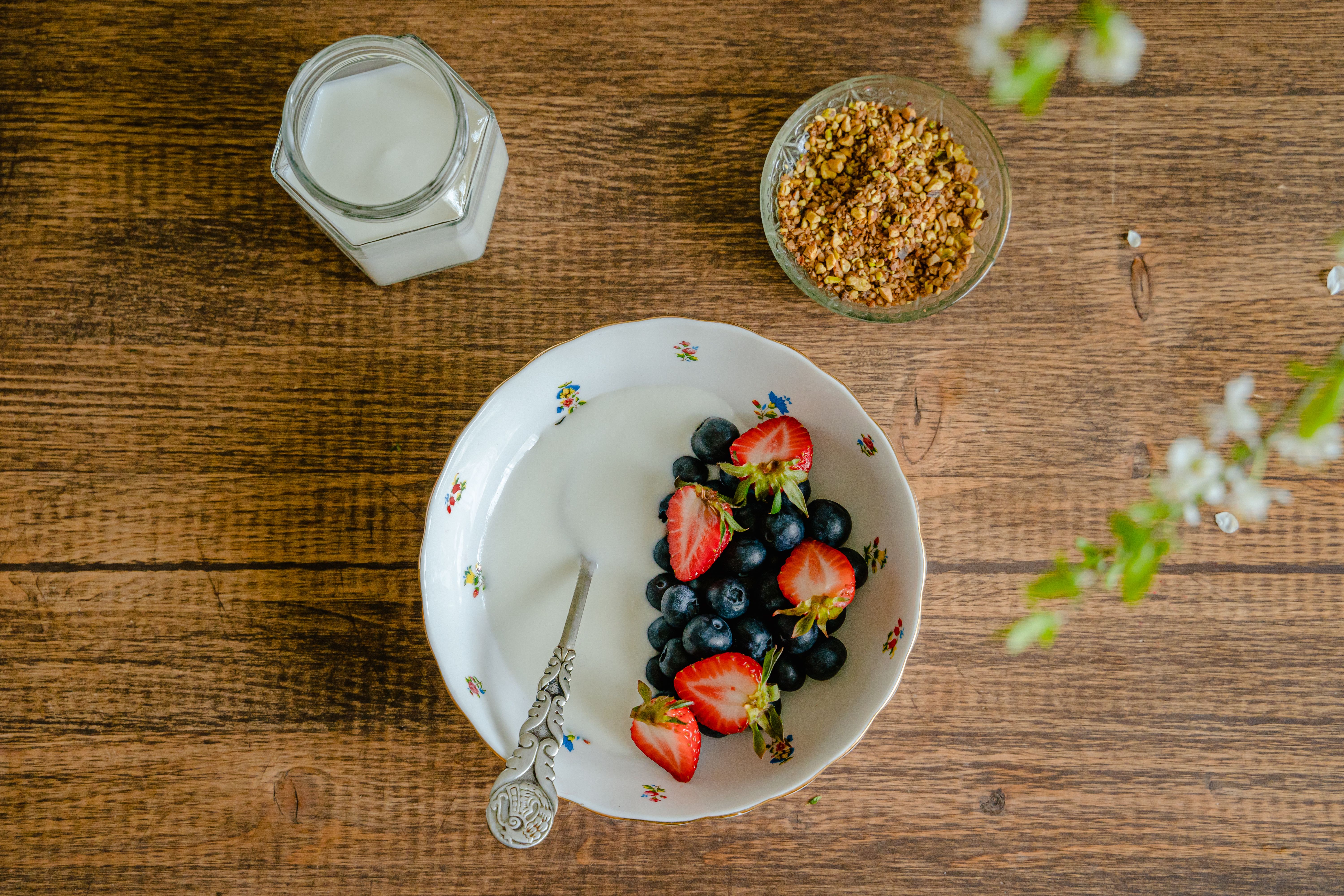
Greek yogurt, plain 0 percent (10g, 4g). Straining removes whey, so it has roughly double the protein of regular yogurt. Plain pots avoid added sugar. Sweeten them yourself with berries, and count the berries separately, since fruit adds its own carbs (see the FAQ on fruit below).
Skyr (11g, 4g). Iceland’s strained yogurt is even thicker than Greek yogurt and slightly higher in protein. Per tub, it is one of the strongest dairy picks on this list.
Cottage cheese, 2 percent (11g, 3g). Mild, spoonable protein that works sweet or savory. Blend it into eggs, dips, and sauces if you dislike the curds.
Hard cheeses (22 to 36g, 0 to 3g). Parmesan tops the protein column at 36 grams per 100 grams with about 3 grams of net carbs, while cheddar gives 25 grams of protein with essentially zero net carbs. Both are eaten in 1 oz portions, so treat cheese as a flavoring plus a helper, not as the anchor of a meal.
Plant-Based Low Carb: The Dedicated Picks
Plant proteins face a real trade off on this list: most plant foods carry their protein alongside carbohydrate. Beans and lentils, for example, are excellent foods, but their net carbs sit above this guide’s 10 gram cutoff, so they appear in the “not low carb” section below rather than here. The foods below are the plant options that genuinely qualify, and they deserve their own table because vegetarians ask about them more than any other group.
| Plant food | Protein per 100g | Net carbs per 100g | Why it works |
|---|---|---|---|
| Hemp seeds | 32g | 5g | Complete protein, disappears into smoothies and salads |
| Pumpkin seeds | 30g | 5g | Strongest seed per bite, easy to scatter over any dish |
| Seitan | 25g | 3g | Made from wheat gluten, the meatiest plant protein here, not suitable if you avoid gluten |
| Almonds | 21g | 9g | Portable and filling, but portion carefully, since calories climb fast |
| Tempeh | 19g | 5g | Fermented soybeans pressed into a firm block, beats tofu on protein because it uses the whole bean |
| Chia seeds | 17g | 8g | Famous for fiber, which is exactly why its net carbs stay low despite high total carbs |
| Walnuts | 15g | 7g | Lower in protein than most nuts here, but brings plant omega-3 fats |
| Edamame, shelled | 11g | 4g | A complete plant protein you can microwave from frozen in minutes |
| Firm tofu | 10g | 2g | The most flexible food on this list, takes on any marinade |
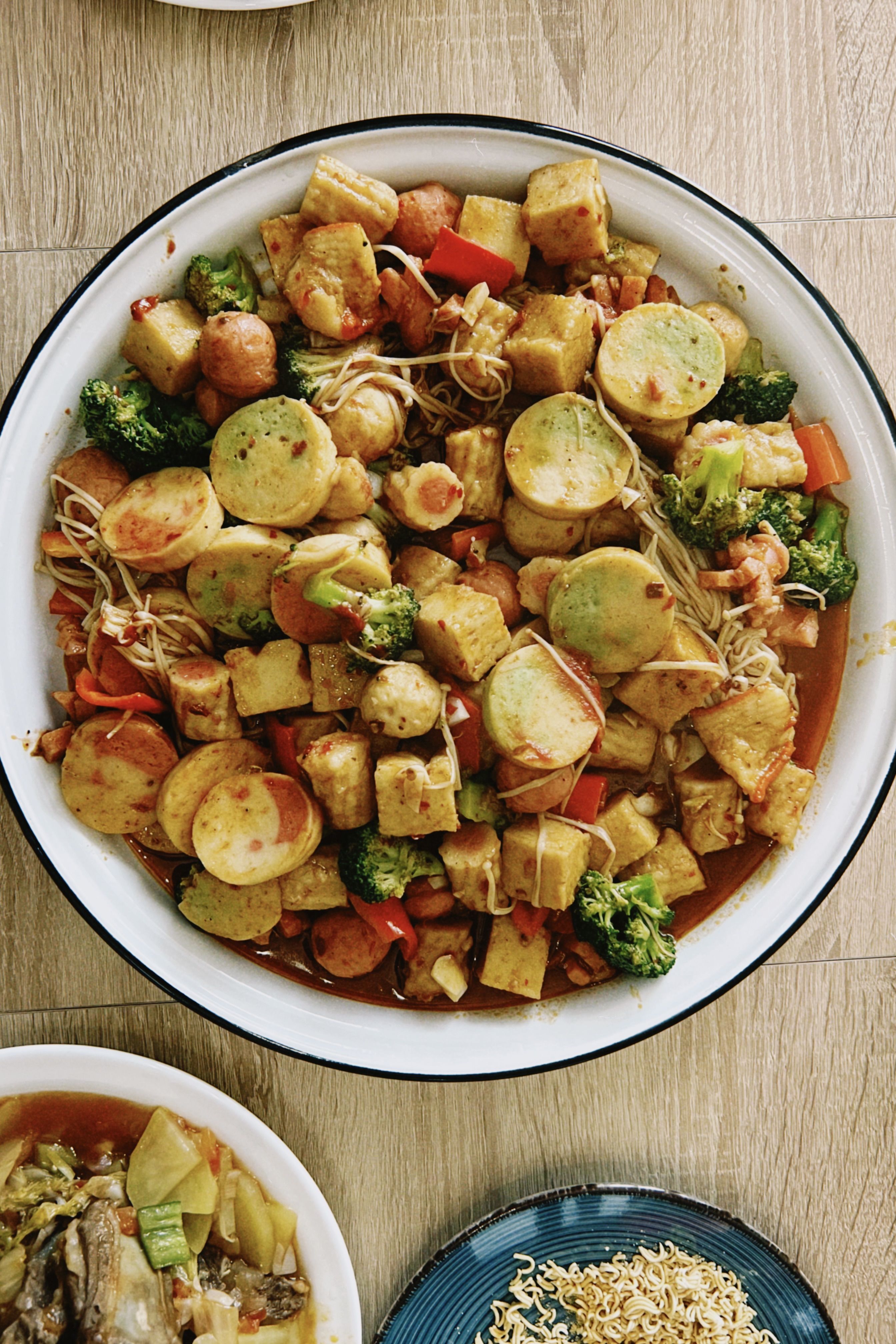
A plant based low carb day builds itself around one strong source per meal: tempeh or tofu at dinner, edamame as a snack, seeds over salads and yogurt. Variety across the day covers the amino acids any single plant food is short on, so there is no need to combine specific foods at the same meal.
10 Low Carb High Protein Snacks With Portions
Snacks are where low carb plans usually fall apart, because the easy options are mostly carbs. Every snack below shows its portion, so there is no guessing.
| Snack | Portion | Protein | Net carbs |
|---|---|---|---|
| Cooked shrimp with lemon | 100g | 24g | 0g |
| Canned tuna on lettuce leaves | 85g drained | 21g | 0g |
| Greek yogurt tub, plain 0 percent | 170g | 17g | 4g |
| Edamame, shelled | 1 cup (155g) | 17g | 4g |
| Hard-boiled eggs | 2 large eggs | 13g | 1g |
| Cottage cheese cup | 1/2 cup (113g) | 12g | 3g |
| Firm tofu cubes with soy and sesame | 100g | 10g | 2g |
| Deli turkey roll ups | 2 slices (about 56g) | 10g | About 1g |
| Pumpkin seeds | 1 oz (28g) | 8g | About 1g |
| Cheddar with cucumber slices | 1 oz (28g) | 7g | 0g |
Two cautions belong here. Deli turkey slices are processed and often high in sodium, so treat them as a convenience snack, not a daily anchor, and pick lower sodium versions. And pre-portion nuts and seeds: a small handful is a serving, while eating straight from a large bag can quietly triple the portion.
Low Carb vs Keto: The Distinction That Matters
Low carb and keto are often used as if they mean the same thing, but they describe different daily totals, and the distinction decides which foods fit easily.
A low carb day is commonly described as under about 130 grams of carbs per day. At that level, every food in the master table fits comfortably, including Greek yogurt, cottage cheese, edamame, and nuts. You have room for vegetables, a serving of berries, and even a small portion of beans if you plan for it.
A strict keto day is usually described as under about 20 to 30 grams of net carbs per day. At that level, the zero net carb foods (meat, fish, eggs) fit easily, while yogurt, cottage cheese, edamame, and nuts need careful portions, because a single tub of Greek yogurt already uses about 4 grams of your daily budget and a cup of edamame uses about 4 grams more. This is a description of how the terms are commonly used, not a diet prescription. Anyone considering a strict keto diet, especially with a medical condition, should talk to a clinician first.
The practical takeaway: do not judge a food by its diet label. Judge it by its net carbs per portion against your own daily total. That is why this guide sorts by net carbs instead of by diet name.
What to Limit
Some protein foods cost more carbs, sugar, sodium, or processing than their protein is worth. Limit these, even though they appear on many protein lists.
Processed meats. Sausages, bacon, salami, and most deli meats are high in sodium and saturated fat, and Harvard’s general guidance is to limit processed meat. Fresh meat, poultry, and fish from the master table give the same protein without that baggage.
Breaded and battered protein. A chicken breast has zero net carbs. The same chicken in breadcrumbs or batter can carry 10 to 20 grams of carbs per serving from the coating alone, plus extra fat from frying. Grilled, baked, steamed, or roasted preparations keep the numbers in this guide honest.
Sweetened dairy. Flavored yogurts, sweetened kefir, and chocolate milk can add 10 to 20 grams of sugar per serving to a food that is nearly carb free when plain. Choose plain pots and add your own fruit.
Sugary protein bars. Many popular bars offer around 10 grams of protein for 180 to 220 calories and 15 to 25 grams of carbs, which is closer to a candy bar with protein added than to the foods at the top of this list. Some bars do much better, so the label, not the wrapper claim, decides.
Heavy sauces. Barbecue sauce, sweet chili sauce, honey mustard, and teriyaki glazes are mostly sugar. A tablespoon or two can add 5 to 10 grams of carbs to an otherwise zero carb meal. Mustard, hot sauce, lemon, herbs, and vinegar based dressings keep the flavor without the carbs.
For the full ranked list built on a different measure, protein per calorie rather than per net carb, see our guide to high protein low calorie foods. The two sorts complement each other: one tells you where the carbs are, the other tells you where the calories are.
High-Protein Foods That Are NOT Low Carb
This section is the honesty check that most low carb lists skip. Several famous protein foods fail this guide’s net carb cutoff, and knowing which ones saves you from a common mistake.
| Food | Protein per 100g | Net carbs per 100g | Verdict |
|---|---|---|---|
| Lentils, cooked | 9g | About 12g | Excellent food, but over the cutoff, and slightly under the protein cutoff too |
| Black beans, cooked | 9g | About 15g | Same story, healthy and filling, but not low carb |
| Chickpeas, cooked | 9g | About 20g | Higher still, better counted as a planned carb portion |
| Quinoa, cooked | 4g | About 19g | A complete protein among grains, but a grain first and a protein food second |
| Whole wheat bread | 13g | About 34g | Good protein for a bread, but far too carb heavy for this list |
| Peanut butter | 25g | About 13g | Strong protein, but just over the cutoff, so portion it as a helper, not an anchor |
None of these are bad foods. Lentils and beans are among the cheapest, most filling protein sources available, and they anchor our other guides. They simply do not belong on a low carb list, and a list that includes them without saying so is not sorting by carbs at all.
High Protein Does Not Mean Low Calorie
A second honesty check: several foods on this list are high in protein and low in carbs, but not low in calories. Almonds give 21 grams of protein per 100 grams, yet they also pack roughly 580 calories in that same 100 grams. Peanut butter, cheese, and fatty cuts of meat follow the same pattern. If your goal is carb control alone, these foods serve you well. If your goal is carb control plus weight loss, portion size matters more with them than with almost any other group on this list. A 1 oz portion of almonds gives about 6 grams of protein for about 160 calories, which is a reasonable snack. A large handful straight from the bag can quietly triple that.
How to Build a Low Carb High Protein Plate
The formula is simple: one anchor protein, plus low carb vegetables, plus a healthy fat for flavor and staying power.
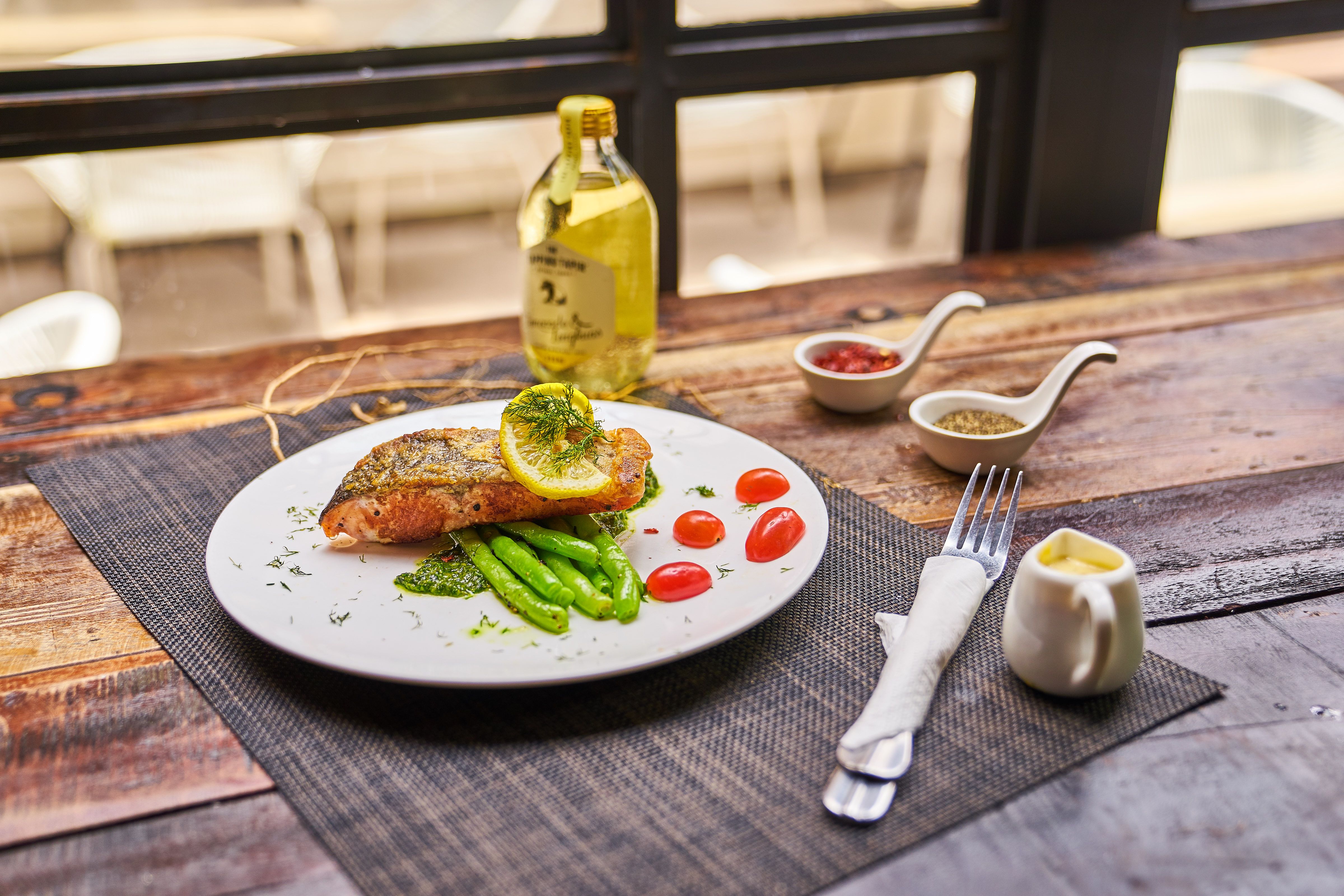
Anchor (pick one, 20 to 35 grams of protein, 0 to 5 grams of net carbs). Chicken breast, turkey breast, salmon, shrimp, tofu, tempeh, or two eggs with cheese.
Vegetables (fill half the plate, 2 to 6 grams of net carbs). Broccoli, spinach, green beans, zucchini, cauliflower, peppers, mushrooms, and salad leaves are all low in net carbs and high in fiber, which keeps the meal filling.
Fat and flavor (1 to 2 tablespoons, 0 to 1 grams of net carbs). Olive oil, butter, avocado, or a cheese sprinkle. Fat carries no carbs, so it adds satisfaction without moving the carb count, but it does add calories, so keep the portion honest if weight is also a goal.
Optional carb portion (only if your daily total allows it). A small serving of berries, a half cup of beans, or one slice of whole wheat bread, counted deliberately rather than added by habit.
Three plates built this way show the math:
Plate 1: Salmon and broccoli dinner (about 30 grams of protein, about 6 grams of net carbs). A 4 oz salmon fillet (25g protein, 0g net carbs) with 1 cup of cooked broccoli (about 4g protein, about 6g net carbs) and a drizzle of olive oil.
Plate 2: Chicken and vegetable stir fry (about 37 grams of protein, about 5 grams of net carbs). A 120 gram chicken breast (about 37g protein, 0g net carbs) stir fried with peppers, zucchini, and mushrooms (about 5g net carbs combined).
Plate 3: Tofu and greens lunch (about 22 grams of protein, about 6 grams of net carbs). A 150 gram portion of firm tofu (about 15g protein, about 3g net carbs) with spinach and mushrooms (about 3g net carbs combined) and a spoon of sesame seeds.
Reading Labels at the Grocery Store
Four numbers on a label tell you whether a food belongs on this list.
Protein per serving. Aim for at least 10 grams per serving for an anchor food. Below that, the food is a helper.
Total carbs and fiber. Subtract fiber from total carbs to get net carbs. A bar with 20 grams of total carbs and 12 grams of fiber has 8 grams of net carbs, which is a very different food from a bar with 20 grams of carbs and 1 gram of fiber.
Added sugar. A plain yogurt and a flavored yogurt can look identical on protein and differ by 10 grams of sugar. The plain pot is the one that matches this guide.
Sodium and saturated fat. Deli meats, jerky, and processed cheese can pass the protein and carb tests while failing on sodium. Check the sodium line before making any of them a daily habit.
Frequently Asked Questions
How many carbs is low carb?
There is no single official number, but research and nutrition guides commonly describe a low carb diet as under about 130 grams of carbs per day. That is a description of how the term is used, not a target for any individual. Your own needs depend on your body, your activity, and your health, so treat the number as a reference point, not a prescription.
What is the difference between low carb and keto?
Low carb is the broader term, commonly described as under about 130 grams of carbs per day. Keto is a stricter version, usually described as under about 20 to 30 grams of net carbs per day, which is low enough that the body starts producing ketones. Every keto diet is low carb, but most low carb diets are not keto. The foods in this guide fit a low carb pattern easily, while only the zero and very low net carb foods fit a strict keto day without careful portioning.
What is the best high protein low carb food for weight loss?
No single food causes weight loss on its own. The most useful foods for this goal are the ones that combine high protein, low net carbs, and low calories: white fish, shrimp, egg whites, chicken breast, turkey breast, and plain nonfat Greek yogurt. Nuts, cheese, and fatty meats are high in protein and low in carbs, but they are also high in calories, so they help less when weight loss is the goal. Our guide to high protein low calorie foods ranks the same foods by protein per calorie if that is your main measure.
How do I eat 100 grams of protein on a low carb diet?
Build each meal around one anchor food. Breakfast: 2 eggs (13g) with a tub of plain Greek yogurt (17g) totals 30 grams. Lunch: a 120 gram chicken breast (about 37g) with salad totals about 37 grams. Dinner: a 120 gram salmon fillet (about 26g) with broccoli totals about 26 grams. A half cup of cottage cheese as a snack (12g) takes the day to about 105 grams, with roughly 10 to 15 grams of net carbs from the anchors plus vegetables. No powder is needed.
How much protein do I need per day?
The official Recommended Dietary Allowance for adults is 0.8 grams of protein per kilogram of body weight per day, which is a minimum to prevent deficiency rather than an optimum. That works out to 56 grams for a 70 kg (154 lb) adult. Many experts suggest 1.2 to 1.6 grams per kilogram for active adults, which is 84 to 112 grams for the same adult. For healthy older adults, expert groups commonly cite 1.0 to 1.2 grams per kilogram. These are general ranges, not personal targets.
Is fruit off-limits on a low carb diet?
No, but fruit needs counting, because fruit carbs vary widely. Berries are the lowest carb choice: a cup of raspberries has about 5 grams of net carbs, and a cup of strawberries has about 8 grams. Bananas, grapes, and mangoes are much higher, at roughly 20 to 25 grams of net carbs per cup. On a flexible low carb day, a serving of berries fits easily. On a strict keto day, even berries need a small portion.
Can I build muscle on a plant-based low-carb diet?
Yes, with planning. The plant foods in this guide that clear both bars are seitan, tempeh, tofu, edamame, hemp seeds, pumpkin seeds, chia seeds, walnuts, and almonds. The challenge is that most plant proteins arrive with carbs, so portions must be chosen from the low net carb end of the plant list rather than from beans and lentils, which are higher in net carbs. Spreading protein across meals and eating a variety of plant sources across the day covers the amino acids any single plant food is short on.
Can vegetarians follow a high protein low carb diet?
Yes, and vegetarians have an easier time than vegans, because eggs and dairy are both low in net carbs and high in protein. Greek yogurt, skyr, cottage cheese, eggs, and cheese anchor the day, with tofu, tempeh, edamame, and seeds filling the gaps. A vegetarian low carb day can reach 100 grams of protein from ordinary foods, as the example day in the 100 gram FAQ above shows.
Can you eat legumes on a low carb high protein diet?
You can, but count them as a carb portion, not as a free protein food. Cooked lentils carry about 12 grams of net carbs per 100 grams, black beans about 15 grams, and chickpeas about 20 grams. On a flexible low carb day under about 130 grams, a half cup of lentils fits fine. On a strict keto day, legumes generally do not fit, because a single serving can use most of the daily carb budget.
Are there any risks or side effects of a high protein low carb diet?
For healthy adults, eating toward the higher end of the common protein ranges is generally considered safe, and the foods in this guide are ordinary supermarket foods. Two cautions belong here. People who have kidney disease are often advised to limit protein, and their right amount is a personal medical decision. People with diabetes, or anyone taking medication that affects blood sugar, should talk to a clinician before changing their carbohydrate intake, because lower carbs can change medication needs. Very low carb diets can also cause tiredness, headaches, and constipation in the first days, which is why a gradual change and plenty of vegetables, water, and fiber are sensible. If you have any medical condition, talk to a qualified health professional before making a major change to your diet.
Conclusion
Sorting by net carbs changes the protein conversation. The winners are not the foods with the biggest protein numbers in isolation, but the foods that deliver protein with the fewest carbs attached: chicken, turkey, fish, shrimp, eggs, plain yogurt, cheese, tofu, tempeh, and seeds. Use the master table to pick your anchors, the snack table to survive the afternoon, and the “not low carb” section to avoid the most common mistake, which is counting lentils, beans, and bread as low carb foods when they are not.
For more practical eating guides like this one, browse our nutrition and diet guides. Steady habits beat perfect days: a fridge with eggs, yogurt, and cheese, a freezer with fish and shrimp, and a pantry with tuna and seeds will do more than any single shopping trip.
Sources
- USDA FoodData Central, protein, carbohydrate, and fiber values for the foods listed: https://fdc.nal.usda.gov
- USDA MyPlate, protein foods group guidance: https://www.myplate.gov/eat-healthy/protein-foods
- National Academies, Dietary Reference Intakes for Energy, Carbohydrate, Fiber, Fat, Fatty Acids, Cholesterol, Protein, and Amino Acids (protein RDA 0.8 g/kg): https://nap.nationalacademies.org/catalog/10490/dietary-reference-intakes-for-energy-carbohydrate-fiber-fat-fatty-acids-cholesterol-protein-and-amino-acids
- FDA, Advice About Eating Fish (mercury guidance): https://www.fda.gov/food/consumers/advice-about-eating-fish
Disclaimer: This article is for general information only and is not medical advice. Protein and carbohydrate needs vary from person to person. If you have kidney disease, diabetes, or another medical condition, or you are planning a major change to your diet, please speak with a qualified health professional about your personal needs.