
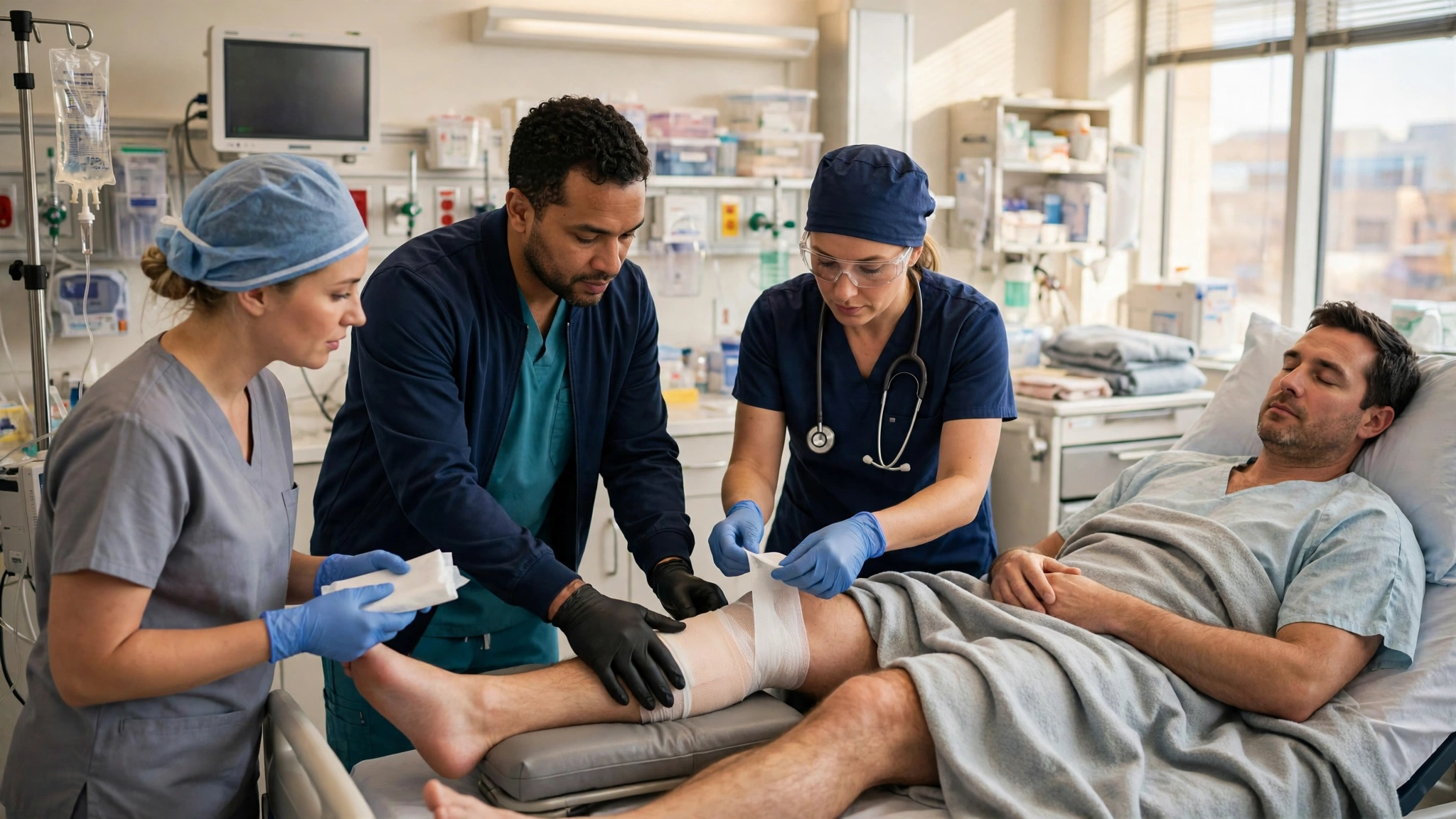
Degloving Injury: What It Is, How It Is Treated, and Recovery
A degloving injury happens when skin and the soft tissue under it are torn away from the muscle, bone, or tissue below. The force slides the layers apart, much like pulling a glove off a hand. Blood vessels and nerves in the area can be damaged at the same time.
Degloving is a serious form of trauma. It needs emergency care, and recovery often takes weeks or months. The injury can be open, with the skin torn away where you can see it, or closed, with the damage hidden under skin that looks almost normal.
In this guide, you will learn what causes degloving, how doctors tell the open and closed types apart, and what treatment and recovery involve.
Contents
- What It Is
- Causes
- Open vs Closed Types
- Where Injuries Happen
- Signs and Symptoms
- Diagnosis
- Treatment
- Recovery
- Possible Complications
- Reducing the Risk
- When to Get Emergency Help
- Frequently Asked Questions
What Is a Degloving Injury?
A degloving injury is a type of soft tissue injury. A strong shearing force drags the skin and the fatty layer beneath it in one direction while the deeper muscle and bone stay in place, and the blood vessels that run between them tear.
The name comes from the way the injury looks. In an open injury, a flap of skin peels back from the body, similar to a glove pulled off a hand. In a closed injury, the skin stays in place, but the tissue underneath has separated and fluid can collect in the gap.
Either form can threaten the tissue involved. When blood flow to the skin is cut off, the skin can die, and torn nerves can harm feeling and movement. That is why doctors treat every degloving injury as urgent.
What Causes Degloving Injuries?
Degloving needs a strong sideways or pulling force. It does not happen from a simple cut or bruise. Common causes include:
- Traffic accidents. Crashes are the leading cause of these injuries, when a body slides along the road or is caught against part of a vehicle.
- Industrial and farm machinery. Moving belts, rollers, and gears can catch clothing or skin and pull it away from the body.
- Falls from height. A hard landing or a slide across a rough surface can shear skin away from the tissue below.
- Sports injuries. High-speed crashes in cycling, motor sports, and skiing can cause degloving on exposed arms and legs.
- Ring injuries. A ring caught on a hook, fence, or machine can strip the skin from a finger in a sudden pull. Doctors call this a ring avulsion.
Children and adults can both be affected, and the pattern depends on the cause: road crashes tend to injure the legs and torso, while machinery and ring injuries tend to injure the hands and fingers.
Open vs Closed Injuries
Doctors divide degloving injuries into two types. The type shapes the treatment plan and the risks.
Open injuries
In an open injury, the skin is torn away and the wound is visible. Muscle, tendon, or bone may be exposed, and bleeding can be heavy because the torn vessels are open. These injuries almost always need surgery to clean the wound and restore coverage.
Closed injuries
In a closed degloving injury, the skin stays intact while the tissue beneath it separates, and blood and fluid collect in the pocket between the layers. Doctors often call this a Morel-Lavallée lesion, after the French physician who first described it in 1853. The StatPearls review of degloving injuries explains how these closed injuries form and why they can be missed at first.
Closed injuries are easy to miss because the skin can look only bruised. The swelling may grow slowly over hours or days. If the pocket is not found, the skin above it can lose its blood supply and die, and infection can follow.
| Feature | Open | Closed |
|---|---|---|
| Skin | Torn away, wound visible | Intact, may look bruised |
| Main risk | Bleeding and infection | Missed diagnosis and skin death |
| First step | Emergency wound care and surgery | Imaging, drainage, or observation |
Where These Injuries Most Often Happen
This injury can happen anywhere on the body, but some areas are more exposed than others.
- Hands and fingers. Ring injuries and machinery catches most often affect the hands. A finger injury can damage tendons, nerves, and blood vessels in a small space.
- Legs and feet. Road crashes and falls often shear the skin of the lower leg and foot. The shin has little fat padding, so the skin separates easily there.
- Thigh and hip. Closed degloving is common over the outer thigh and hip after a crash or a hard fall onto the side.
- Torso. Large shearing forces can strip skin from the back, belly, or chest.
Signs and Symptoms
A closed injury can be subtle, so it helps to know the warning signs.
- Skin peeled back or hanging loose from the body
- A large, soft, fluid-filled swelling under the skin
- Bruising that spreads or grows over hours
- Skin that feels numb, cold, or pale over a wide area
- Pain that seems out of proportion to how the skin looks
- Bleeding that is hard to stop
After any serious accident, doctors look for these signs even when the patient feels fine.
How Doctors Diagnose It
Diagnosis starts in the emergency department. The team first checks breathing, bleeding, and other life-threatening injuries, then examines the injured area closely for soft spots, fluid pockets, and loss of feeling.
Imaging helps map the damage. X-rays show broken bones. A CT scan can show the extent of soft tissue damage and any hidden injuries in the same area, and our guide to CT scan preparation and risks explains what that test involves. MRI is often the best test for a closed degloving injury because it shows fluid pockets and separated tissue layers clearly.
Blood tests are part of hospital care too. They check for blood loss and infection, and a standard blood count test, such as an MCHC blood test, may be included.
Doctors also check blood flow to the area. If the skin is pale and cold, or if a pulse is weak, the vessels may be damaged.
Degloving Injury Treatment
Treatment for a degloving injury depends on whether it is open or closed, how large it is, and which tissues are damaged. Care is usually handled by trauma surgeons, plastic surgeons, orthopedic surgeons, and wound care nurses.
Emergency care first
The first goal is to stop bleeding and prevent infection. The team applies pressure to bleeding wounds, covers them with clean dressings, and gives fluids and pain relief. They also check tetanus status and start antibiotics when the wound is dirty or deep. For general guidance on wound first aid, MedlinePlus has a clear page on wounds and injuries.
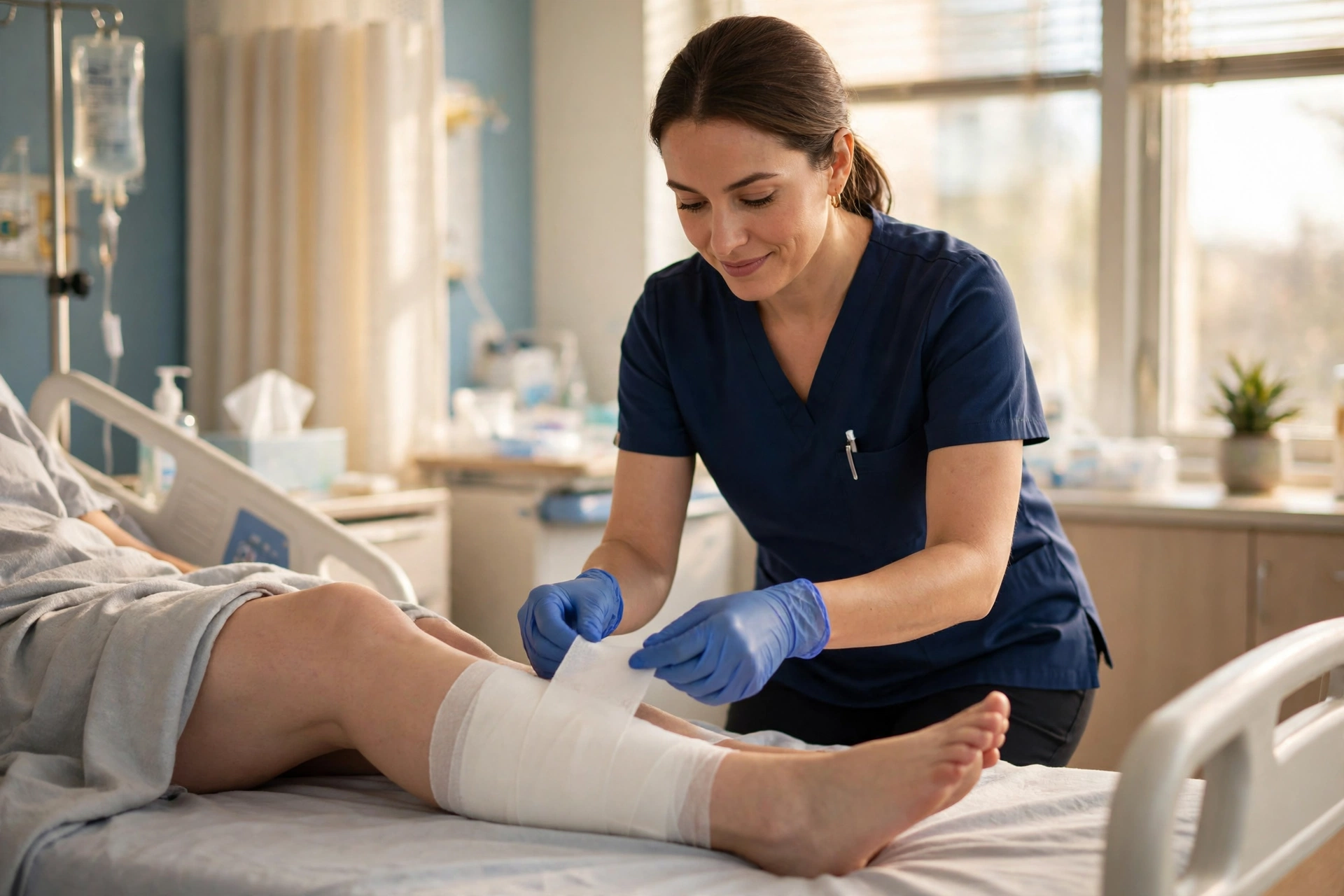
Cleaning the wound
For open injuries, surgeons clean the wound in the operating room and remove tissue that has lost its blood supply. This step is called debridement. Dead tissue left in place invites infection and blocks healing, so surgeons remove it and repeat the cleaning if needed.
Restoring skin coverage
Once the wound bed is clean, surgeons restore coverage. Options include:
- Reattaching the skin. If the peeled skin is still alive and clean, surgeons may stitch it back in place. This works best when the injury is fresh.
- Skin grafts. A thin layer of healthy skin from another part of the body is placed over the wound. Grafts need a clean wound bed to take hold.
- Tissue flaps. A flap moves skin along with its own blood vessels to cover a deeper wound. Flaps are used when a graft alone would not survive.
- Negative pressure therapy. A sealed dressing connected to gentle suction pulls fluid from the wound and helps grafts stick. It is often used between surgeries.
Treating a closed injury
Small closed injuries may be managed without surgery. Doctors watch the fluid pocket, apply compression, and repeat exams to make sure the skin stays alive. Larger pockets are often drained with a needle or a small tube. If the pocket keeps refilling, or if the skin above it is dying, surgeons open the area, clean it out, and close the space.
Care during the hospital stay
Most people with a serious degloving injury stay in the hospital for days or weeks while the team changes dressings, watches for infection, and manages pain.

Recovery and Rehabilitation
Recovery is measured in weeks to months, not days. The timeline depends on the size and site of the injury, whether a graft was needed, and whether complications appear.
- First days. The focus is on wound care, pain control, and watching for infection. Dressings are changed often, and the injured limb is kept raised and still.
- First weeks. Stitches or staples come out, and grafts are checked to see if they have taken. Gentle movement starts to prevent stiffness in nearby joints.
- First months. Physical therapy builds strength, range of motion, and the ability to walk or use the hand again. Occupational therapy helps with daily tasks such as dressing, cooking, and work.
- Longer term. Scars soften slowly over many months. Some numbness can remain where nerves were damaged. Follow-up visits continue until the wound is fully healed.
Walking again is a gradual process after a leg injury. Short, regular walks build stamina. Our guide to how many steps in a mile can help you plan gentle walking goals once your care team says it is safe to move more.
Possible Complications
These injuries carry a real risk of complications, even with good care. The most common ones include:
- Infection. Open wounds and dead tissue invite bacteria. Infection can delay healing and may need more surgery and antibiotics.
- Skin death. Skin that loses its blood supply can die, even days after the injury. This is a key risk with closed injuries that are found late.
- Graft failure. A skin graft may not take hold if the wound bed is poor or infected. A second graft or a flap may then be needed.
- Scarring and stiffness. Large wounds heal with scars, and scars near joints can limit movement.
- Numbness. Nerves torn by the shearing force may not fully recover, leaving lasting numbness in the area.
- Amputation. In the most severe cases, when blood flow cannot be restored, doctors may need to remove a finger, hand, or part of a limb.
Emotional effects are common too. A sudden, visible injury and a long recovery can bring stress and low mood, so support from family, friends, and counselors helps.
How to Reduce the Risk
Degloving injuries are accidents, but several habits lower the odds.
- Wear a seat belt on every trip, and use a helmet on a motorcycle or bicycle.
- Keep machine guards in place at work, and tie back loose clothing and hair near moving parts.
- Remove rings before work with machinery, heavy lifting, or climbing. A plain band can catch and strip a finger in a second.
- Wear sturdy boots and protective gear for motor sports, cycling, and construction work.
Workplace safety rules exist because these injuries are often preventable. If a guard is missing or a machine feels unsafe, report it.
When to Get Emergency Help
Call emergency services right away if skin has been torn away from the body, if bleeding will not stop, or if a limb looks deformed or cannot move. Do not drive yourself to the hospital in this state.
While waiting for help, press a clean cloth firmly on the wound to slow bleeding, and cover it loosely with a clean, damp cloth. Do not try to push torn tissue back into place, and do not remove objects stuck in the wound. If a piece of skin has come off completely, place it in a clean, damp cloth inside a sealed bag, and bring it with you.
Even a closed injury deserves urgent care after a serious accident. Swelling, numbness, or pain that grows over hours can signal hidden damage, so get checked the same day.
Frequently Asked Questions
What is a degloving injury?
A degloving injury is a trauma in which skin and the tissue beneath it are torn away from the muscle or bone below by a shearing force. It can be open, with the skin peeled back, or closed, with the damage hidden under intact skin.
What causes a degloving injury?
Traffic accidents are the most common cause, followed by machinery accidents, falls from height, and sports crashes. A ring catching on an object can strip the skin from a finger, and this is called a ring avulsion.
What is a Morel-Lavallée lesion?
A Morel-Lavallée lesion is a closed degloving injury, usually over the thigh, hip, or pelvis. The skin stays intact while the tissue below separates and fluid collects in the gap. It was first described by the French physician Morel-Lavallée in 1853.
How is a degloving injury treated?
Open injuries are cleaned in surgery, dead tissue is removed, and coverage is restored with stitches, skin grafts, or tissue flaps. Closed injuries may be watched, compressed, or drained, and surgery is used when the pocket refills or the skin is at risk.
How long does recovery from a degloving injury take?
Recovery usually takes weeks to months. Small injuries may heal in a few weeks, while large injuries with grafts can need months of wound care and physical therapy.
Can a degloving injury heal without surgery?
Some small closed injuries can heal with observation, compression, and drainage. Most open injuries need surgery to clean the wound and restore skin coverage. A doctor decides based on the size and the blood supply.
Is a degloving injury life-threatening?
It can be. Heavy bleeding, infection, and damage to deeper structures can threaten life, especially after a major crash. Closed injuries can also be dangerous because they are easy to miss.
Conclusion
A degloving injury is a severe trauma in which skin and soft tissue separate from the structures beneath them. Fast emergency care, careful cleaning, and the right repair give the best chance of healing, and steady rehabilitation restores movement and strength over time. If you or someone near you suffers this kind of injury, get emergency help at once.
This article shares general health information only and is not medical advice. If you have an injury or ongoing symptoms, talk to a healthcare professional.