How to Get More Deep Sleep: What Works and What Does Not
Deep sleep is the part of the night when your body does its heavy repair work. It is also called slow-wave sleep. You cannot order your body to give you more of it. But you can give it the hours, the rhythm, and the conditions it needs, and stop doing the things that cut it short.
This article is for general information only and is not medical advice. If you have a health concern, talk to a healthcare professional.
Quick Answer: To get more deep sleep, give yourself seven or more hours of sleep each night on a steady schedule, move during the day, stop caffeine by the early afternoon, skip alcohol in the evening, and keep your bedroom cool, dark, and quiet. Most deep sleep comes in the first few hours after you fall asleep, so protect those hours from alcohol, noise and heat. You cannot force deep sleep, but you can protect it.
What Deep Sleep Is
Deep sleep is the third stage of non-REM sleep. Doctors call it stage N3, or slow-wave sleep, because your brain waves slow into big, slow waves called delta waves. Your breathing and heart rate slow, and your muscles relax fully. It is the hardest stage to wake from.
The Four Stages in One Night
Your night is not one long stretch of the same sleep. It runs in cycles. Each cycle lasts about 90 minutes, and most adults go through four to six cycles a night, according to the Cleveland Clinic.
| Stage | What happens | Rough length |
|---|---|---|
| Stage 1 (light) | You drift off. Your body starts to slow down. | 1 to 5 minutes |
| Stage 2 (light) | Your muscles relax. Your heart rate and breathing slow. | About half the night |
| Stage 3 (deep) | Your brain waves slow right down. Your body repairs itself. | 20 to 40 minutes in early cycles |
| REM (dreaming) | Your brain wakes up while your body stays still. Most dreams happen here. | About 10 minutes at first, longer later |
Each cycle moves from light sleep into deep sleep, then back to light sleep, then into dreaming (REM) sleep. As the night goes on, deep sleep gets shorter and dreaming sleep gets longer.

Why the First Few Hours Matter
Most of your deep sleep comes in the first two or three cycles after you fall asleep. Your body pays off the tiredness it built up during the day, so deep sleep comes first and fades as the night goes on. That means deep sleep follows when you fall asleep, not the clock. What hurts it most is a short night, an irregular schedule, and anything that breaks up those first hours, like alcohol, a hot room or noise. Later in the night you get more dreaming sleep, so cutting the night short at the end costs you mostly REM.
Why Deep Sleep Matters
Deep sleep is the most physically restorative stage of sleep. During this stage, your body repairs itself by regrowing tissue, strengthening your immune system and building bones and muscle. That is how the Cleveland Clinic describes it. In short, deep sleep is repair time.
Deep sleep is also when your body releases growth hormone. In children and teens it supports normal growth. In adults it helps build muscle and repair cells and tissues, according to the National Heart, Lung, and Blood Institute.
Your brain uses deep sleep too. While you sleep, your brain forms new pathways to help you learn and remember. A good night of sleep improves learning and helps you pay attention, make decisions, and be creative.
How Much Deep Sleep Do You Need
There is no official target for deep sleep. No major health body sets a minimum number of minutes. What the guidelines do set is total sleep: adults need seven or more hours a night.
“By adulthood, most healthy people need seven to nine hours,” says Michelle Drerup, PsyD, DBSM, psychologist and sleep disorder specialist at Cleveland Clinic (source).
A full night holds four to six cycles of about 90 minutes. The early cycles hold 20 to 40 minutes of deep sleep each, so most adults get roughly one to two hours of deep sleep a night. That is a rough guide, not a target to chase. The Sleep Foundation says most adults spend about 10 to 20 percent of the night in deep sleep.
Deep sleep falls with age. As you get older, you spend less time in this stage and more time in lighter stages of sleep. That is normal, and the habits in this guide still help.
A wrist tracker cannot read your brain waves. It guesses deep sleep from movement and heart rate, so treat its number as a rough trend, not a measurement. Only a sleep study that tracks brain waves can measure deep sleep accurately.
How to Get More Deep Sleep
You cannot force deep sleep. What you can do is build the conditions that let it happen, and remove the things that block it. If you want to know how to get more deep sleep, start with the first two habits below. They do most of the work. For the basics of better sleep in general, see our guide to sleeping better at night.
1. Give Yourself Enough Hours
Deep sleep is a share of your total sleep. If your total is short, deep sleep gets cut too. Adults need seven or more hours a night, and most healthy adults need seven to nine. Count back from your wake time to find your bedtime. If you now sleep six hours, do not add two hours in one night. Move bedtime earlier by 15 to 30 minutes every few days. Steady beats perfect.
2. Keep the Same Bedtime
Your body runs on an internal clock. It works best with a steady pattern. When you go to bed and wake up at roughly the same times each day, that clock learns when to make you sleepy and when to make you alert. A regular wake time does most of the work, because it anchors everything else. Pick a wake time you can keep seven days a week. Our healthy morning routine shows how a steady start supports the night.

3. Move During the Day
Regular daytime exercise is one of the best-supported ways to improve sleep quality. Research that pooled many studies found that regular exercise improved sleep, and even a single session was linked to a small rise in slow-wave sleep. Aim for at least 30 minutes of moderate movement most days. Walking, cycling, swimming, and strength training all count. Our home workout without equipment guide has simple routines you can do at home. Evening workouts are fine for most people. A 2019 review found that exercise in the evening did not hurt sleep, but hard exercise in the last hour before bed made it harder to fall asleep. Keep the last hour for something gentle.

4. Stop Caffeine by the Early Afternoon
Caffeine blocks adenosine, one of the chemical signals behind sleep pressure. Sleep pressure is the tiredness that builds while you are awake. It pushes you into deep sleep at night, and caffeine hides that signal. The CDC lists avoiding caffeine in the afternoon or evening among the habits that help sleep. In one controlled study, caffeine taken six hours before bed still disturbed that night’s sleep. An early afternoon cut-off is a simple rule. If you sleep at 10 p.m., your last coffee lands around 2 p.m.
5. Skip the Nightcap
Alcohol can make you feel drowsy, and that part is real. The catch is what happens later. It can make the first part of the night look deeper, but it breaks up sleep in the second half. You may wake more and feel less rested in the morning. Less alcohol in the evening, or none on weeknights, usually leads to steadier sleep.
6. Cool the Room
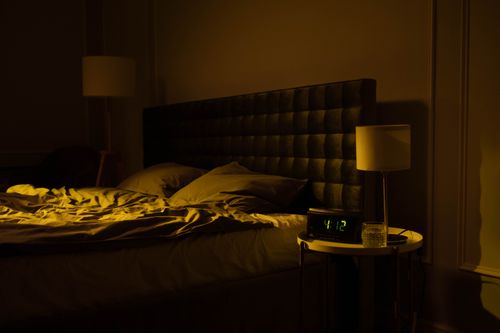
Your body temperature needs to drop to fall asleep and stay asleep. A cool room helps that drop happen. Many sleep experts suggest a bedroom around 60 to 67 degrees Fahrenheit. If you wake up hot, try lighter bedding or a fan. Darkness matters too. Use blackout curtains and cover tiny standby lights.
7. Take a Warm Bath Before Bed
A warm bath or shower one to two hours before bed helps many people fall asleep faster. A review of several studies found that warm bathing in that window helped people fall asleep faster and rate their sleep better. The warm water raises your body temperature a little, and the drop afterward lines up with natural sleepiness. Use warm water, not hot. One to two hours before bed, not right at lights out.

Stress keeps your body alert, which can make sleep lighter. A calm last hour helps: dim lights, slow breathing, light stretching or a few pages of a book.
8. Protect the First Few Hours of Sleep
Most deep sleep happens in the first few hours after you fall asleep, so guard them. Skip alcohol close to bed, keep the room cool and quiet, and put the phone away so late scrolling doesn’t push your sleep later than your wake time allows. If you wake up in the middle of the night, do not panic about lost deep sleep. Most of it is already banked by then.
What Happens If You Don’t Get Enough Deep Sleep
When deep sleep runs short, you may wake up feeling unrefreshed even after a full night in bed. You may feel foggy, find it harder to focus and feel more tired during the day. Over time, poor sleep is linked to a weaker immune system and other health problems. One bad night is not a problem. A pattern that lasts for weeks is worth fixing, and worth a doctor’s visit if better habits don’t help.
What Does Not Help Deep Sleep
Some popular fixes have thin evidence. Pink noise is one example. Some small studies link soft pink noise to stronger slow waves, but the evidence is thin and the effect is small. A quiet room, or a steady fan, does the same job for most people. Sleep drinks, gummies, and “deep sleep” supplements are another. No product can target one sleep stage. If you are thinking about a supplement or a sleep aid, talk to a healthcare professional first. Fancy trackers and scores are a third. Chasing a higher deep sleep number can make sleep worse, because worry itself keeps you awake. Use the tracker for trends across weeks, not as a nightly grade.
A Simple 7-Night Deep Sleep Test
This plan is built around how to get more deep sleep in a real week. Add one change per night, and each morning write one short line about how rested you feel. Judge the week as a whole, not one night.
| Night | One change to add |
|---|---|
| Night 1 | Set a fixed wake time and keep it, even on the weekend days that follow |
| Night 2 | Move bedtime earlier by 30 minutes so you get more time in bed |
| Night 3 | Take a short morning walk in daylight |
| Night 4 | Add 30 minutes of daytime movement, and keep hard exercise out of the last hour before bed |
| Night 5 | Stop caffeine by the early afternoon |
| Night 6 | Skip alcohol in the evening |
| Night 7 | Cool the room and take a warm bath 1 to 2 hours before bed |
If a night goes badly, do not restart the plan. Pick up the next night where you left off. Deep sleep responds to patterns, not to single perfect nights.
When to Talk to a Doctor
Talk to a healthcare provider if you snore loudly, gasp for air, or stop breathing during sleep, or if you still feel tired after getting enough sleep. The CDC gives the same advice. A sleep study can find what habits alone cannot.
Frequently Asked Questions
How much deep sleep do I need per night?
There is no official target. On a full night of four to six 90-minute cycles, most adults get roughly one to two hours. Focus on total sleep first. Seven or more hours on a steady schedule protects deep sleep better than chasing a number.
How can I get more deep sleep?
Give yourself enough hours in bed. Keep the same bedtime and wake time, and move during the day. Stop caffeine by the early afternoon, skip alcohol in the evening, and keep your bedroom cool, dark, and quiet. Most deep sleep comes in the first few hours after you fall asleep, so protect those hours from alcohol, heat and noise.
What is deep sleep?
Deep sleep is the third stage of non-REM sleep, also called slow-wave sleep or stage N3. Your brain waves slow right down, your breathing and heart rate slow, and your body does its heavy repair work. It is the hardest stage to wake from.
Is deep sleep the same as REM sleep?
No. Deep sleep is slow, quiet, and focused on physical repair. REM sleep is active, with fast brain activity and most dreaming. Deep sleep fills the first half of the night. REM grows longer toward morning.
Why do I get less deep sleep as I get older?
Deep sleep falls with age. As you get older, you spend less time in deep sleep and more time in lighter stages. That is normal. The habits in this guide still help, but they will not bring back the deep sleep of your twenties.
Do sleep trackers measure deep sleep accurately?
No. A wrist tracker cannot read brain waves, so it can only guess deep sleep from movement and heart rate. Treat its number as a rough trend across weeks, not a nightly measurement. Only a sleep study that tracks brain waves measures it accurately.
What causes a lack of deep sleep?
The most common causes are short nights and an irregular schedule. Late caffeine, alcohol in the evening, a warm or noisy bedroom, and anything that breaks up the night, like loud snoring, can also cut deep sleep short. Fix the total hours and the schedule first. If the problem lasts for weeks despite good habits, talk to a healthcare provider.
Conclusion
Learning how to get more deep sleep comes down to a simple idea. You cannot order your body to sleep deeply, but you can give it the hours, the rhythm, and the quiet it needs. Start with a steady wake time and enough time in bed. Add daytime movement, an early caffeine cut-off, and a cool, dark room. Give the changes a week or two, and judge them by how you feel in the morning.
Sources
- Centers for Disease Control and Prevention, About Sleep: https://www.cdc.gov/sleep/about/
- National Heart, Lung, and Blood Institute, Sleep Deprivation and Deficiency: Why Is Sleep Important?: https://www.nhlbi.nih.gov/node/4605
- Cleveland Clinic, How Much Sleep You Actually Need: https://health.clevelandclinic.org/how-much-sleep-do-i-need
- Cleveland Clinic, Sleep: What It Is, Why It Is Important, Stages, REM & NREM: https://my.clevelandclinic.org/health/body/12148-sleep-basics
- Patel, Aakash K., et al. Physiology, Sleep Stages. StatPearls. https://www.ncbi.nlm.nih.gov/books/NBK526132/
- Sleep Foundation, How to Get More Deep Sleep: https://www.sleepfoundation.org/stages-of-sleep/how-to-get-more-deep-sleep
- Sleep Foundation, How to Fall Asleep Fast: https://www.sleepfoundation.org/sleep-hygiene/how-to-fall-asleep-fast
- Kredlow, M. Alexandra, et al. The effects of physical activity on sleep: a meta-analytic review. Journal of Behavioral Medicine, 2015. https://pubmed.ncbi.nlm.nih.gov/25596964/
- Stutz, Jan, et al. Effects of Evening Exercise on Sleep in Healthy Participants: A Systematic Review and Meta-Analysis. Sports Medicine, 2019. https://pubmed.ncbi.nlm.nih.gov/30374942/
- Drake, Christopher, et al. Caffeine effects on sleep taken 0, 3, or 6 hours before going to bed. Journal of Clinical Sleep Medicine, 2013. https://pubmed.ncbi.nlm.nih.gov/24235903/
- Ebrahim, Irshaad O., et al. Alcohol and sleep I: effects on normal sleep. Alcoholism: Clinical and Experimental Research, 2013. https://pubmed.ncbi.nlm.nih.gov/23347102/
- Haghayegh, Shahab, et al. Before-bedtime passive body heating by warm shower or bath to improve sleep: A systematic review and meta-analysis. Sleep Medicine Reviews, 2019. https://pubmed.ncbi.nlm.nih.gov/31102877/
This article is for general information only and is not medical advice. If you have a health concern, talk to a healthcare professional.