Stickler Syndrome: What It Is, Its Symptoms, and How It Is Diagnosed
Stickler syndrome is a rare inherited genetic condition that affects collagen, the protein that gives strength and shape to connective tissue. Because collagen is present through the whole body, the condition mainly affects the eyes, ears, joints and face. It is also called Stickler dysplasia or hereditary progressive arthro-ophthalmopathy.
The condition affects roughly 1 in 7,500 to 10,000 newborns. Doctors first described it in 1965, when Gunnar Stickler reported a family with eye, joint and hearing problems passed from parent to child.
There is no cure for stickler syndrome. Care focuses on protecting vision, supporting hearing, and managing joint and facial problems one by one. Regular eye checks are the most important step, because a detached retina can cause blindness if it is not treated in time. The Cleveland Clinic notes that early diagnosis and steady follow up help people with this condition keep the best possible sight and hearing.
Contents
- What Is Stickler Syndrome?
- What Causes Stickler Syndrome?
- Stickler Syndrome Types: A Comparison
- Stickler Syndrome Symptoms
- Stickler Syndrome in Babies and Children
- How Is Stickler Syndrome Diagnosed?
- Care and Management for Stickler Syndrome
- Living with Stickler Syndrome
- Frequently Asked Questions About Stickler Syndrome

What Is Stickler Syndrome?
Stickler syndrome is a disorder of connective tissue, the tissue that supports and connects the parts of the body. Collagen is the main building block of this tissue. When a collagen gene carries a fault, these parts of the body do not develop or work quite as they should.
The condition varies a great deal from person to person, even within one family. One person may have severe short sight and hearing loss, while a close relative with the same gene change has only mild joint pain.
The condition is present from birth, but it is not always found early. A baby with a cleft palate may be diagnosed in the first weeks of life, while a child with only mild short sight may not be diagnosed until a school eye test. It is not caused by anything a parent did during pregnancy.
What Causes Stickler Syndrome?
Stickler syndrome is caused by a change, or mutation, in one of six genes that give instructions for making collagen. Those genes are COL2A1, COL11A1, COL11A2, COL9A1, COL9A2 and COL9A3.
In most cases, a child inherits the changed gene from a parent. Types I, II and III follow an autosomal dominant pattern. If one parent carries the gene change, each child has a 50 percent chance of inheriting it.
Types IV, V and VI are far rarer and follow an autosomal recessive pattern. A child must inherit a changed copy of the gene from both parents. When both parents are carriers, each child has a 25 percent chance of having the condition. Some cases are new, which doctors call de novo. The gene change appears for the first time in the child, and neither parent carries it. Genetic testing can often find the exact gene change. Our Health guides cover other inherited and long term conditions in the same plain style.
Stickler Syndrome Types: A Comparison
Doctors divide the condition into six types, based on the gene involved and the pattern of symptoms. Type I is by far the most common.
| Type | Gene | Inheritance | Main features |
|---|---|---|---|
| Type I | COL2A1 | Dominant | Most common, 80 to 90 percent; membranous vitreous; highest retinal detachment risk; severe short sight |
| Type II | COL11A1 | Dominant | 10 to 20 percent; beaded vitreous; severe hearing loss; short sight and joint problems |
| Type III | COL11A2 | Dominant | Hearing loss and joint problems; no eye symptoms |
| Type IV | COL9A1 | Recessive | Extremely rare; severe hearing and vision loss |
| Type V | COL9A2 | Recessive | Extremely rare; severe hearing and vision loss |
| Type VI | COL9A3 | Recessive | Extremely rare; severe hearing and vision loss |
Type I carries the highest risk of retinal detachment. The vitreous, the clear jelly that fills the eye, has a thin, membranous look in type I, which makes the retina more likely to tear or detach, sometimes in childhood. An EyeRounds case review describes the eye findings in type I in detail, including the vitreous changes that help doctors tell it apart from other types.
Type II has a beaded appearance in the vitreous, and hearing loss tends to be more severe than in type I. Type III affects hearing and joints but leaves the eyes alone, so a person with type III does not need the same level of eye monitoring as a person with type I.
Stickler Syndrome Symptoms
The symptoms fall into four main groups: eyes, ears, joints and face. Most people have a mix of symptoms from more than one group, and the mix can change over time.
Eye Problems
Severe nearsightedness, also called myopia, is one of the most common signs. Children with the condition often need strong glasses from an early age.
Retinal detachment is the most serious eye problem linked to this condition. The retina is the light sensitive layer at the back of the eye. If it tears or peels away, vision can be lost quickly. Warning signs include a sudden shower of floaters, flashes of light, or a shadow spreading across the field of vision. Any of these signs needs urgent eye care.
Cataracts and glaucoma can also develop earlier in life than usual, so regular monitoring matters.
Hearing Loss
Hearing loss is common, and it is usually sensorineural, which means it comes from the inner ear or the nerve that carries sound to the brain. It can be present from birth, or it can develop slowly during childhood. In some people, the hearing loss is conductive, which means sound does not travel well through the middle ear.
Hearing loss in a young child can affect speech and language, so early testing matters.
Joints and Bones
Joint hypermobility is a frequent feature. This means the joints bend further than usual, and the child may seem unusually flexible. Over time, the joints often stiffen, and the person may lose some of that flexibility.
Early onset arthritis is another common problem. Joints, especially the knees, hips and spine, can become painful and stiff at a younger age than expected. Some people develop scoliosis, a sideways curve of the spine. A sudden pain in the belly is different, and our guide to appendicitis explains how doctors tell that apart from other causes.
Face and Mouth
Many people with the condition have a flattened midface, a small nose, and a small or recessed lower jaw, which doctors call micrognathia.
A cleft palate is a more visible feature. This is a gap in the roof of the mouth that forms before birth. Some babies are born with Pierre Robin sequence, a set of features that includes a small jaw, a tongue that falls back in the throat, and breathing or feeding difficulty.
Stickler Syndrome in Babies and Children
Babies with the condition may face feeding and breathing problems in the first weeks of life. A cleft palate makes it hard for a baby to suck and swallow, and a small jaw can narrow the airway.
Early diagnosis in babies is common when the facial features or the cleft palate are clear at birth. An eye exam and a hearing test usually follow soon after.
For older children, the first sign is often poor vision at school or a failed hearing test. A child who sits close to the television, holds books very near the face, or asks people to repeat themselves may need a fuller check. Contact sports need more care, because of the risk to the retina.
How Is Stickler Syndrome Diagnosed?
Diagnosis rests on a mix of clinical features, family history and tests. There is no single test that proves the condition on its own. Instead, doctors build up a picture from several sources, and genetic testing can then confirm the cause.
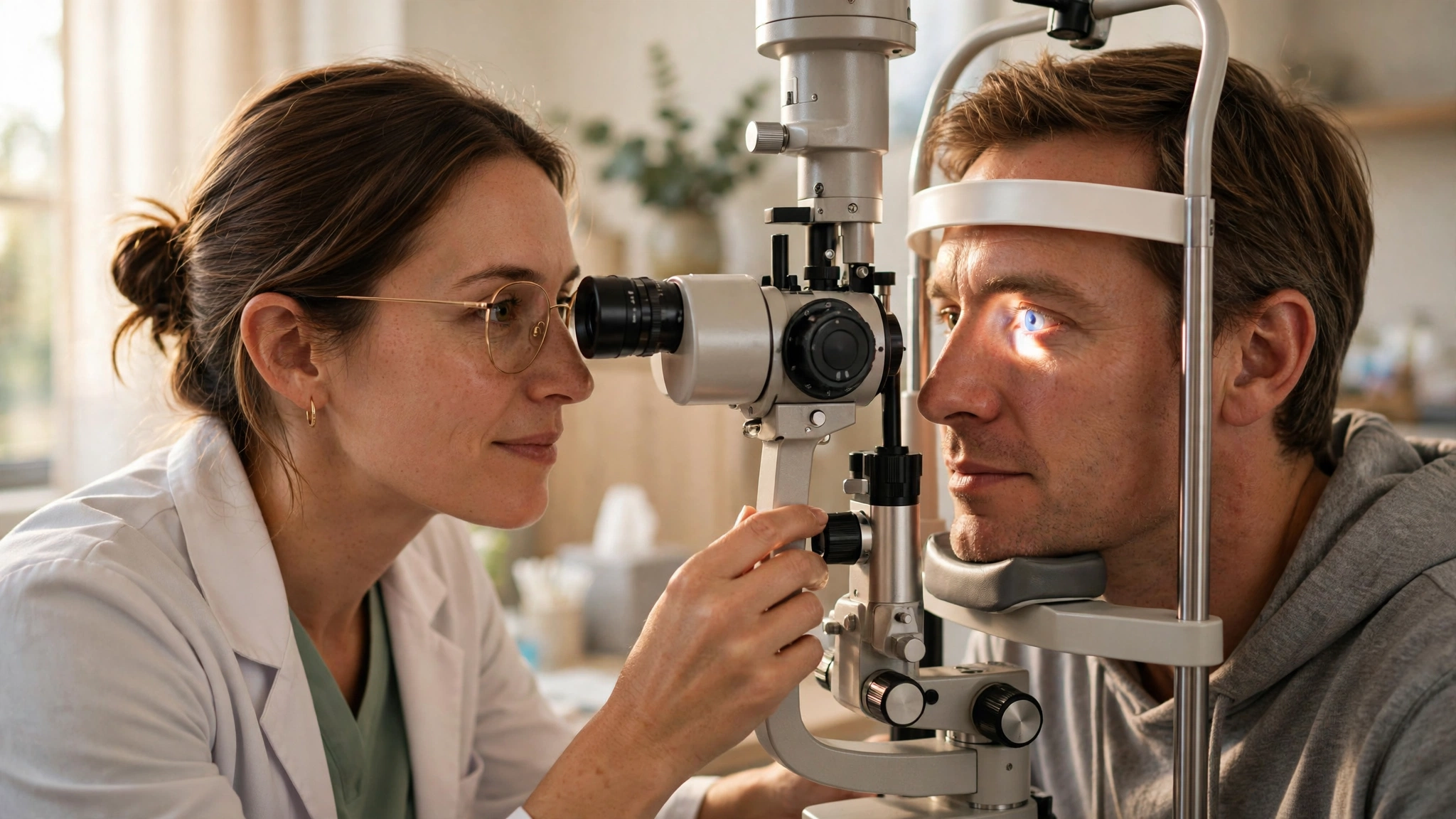
The process often starts with an eye exam. An eye doctor uses a slit lamp, a microscope with a bright light, to look at the vitreous gel and the retina. A full retina check, with the pupil widened, looks for tears, thinning or early detachment.
Hearing tests come next. These may include simple hearing checks in a young child, or more detailed tests that measure how the inner ear and the hearing nerve respond to sound. A doctor will also examine the face and mouth, and ask about the family history in detail.
Genetic testing, usually from a blood sample, looks for a change in one of the six collagen genes. A clear result confirms the diagnosis and the type. Other conditions can look similar, so doctors may check for other causes first. Tests that look at other body systems, such as an EEG test for brain activity or an MCHC blood test for red blood cell health, are sometimes used when a wider picture is needed.
Care and Management for Stickler Syndrome
There is no cure, and care is planned symptom by symptom. The goal is to protect sight and hearing, to keep joints working well, and to support speech, feeding and learning.
Regular eye checks are the single most important part of care. Children and adults with the condition should see an eye specialist at least once a year, and more often if problems are found. Laser treatment or surgery can repair a retinal tear before it becomes a full detachment, but only if the tear is found early.
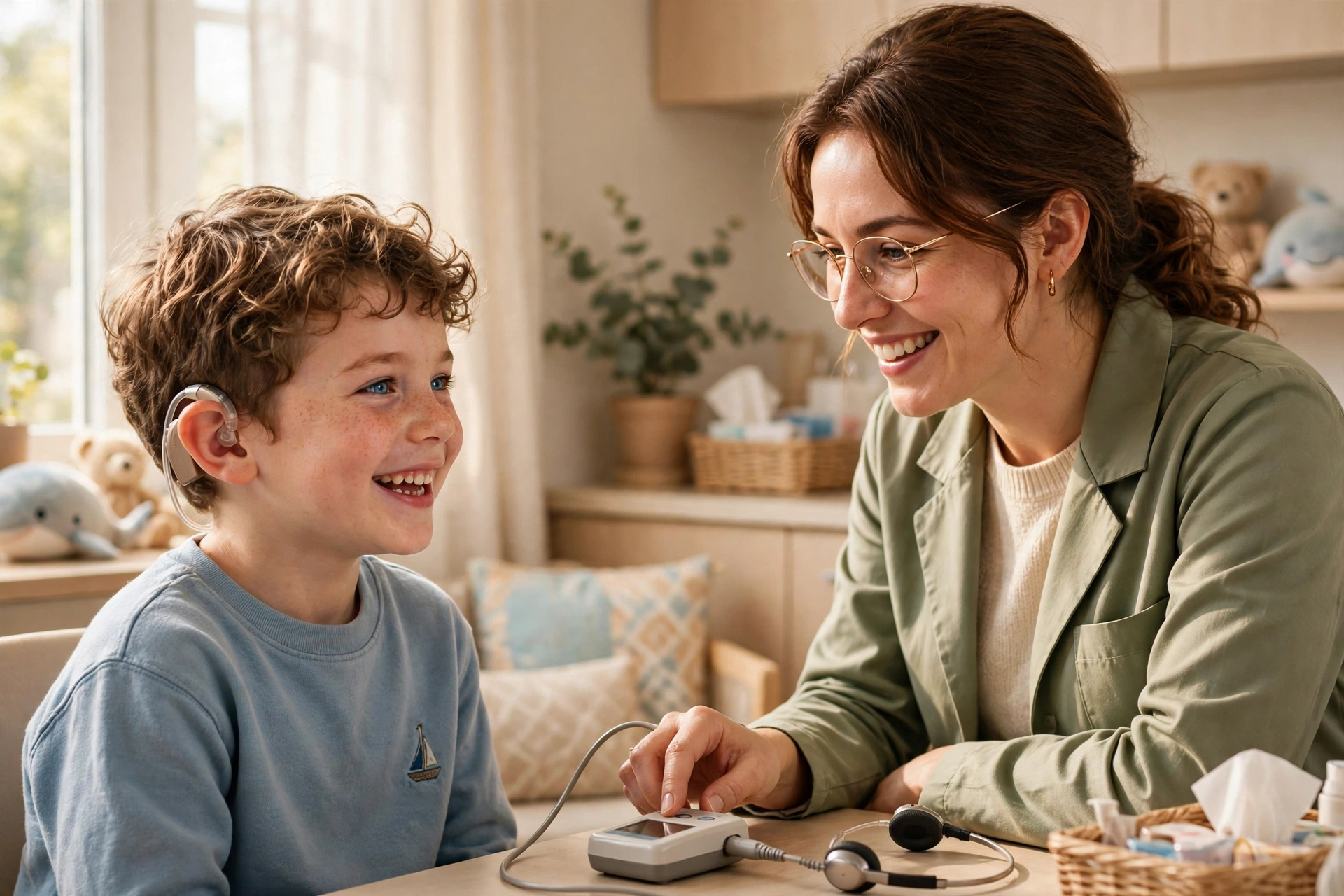
Hearing aids can help a great deal when hearing loss is present. Cleft palate surgery is usually done in the first year of life. The operation closes the gap in the roof of the mouth, which helps feeding and speech, and further speech therapy often follows.
Physiotherapy helps to keep joints mobile and muscles strong. Gentle exercise, such as swimming, can build strength without putting too much strain on the joints. Genetic counselling is also an important part of care. A counsellor explains the inheritance pattern, the chance of passing the condition to a child, and the options for testing during pregnancy.
Living with Stickler Syndrome
Living with the condition means living with regular check ups, and that routine can feel tiring, especially for families with young children. At the same time, the routine is what protects vision and hearing, so most families find it worth the effort.
At school, a child with poor vision or hearing loss may need extra help. Large print books, a seat near the front, and a hearing aid that works well can make a real difference. Parents should tell the school about the diagnosis, so that teachers can watch for signs of eye or ear trouble, such as squinting, headaches or a drop in school work.
Emotional support matters too, because a rare condition can feel isolating. Anyone with the condition who notices new floaters, flashes of light, a shadow in their vision, or a sudden change in hearing should seek care at once.
Frequently Asked Questions About Stickler Syndrome
Is stickler syndrome life threatening?
Stickler syndrome is not usually life threatening, but it can cause serious problems if they are not treated. The main risk is loss of vision from retinal detachment, and this can be prevented in many cases with regular eye checks and early treatment. Breathing problems in babies with Pierre Robin sequence can also need urgent care.
Can stickler syndrome be cured?
No, there is no cure for stickler syndrome at present. The condition comes from a change in a collagen gene, and no treatment can rewrite that gene. Care is therefore aimed at each symptom in turn, with eye checks, hearing aids, surgery for cleft palate, and physiotherapy for joints.
Is stickler syndrome inherited from parents?
Yes, in most cases stickler syndrome is inherited from a parent who carries the gene change. Types I, II and III are autosomal dominant, so a child of an affected parent has a 50 percent chance of inheriting the condition. Types IV, V and VI are autosomal recessive, so a child needs a changed gene from both parents. Some cases are new, and neither parent carries the change.
What is the difference between type I and type II?
Type I is the most common type, and it is caused by a change in the COL2A1 gene. It carries the highest risk of retinal detachment, and the vitreous inside the eye looks thin and membranous. Type II is caused by a change in the COL11A1 gene, and the vitreous looks beaded. Hearing loss tends to be more severe in type II, while the eye risk is highest in type I.
Can a child with stickler syndrome go to a normal school?
Yes, most children with stickler syndrome go to a regular school, and many do very well. They may need glasses, hearing aids, a seat near the front of the class, or large print materials. Speech therapy may also help after cleft palate repair.
When should a family seek genetic counselling?
A family should consider genetic counselling when the condition is diagnosed, or when a relative is found to carry the gene change. A counsellor can explain the type, the inheritance pattern, and the chance of passing it on. They can also talk through testing options for other family members and for future pregnancies.
Conclusion
Stickler syndrome is a rare genetic condition that affects collagen, and through it the eyes, ears, joints and face. Its symptoms vary widely, from severe short sight and hearing loss to joint pain and cleft palate. With regular eye checks, hearing support and care planned symptom by symptom, most people with the condition can protect their sight and live full lives.
This article shares general health information only. If you have ongoing health concerns, talk to a healthcare professional before starting, stopping, or changing any treatment.