
MCHC Blood Test: What Your Result Means and What to Do Next
An MCHC blood test is part of a complete blood count, and it measures how much hemoglobin is packed inside your red blood cells. Hemoglobin is the protein that carries oxygen from your lungs to the rest of your body. When your MCHC blood test result falls outside the normal range, it gives your doctor a clue about what may be going on, but it never makes a diagnosis on its own.
This guide explains what the test measures, the normal range for adults, what low and high results usually mean, and how doctors read the result alongside your other blood counts. It also covers what to do next if your result is flagged.

Table of Contents
- What It Is
- Normal Range
- Low Results
- High Results
- Reading It With Other Numbers
- What to Do Next
- Frequently Asked Questions
- Conclusion
What Is an MCHC Blood Test?
MCHC stands for mean corpuscular hemoglobin concentration. An MCHC blood test reports the average concentration of hemoglobin inside your red blood cells, measured in grams per deciliter (g/dL). It tells your doctor how densely packed the hemoglobin is, not how many red blood cells you have, and not how large they are.
The test is not a separate blood draw. It comes from a complete blood count (CBC), a routine panel that millions of adults have each year for checkups, before surgery, or when a doctor checks for anemia and other blood conditions. The MedlinePlus complete blood count guide describes the CBC as a common test that measures many parts of your blood at once.
Unlike most blood values, MCHC is calculated, not measured directly. The lab analyzer measures your hemoglobin and your hematocrit, which is the share of your blood made up of red cells, and then it works out the MCHC with a simple formula:
MCHC = (hemoglobin in g/dL divided by hematocrit as a decimal) x 100
For example, if your hemoglobin is 14 g/dL and your hematocrit is 0.42, the MCHC is about 33 g/dL. Because the value is calculated, a mistake in either of the two starting numbers can shift the result. That is one reason doctors repeat an odd result before acting on it.
An MCHC blood test result is most useful as part of the full picture. Doctors read it together with MCV (the average size of your red cells), MCH (the average amount of hemoglobin per cell), and RDW (how much your red cells vary in size). For a broader view of everyday health topics, see our HealthRader health guides.
MCHC Blood Test Normal Range
For most adults, the normal range on an MCHC blood test is about 32 to 36 g/dL. Some labs use a slightly tighter window, such as 33 to 36 g/dL. The range is broadly the same for men and women, and it is similar for older children and teens.
| Result (g/dL) | How it is usually read |
|---|---|
| Below 32 | Low, called hypochromia |
| 32 to 36 | Within the typical range |
| Above 36 | High, called hyperchromia |
Always compare your number to the reference range printed on your own report, because labs build their ranges from different groups of healthy people. A value of 31.8 g/dL may be flagged as low by one lab and normal by another. A single point just outside the range is often unremarkable, especially if your other blood counts look normal.
Children have their own reference ranges, which shift with age. If the test is for a child, the lab’s pediatric range is the one that matters, and a pediatrician should read the result.
What a Low MCHC Blood Test Result Means
A low result on an MCHC blood test means your red blood cells carry less hemoglobin per unit of volume than they should. Doctors call this hypochromia, which means pale-colored, because hemoglobin is what gives blood its red color. The cells often look paler than normal under a microscope, and they are often smaller than normal too.
Iron deficiency anemia. This is the most common cause by far. When your body runs short on iron, it cannot build hemoglobin efficiently, so each red cell ends up with a diluted load. Low iron can come from a diet low in iron, heavy menstrual periods, pregnancy, or slow blood loss in the digestive tract. A low MCHC usually travels with a low MCV, a low MCH, a high RDW, and a low ferritin level. Our guide to iron-rich foods for women covers food sources of iron in general terms.
Thalassemia trait. This inherited condition also lowers MCHC, and it is the other common cause. It changes how the body builds hemoglobin, so the red cells stay small and pale. It matters to tell thalassemia trait apart from iron deficiency, because the two are managed very differently, and iron supplements do not fix thalassemia trait.
Long-term illness. Chronic disease, such as kidney disease or long-standing inflammation, can lower MCHC over time. In these cases the result is one piece of a larger pattern, and the underlying condition is what the doctor treats.
Lead exposure. Lead interferes with hemoglobin production, and it can lower MCHC. This is less common today, but doctors may consider it when other causes do not fit.
A low result does not always come with symptoms. When it does, the symptoms are usually those of anemia in general: tiredness, pale skin, weakness, shortness of breath on exertion, dizziness, or a fast heartbeat. These symptoms have many possible causes, so they do not prove what is behind a low result.
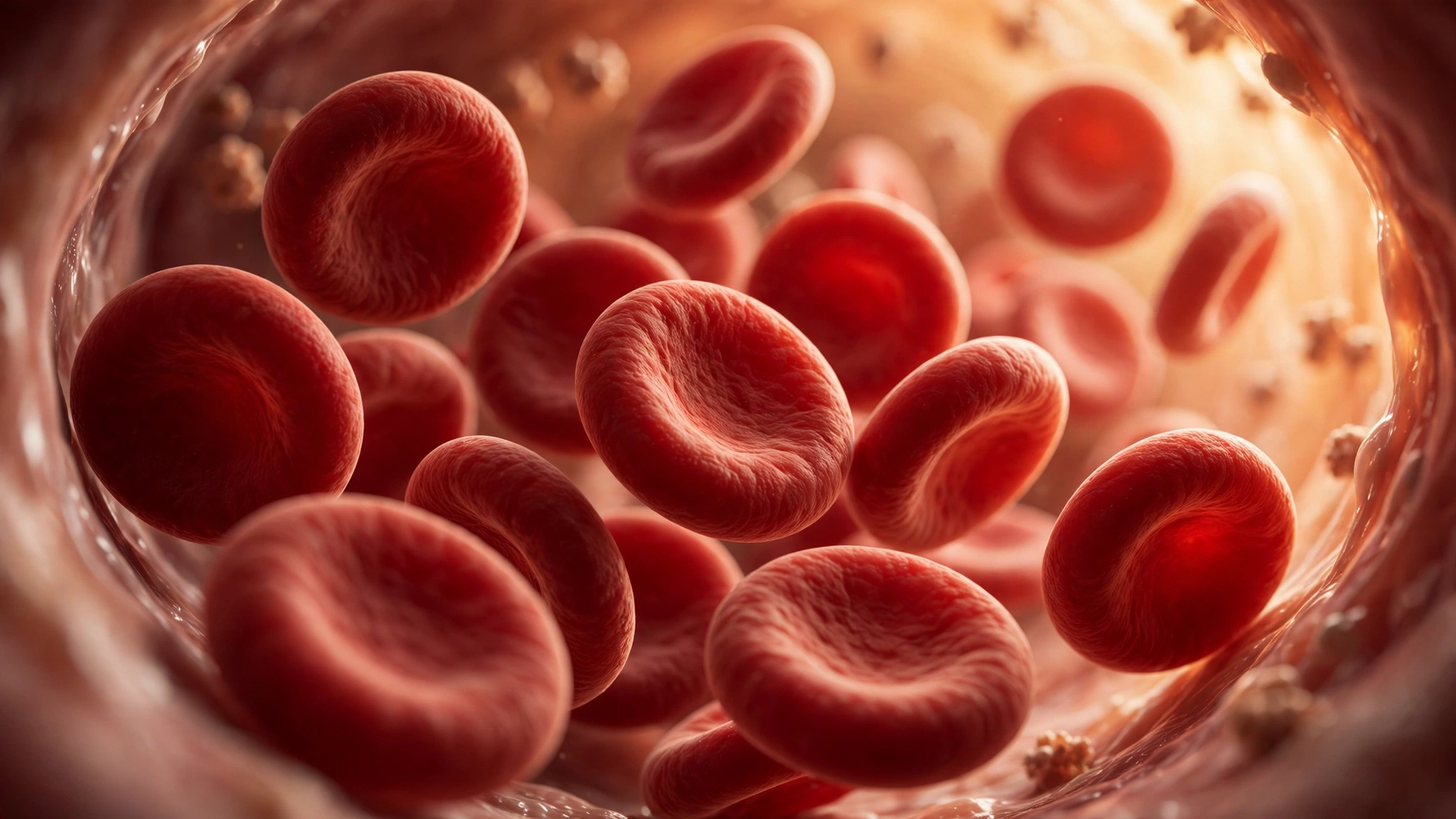
What a High MCHC Blood Test Result Means
A high result on an MCHC blood test is much less common than a low one. It means the hemoglobin inside your red cells is more concentrated than normal. Doctors look at a high result with two possibilities in mind: a real red cell condition, or a lab artifact.
Hereditary spherocytosis. This is the classic cause of a genuinely high MCHC. It is an inherited condition in which a defect in the red cell membrane makes the cells lose their normal disc shape and become small, dense spheres. These round cells pack more hemoglobin per unit of volume, so MCHC rises. People with this condition may also have anemia, jaundice, or an enlarged spleen, and the condition often runs in families.
Hemolysis. When red blood cells break apart faster than normal, hemoglobin can spill into the plasma, and the calculated MCHC can read high. Hemolysis has many causes, from immune reactions to infections, and it usually shows up with other abnormal results too.
Severe dehydration. Losing a lot of fluid can concentrate the blood and nudge MCHC upward. This is a minor and temporary effect, and the value usually returns to normal once fluids are replaced.
Lab artifact. A high MCHC is often a measurement quirk rather than a real finding. Red cells can only hold so much hemoglobin, so a very high reading, such as above 37 or 38 g/dL, usually points to a problem with the sample. Cold agglutinins, which are antibodies that make red cells clump at room temperature, and lipemia, a fatty sample, are the two most common culprits. Labs usually repeat the test or warm the sample when they suspect this.
Because a true high result is rare, doctors almost always confirm it before looking for a cause. A repeat test on a fresh sample often settles the question.
How Doctors Read an MCHC Blood Test With Other Numbers
An MCHC blood test is never read alone. The pattern of the red cell indices together points your doctor toward a category of causes, and that pattern decides which follow-up tests make sense.
| MCV | MCH | MCHC | RDW | Likely pattern |
|---|---|---|---|---|
| Low | Low | Low | High | Iron deficiency anemia |
| Low | Low | Low or normal | Normal | Thalassemia trait |
| Low | Low | High | Normal or high | Hereditary spherocytosis |
| High | High | Normal | High | Vitamin B12 or folate deficiency |
| Normal | Normal | Normal | Normal | Often no red cell problem |
A low MCV with a low MCHC is the classic iron deficiency pattern, while a low MCV with a normal RDW points more toward thalassemia trait. A high MCV with a high RDW suggests a vitamin B12 or folate problem. A low MCV with a high MCHC is the spherocytosis pattern.
Follow-up tests often include ferritin, which shows iron stores, plus serum iron, transferrin saturation, vitamin B12, and folate, depending on the pattern. A blood smear, where a lab worker looks at the cells under a microscope, can also help. For general nutrition background, see our guides to vitamin B12 foods and foods high in zinc.
What to Do After an MCHC Blood Test
If your result is flagged, start by reading it against the reference range on your own report, and look at the rest of your CBC. A result just outside the range with normal MCV, hemoglobin, and ferritin is often nothing to worry about, but your doctor should still see it.
Ask your doctor what the pattern means. Bring the full report, not just the one number, and ask which follow-up tests they suggest. The Mayo Clinic complete blood count guide explains that a CBC is often a first step, and abnormal results usually lead to more specific tests rather than a diagnosis on their own.
Do not start iron supplements on your own. Iron deficiency is the most common cause of a low result, but iron is not the cause every time. Taking iron without a confirmed deficiency can cause side effects, and it can hide the real cause. A ferritin test should come first.
Expect a repeat test. Labs often repeat an abnormal MCHC, especially a high one, because sample problems are common. A second result on a fresh sample gives a clearer picture.
Note your symptoms and history. Tell your doctor about tiredness, heavy periods, stomach bleeding, a family history of anemia or blood conditions, and any medicines you take. These details help narrow the cause faster than any single number can.
Keep the result in context. MCHC is a clue, not a verdict. It points to a category, and the follow-up tests do the real work of finding the cause.

Frequently Asked Questions
What is an MCHC blood test?
An MCHC blood test measures the average concentration of hemoglobin inside your red blood cells, and it comes from a complete blood count. The normal range for most adults is about 32 to 36 g/dL. It is a calculated value, not a direct measurement.
What does a low MCHC blood test result mean?
A low result means your red cells carry less hemoglobin than they should, a state called hypochromia. Iron deficiency anemia is the most common cause, and thalassemia trait is the other common one. Your doctor will usually check ferritin and the other red cell indices next.
What does a high MCHC blood test result mean?
A high result is uncommon, and it often turns out to be a lab artifact, such as cold agglutinins or a fatty sample. When the rise is real, the classic cause is hereditary spherocytosis. Doctors usually repeat the test before looking for a cause.
What is the normal range for an MCHC blood test?
For most adults, the normal range is about 32 to 36 g/dL, though some labs use 33 to 36 g/dL. Reference ranges vary slightly between labs, so always read your result against the range printed on your own report.
Do I need to fast before an MCHC blood test?
No special preparation is needed for the test itself, since it is part of a routine complete blood count. Your doctor may ask you to fast if other tests are ordered at the same time, so follow the instructions on your lab order.
Can dehydration affect my MCHC blood test result?
Yes, severe dehydration can nudge the result upward, because the blood becomes more concentrated. This effect is usually small and temporary, and the value returns to normal once fluids are replaced. A very high reading is more often a sample problem.
Is a slightly low MCHC blood test result serious?
Not always. A value just below the range with normal hemoglobin and ferritin is often unremarkable, and it may reflect normal variation. Still, show the full report to your doctor, who can decide whether follow-up tests are needed.
Conclusion
An MCHC blood test measures how much hemoglobin is packed into your red cells, and the normal range for most adults is about 32 to 36 g/dL. A low result most often points to iron deficiency, while a high result is rare and often a lab artifact. The number is a clue, not a diagnosis, so share the full report with your doctor and let the follow-up tests do the rest.
This article is general health information only and is not medical advice. If a blood test result worries you, talk to a healthcare professional.