Chayote Benefits: Nutrition, Uses and How to Eat This Mild Squash
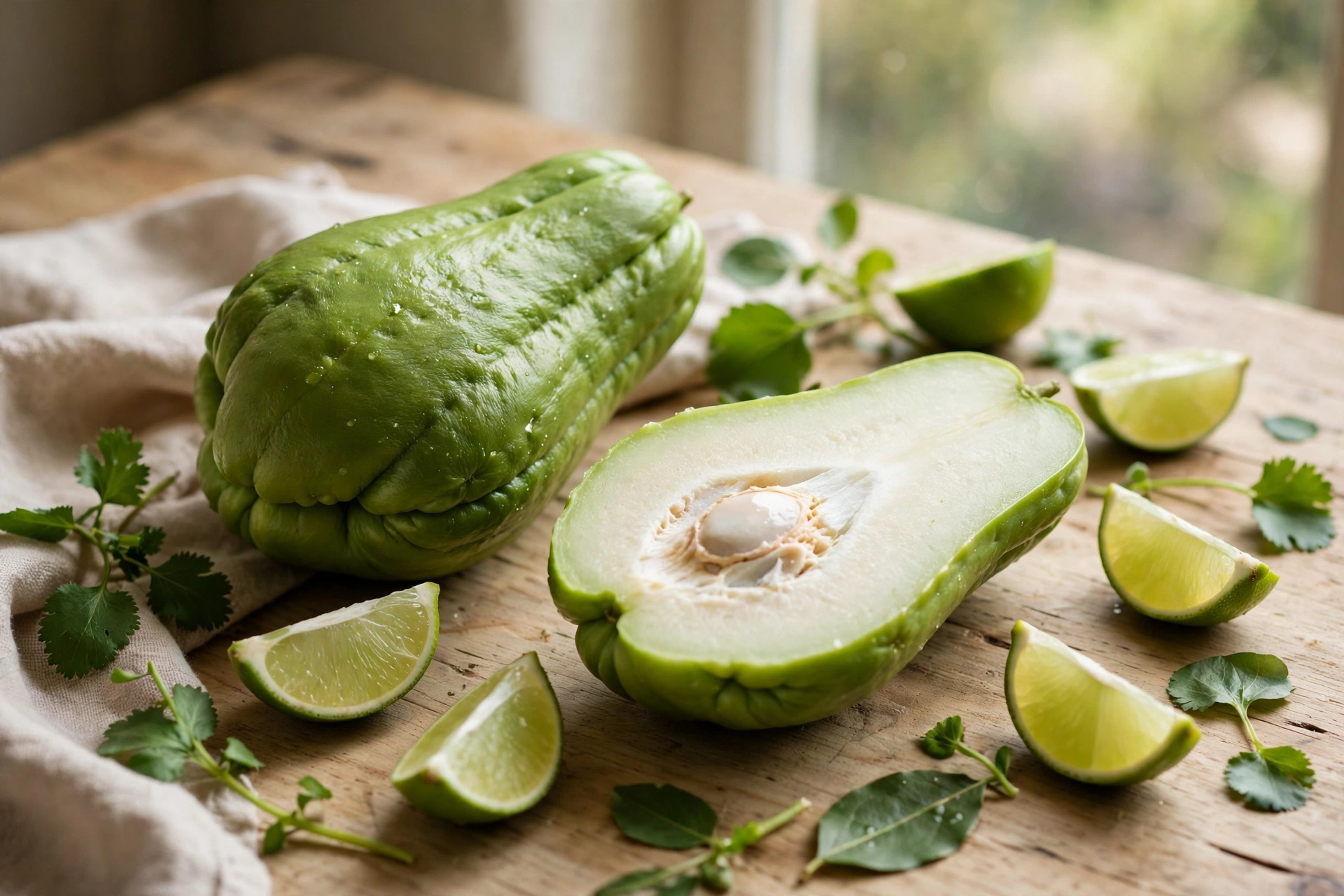
Chayote is a mild, crisp squash with pale green skin and a pear-like shape. It tastes a little like cucumber mixed with a raw potato, and it works in salads, soups, stir-fries, and stews.
One whole chayote has about 39 calories and nearly half the daily value of folate, plus fiber, vitamin C, copper, and manganese. It is low in carbs and fat, and it is about 94 percent water.
This guide covers chayote nutrition, seven possible benefits, how to eat and cook it, and the risks to know. For more health guides, browse our Health section.
Contents
- What Is Chayote?
- Chayote Nutrition Facts
- 7 Chayote Benefits Worth Knowing
- How to Eat Chayote
- How to Cook Chayote: 5 Easy Methods
- Chayote vs Zucchini: How They Compare
- How to Choose and Store Chayote
- Chayote Risks: Who Should Be Careful
- Common Myths About Chayote
- Frequently Asked Questions About Chayote
What Is Chayote?
Chayote, known by its scientific name Sechium edule, is a warm-climate squash from the gourd family. It comes from central Mexico and parts of Latin America, and it now grows in tropical and subtropical regions around the world.
For example, people also call it mirliton squash, christophine, choko, vegetable pear, or sayote. The names change by region, but the fruit is the same.
Botanists class it as a fruit, yet cooks treat it as a vegetable. In addition, nearly the whole plant is edible: the fruit, the soft seed inside it, the tender shoots, the leaves, and even the roots.
Its flavor is mild and slightly sweet, with a firm crunch when raw. When cooked, it turns tender but holds its shape well.
Chayote Nutrition Facts
Chayote is light in calories and rich in water. The table below shows the values for 100 grams of raw fruit, based on USDA FoodData Central data.
| Nutrient (per 100 g raw) | Amount | Daily Value |
|---|---|---|
| Calories | 19 kcal | 1% |
| Water | 94.2 g | n/a |
| Carbohydrate | 4.5 g | 2% |
| Fiber | 1.7 g | 6% |
| Sugars | 1.7 g | n/a |
| Protein | 0.8 g | 2% |
| Fat | 0.13 g | 0% |
| Sodium | 2 mg | 0% |
| Potassium | 125 mg | 3% |
| Calcium | 17 mg | 1% |
| Magnesium | 12 mg | 3% |
| Folate | 93 mcg | 23% |
| Vitamin C | 7.7 mg | 9% |
| Vitamin K | 4.1 mcg | 3% |
| Vitamin B6 | 0.1 mg | 6% |
| Copper | 0.14 mg | 14% |
| Manganese | 0.2 mg | 9% |
| Zinc | 0.2 mg | 2% |
A single whole fruit weighs about 203 grams. That serving has about 39 calories, 9 grams of carbs, and about 3.5 grams of fiber. In addition, it gives 189 mcg of folate, or 47 percent of the daily value, and 16 mg of vitamin C, or 17 percent. One cup of cooked fruit has about 38 calories, so the squash fits easily into most eating patterns.
7 Chayote Benefits Worth Knowing
The benefits below come from the nutrient profile and from early research. Some rest on small or animal studies, and each section says so plainly.
Rich in Folate
First, folate is the standout nutrient in this squash. One whole fruit gives 189 mcg of folate, which is nearly half the daily value for adults.
Folate helps the body make DNA and new cells, and it helps form red blood cells. The National Institutes of Health lists 400 mcg of dietary folate equivalents per day for adults, and 600 mcg per day during pregnancy. MedlinePlus notes that folate works with vitamins B12 and C to help the body build new proteins.
Food folate does not replace prenatal folic acid supplements, so pregnant readers should follow their clinician’s advice.
Supports Heart Health
The mix of fiber, potassium, and plant compounds in this squash fits a heart-friendly eating pattern. Fiber helps lower cholesterol absorption in the gut, and diets rich in fiber are linked to lower rates of heart disease.
Next, potassium helps the body manage blood pressure by easing tension in blood vessel walls. In addition, the fruit is almost sodium-free, with only 2 mg per 100 grams. That balance of low sodium and modest potassium is helpful for many people.
Antioxidants such as myricetin and quercetin may also help blood vessels, but more human studies are needed.
May Help Steady Blood Sugar
This squash is low in total carbs and sugars, with only 4.5 grams of carbs per 100 grams. That makes it an easy fit for glucose-aware meals.
For example, soluble fiber slows digestion and the absorption of carbs, which can soften the rise in blood sugar after a meal. In addition, early lab work suggests that plant compounds in the fruit may improve how cells respond to insulin. The evidence is limited, though, and it comes mostly from lab and animal work.
It is not a treatment for diabetes. People who take glucose-lowering drugs should talk to a clinician before they try concentrated extracts or juices.
Supports Healthy Digestion
Fiber is the main digestive benefit here. One whole fruit gives about 3.5 grams of fiber, which feeds helpful gut bacteria and supports regular bowel movements.
Fiber also draws water into the intestines, which helps prevent constipation. In addition, the fruit itself is about 94 percent water, so it adds fluid to meals in a gentle way.
Also, it is one simple way to add fiber variety, next to beans, whole grains, and leafy greens.
Fits a Healthy Weight Plan
At 19 calories per 100 grams, this squash is one of the lightest vegetables you can buy. It adds bulk and crunch to a plate without adding much energy.
In addition, fiber slows the rate at which the stomach empties, so meals feel more filling. As a result, swapping part of a starchy side for this squash can lower the calorie density of a dish without shrinking the portion.
No single food causes weight loss on its own. However, light, high-water vegetables like this one make satisfying low-calorie meals easier.
Supports Immune Health and Skin
Vitamin C plays a direct role in immune function, and it helps the body make collagen, the protein that gives skin its structure. One whole fruit gives 16 mg of vitamin C, or 17 percent of the daily value.
Also, copper and zinc add modest support, so the fruit works best as part of a varied diet.
Other foods in the same style include dragon fruit and rambutan, which also bring vitamin C and a mild, fresh flavor to meals.
Healthy Aging: What the Evidence Shows
Antioxidant-rich foods may help protect cells from damage over time. This squash contains vitamin C and several plant compounds with antioxidant activity, including myricetin.
For example, one small 2023 study followed older adults with metabolic syndrome for six months. It found that eating the fruit had antioxidant effects and slowed the shortening of telomeres, a marker linked to cell aging. The study was small, though, and the results need confirmation in larger trials.
So the honest summary is this: the fruit fits an antioxidant-rich diet, but no food on its own can slow aging.
How to Eat Chayote
This squash is easy to use because its flavor is so mild. You can eat it raw or cooked, and it fits both savory dishes and light snacks.
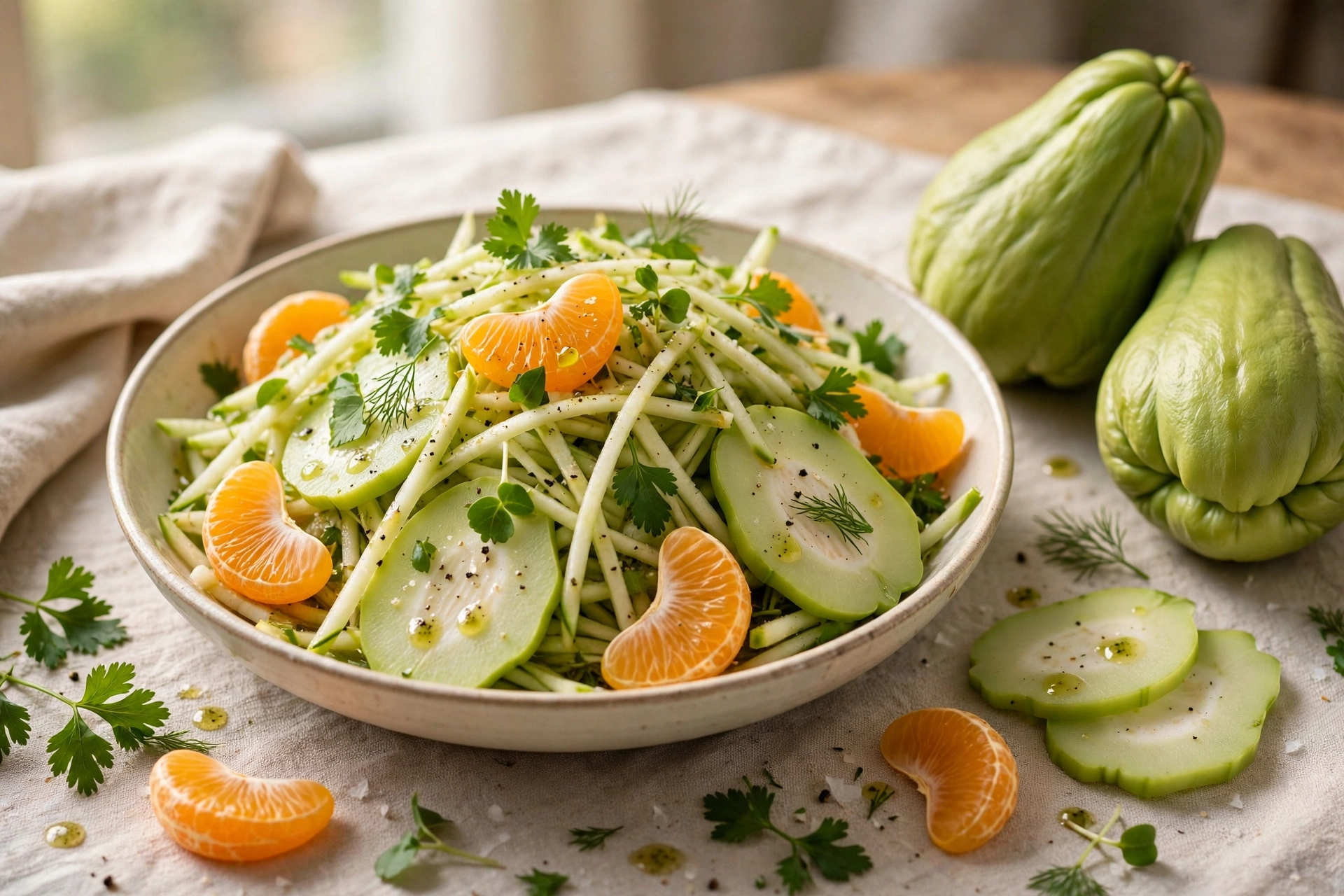
For example, raw, it adds crunch to salads and slaws. First, slice it thin, then toss it with lime juice, salt, and chili for a fresh side. It also blends well into smoothies, where its mild taste disappears behind fruit.
Next, cooked, it works in soups, stews, stir-fries, and curries. Add it near the end so it stays tender-crisp. You can also roast it, stuff it, or pickle it.
Also, the soft seed in the center is edible and has a mild, nutty taste. Many cooks keep it, while others scoop it out. Young fruit can be eaten with the skin on, but older fruit has a tougher peel that is best removed.
For example, try a citrus slaw with thin slices of the fruit, shredded carrot, lime, and a spoon of Greek yogurt thinned with water.
How to Cook Chayote: 5 Easy Methods
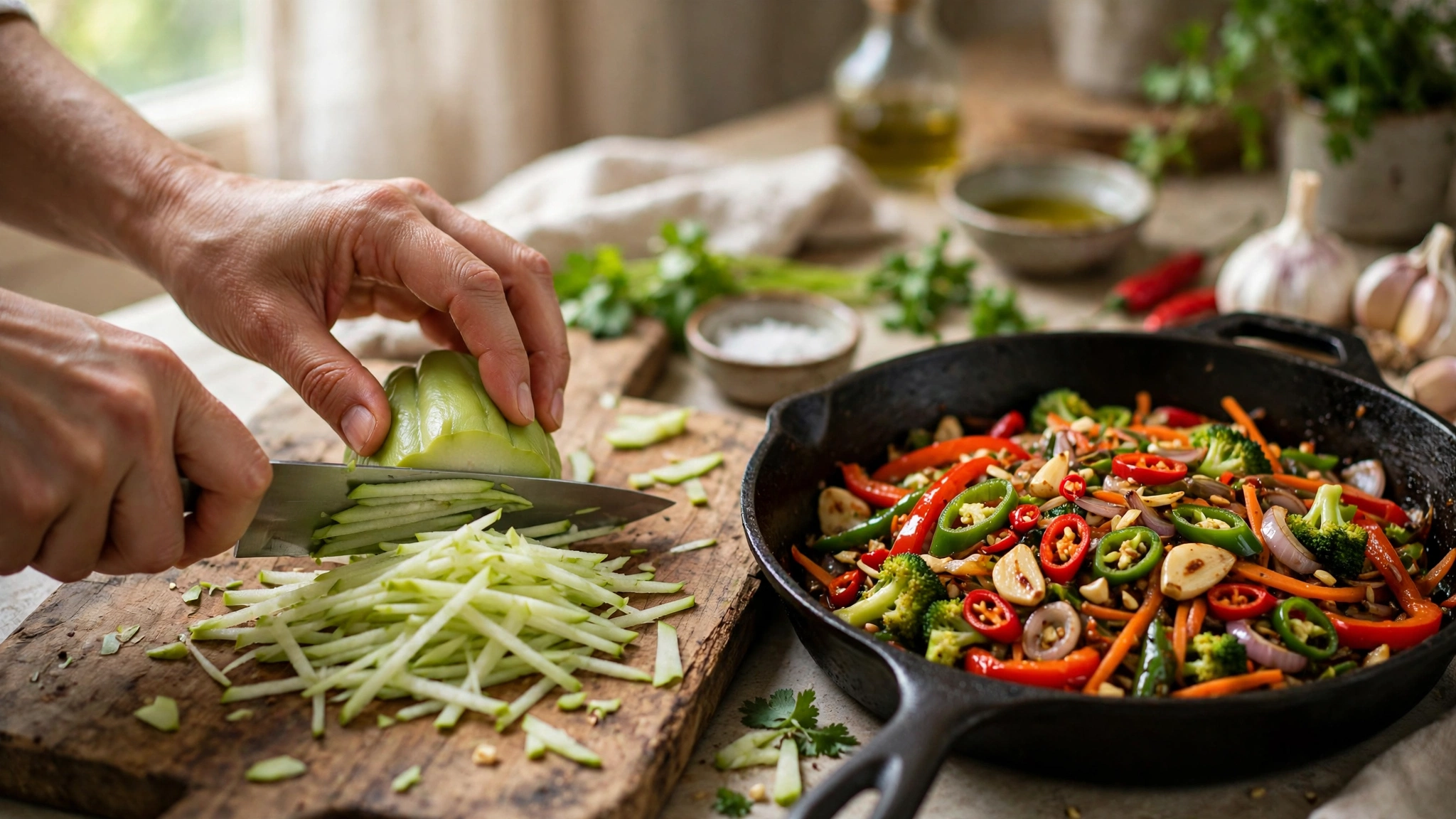
First, start with a firm fruit, rinse it under running water, and pat it dry. If the peel feels tough, wear gloves while you peel it, because the sap can dry out your skin. Then try one of these methods.
1. Raw slaw. Peel and slice the fruit thin, then toss it with lime juice, olive oil, salt, and herbs. Serve it at once for the best crunch.
2. Quick saute. Cut it into thin strips, then cook it with garlic and chili in a hot pan for 3 to 4 minutes. Add it to tacos, noodle dishes, or grain bowls.
3. Simmer in soup. Dice it and add it to broth, beans, or soup in the last 10 to 15 minutes. It holds its shape and soaks up flavor.
4. Roast it. Cut it into wedges, toss with oil and salt, and roast at 200 C (400 F) for 20 to 25 minutes until golden.
5. Stuff and bake. Halve the fruit, scoop out the center, and fill it with grains, beans, cheese, or seasoned meat. Bake until tender.
Chayote vs Zucchini: How They Compare
For example, shoppers often compare this squash with zucchini, since both are mild, green, and low in calories. They are close cousins in the kitchen, but they differ in a few useful ways.
| Feature | Chayote | Zucchini |
|---|---|---|
| Shape | Pear-shaped, wrinkled skin | Long and smooth |
| Texture when raw | Firm and crisp | Soft and watery |
| Texture when cooked | Holds its shape | Turns soft fast |
| Folate per 100 g | Higher (93 mcg) | Lower (about 24 mcg) |
| Vitamin C per 100 g | Lower (7.7 mg) | Higher (about 18 mg) |
| Flavor | Mild, slightly sweet | Very mild, almost neutral |
| Best uses | Slaws, soups, stir-fries, stuffing | Grilling, baking, spiralizing |
The main trade is simple: this squash wins on folate and firmness, while zucchini wins on vitamin C and softness. For a crunchy slaw or a simmered soup, the firmer squash holds up better.
How to Choose and Store Chayote
First, pick fruit that feels firm and heavy for its size, with even pale to medium green color. Skip any piece with soft spots, sunken areas, or a sour smell. A little surface wrinkling is normal.
Smooth-skinned types are easiest to peel. Medium fruit, about 200 to 250 grams, tends to be the most tender.
Store whole fruit in a perforated bag in the fridge for 1 to 2 weeks. Cut pieces keep for 3 to 5 days in a covered container. For longer storage, blanch cubes for 1 to 2 minutes, cool them, and freeze them for up to 10 months.
Chayote Risks: Who Should Be Careful
This squash is safe for most people, but a few cautions are worth knowing before you cook with it.
The sap can irritate skin while you peel older fruit. It may feel drying or mildly numbing, and it usually fades within hours. Wear gloves to avoid it.
Also, if a fruit tastes very bitter, do not eat it. All gourds can rarely produce bitter compounds called cucurbitacins, and very bitter fruit should be thrown away. Normal fruit tastes mild, never strongly bitter.
True allergy is uncommon. However, people who react to other gourds should try a small amount first. In addition, people on potassium-restricted diets should count it toward their daily allowance.
Extracts and juices are a different matter from the whole fruit. Early research is limited, and they may affect blood sugar or blood pressure. If you use them with medicine, talk to a clinician first.
Common Myths About Chayote
Myth 1: The juice cures diabetes. Juice and extracts have shown early promise in small studies, but they do not cure diabetes. Whole fruit is a healthy food, not a treatment.
Myth 2: It has no calories at all. It is very low in calories, but not zero. One whole fruit has about 39 calories, and 100 grams has 19.
Myth 3: The seed is poisonous. The seed is safe to eat. It is soft, mild, and slightly nutty, and many cooks prize it. Scoop it out only if you prefer a smooth texture.
Frequently Asked Questions About Chayote
What does it taste like?
In short, it tastes mild and slightly sweet, a little like cucumber mixed with a raw potato. It is crisp when raw and tender when cooked, and it takes on the taste of the dish around it.
Can you eat it raw?
Yes, you can eat it raw. First, slice it thin for salads and slaws. Young fruit can be eaten with the skin on, while older fruit is better peeled.
Do you need to peel it?
Not always. Young fruit has thin skin that is fine to eat, but older fruit has a tougher peel. Wear gloves while peeling, since the sap can dry out your skin.
Is it good for diabetes?
It fits a diabetes-friendly eating pattern because it is low in carbs and sugars, and its fiber may help steady blood sugar. It is not a treatment, though, so follow your clinician’s plan.
Is it safe in pregnancy?
The whole fruit is a normal food, and its folate is a plus during pregnancy. Food folate does not replace prenatal folic acid supplements, however, so follow your clinician’s advice.
How many calories does it have?
In short, one whole fruit has about 39 calories, and 100 grams has 19 calories. A cup of cooked fruit has about 38 calories. It is one of the lightest vegetables you can add to a meal.
Where can I buy it?
Look in the produce section of large grocery stores, Latin American markets, and Asian markets. Choose firm fruit with even green color and no soft spots.
Conclusion
Chayote is a light, crisp, and versatile squash with a strong folate profile and a mild flavor that fits almost any dish. It brings fiber, vitamin C, and useful minerals for very few calories.
Try it this week in a simple soup or a citrus slaw, and see how easily it fits your meals.
Disclaimer: This article gives general health information only. If you have ongoing problems, talk to a healthcare professional.