
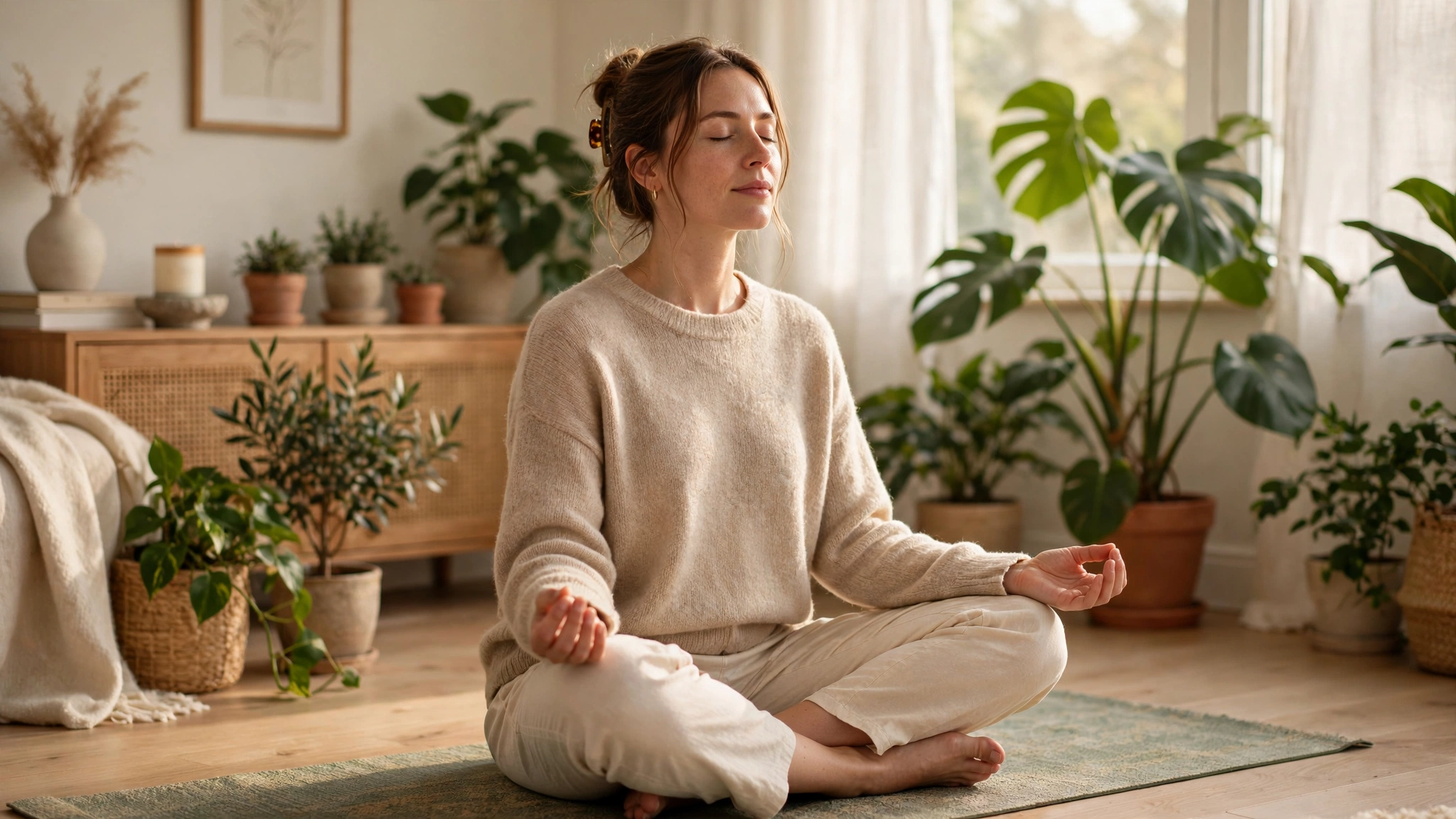
Mental Health Exercises: 12 Simple Practices You Can Do Anywhere
You do not need a gym membership, an app subscription, or an hour of free time to look after your mind. Mental health exercises are short, practical activities that train your mind the way a walk trains your body. Some calm your body within minutes, while others help you untangle unhelpful thoughts or process a hard feeling.
The National Institute of Mental Health offers simple ideas for caring for your mental health, and the practices below follow the same down-to-earth approach. Each one is free, takes only a few minutes, and works almost anywhere: at your desk, in a parked car, or in bed at 2 a.m. when your brain will not switch off.
Below, you will find 12 practices grouped by what they do, plus a simple way to combine them into a daily routine. New to this? Start with our guide on why mental health matters. Then pick two or three exercises here and keep the ones that click.
Contents
- What they are
- The 12 exercises
- Which one to try first
- Build a 10-minute daily routine
- Common mistakes
- When to get more help
- Frequently asked questions
- The bottom line
What Are Mental Health Exercises?
Think of them as workouts for your inner life. Just as physical exercise strengthens muscles, these practices strengthen attention, emotional regulation, and self-compassion. They fall into a few simple families:
- Calming exercises slow your body’s stress response (breathing, muscle relaxation).
- Grounding exercises pull your attention back to the present moment.
- Thinking exercises help you notice and reshape unhelpful thought patterns.
- Processing exercises give feelings somewhere to go (journaling, naming emotions).
- Connection and movement exercises get you out of your head and remind you that you are not alone.
None require talent or special equipment. They do need a little repetition: benefits build gradually, the same way fitness does. Browse more topics in our Mental Health guides.
12 Mental Health Exercises You Can Start Today
1. Box Breathing
This is a fast way to tell your body that you are safe. Slow, even breathing activates the body’s rest-and-digest response, so your heart rate settles.
How to do it:
- Breathe in slowly through your nose for 4 counts.
- Hold your breath for 4 counts.
- Breathe out slowly through your mouth for 4 counts.
- Hold empty for 4 counts.
- Repeat 4 times, about two minutes in total.
If 4 counts feels too long, start with 3. The even rhythm matters more than the exact number. For more on this, see our guide to calm your nervous system.
2. The 5-4-3-2-1 Grounding Exercise
When anxiety spirals, attention gets pulled into “what if” thoughts. This exercise pulls it back to the present by walking through your five senses.
How to do it: Name, out loud or silently:
- 5 things you can see (the crack in the ceiling, your coffee mug)
- 4 things you can touch (the chair under you, your shirt sleeve)
- 3 things you can hear (traffic, the fridge humming)
- 2 things you can smell (soap, rain through the window)
- 1 thing you can taste (toothpaste, morning tea)
By the time you reach taste, the racing thoughts have usually lost their grip.
3. Progressive Muscle Relaxation
Stress lives in your body as tension: a clenched jaw, tight shoulders, a knotted stomach. This exercise teaches you what “relaxed” feels like by contrasting it with tension.
How to do it:
- Sit or lie down comfortably.
- Starting at your feet, tense one muscle group hard for 5 seconds. Curl your toes, for example.
- Release suddenly, and notice the wave of looseness for 10 to 15 seconds.
- Move upward: calves, thighs, belly, hands, shoulders, face.
The whole sequence takes about 10 minutes. MedlinePlus explains how stress affects the body and why relaxation habits are worth building in.
4. The 3-Minute Brain Dump
When your head is full of unfinished tasks and looping worries, writing them out moves them from your mind onto paper, where they become manageable.
How to do it:
- Set a timer for 3 minutes.
- Write everything on your mind: tasks, worries, random thoughts. A messy list is fine; full sentences are not required.
- Do not organize or judge. Spelling does not matter.
- When the timer ends, circle the one item that matters most, and let the rest wait.
The point is not to solve everything. It is to stop carrying it all at once.

5. Catch It, Check It, Change It
This is the core move of cognitive behavioral therapy (CBT), simplified. Unhelpful thoughts such as “I always mess everything up” feel like facts. Often, they are exaggerations that a tired brain produces under stress.
How to do it:
- Catch it: Notice the thought and write it down: “I ruined the presentation.”
- Check it: Ask: Is it 100% true? What would I say to a friend thinking this? What is a more balanced version?
- Change it: Rewrite it fairly: “Parts of the presentation went well; the ending was shaky, and I can prepare differently next time.”
You do not have to force positivity. A fairer thought is enough.
6. Name It to Tame It
Psychologists have found that simply labeling an emotion reduces its intensity. A vague, overwhelming feeling becomes something specific, and specific things are easier to handle.
How to do it: When a strong feeling hits, pause and finish this sentence: “Right now I feel ___.” Go beyond “bad” or “stressed.” Try frustrated, embarrassed, lonely, overwhelmed, disappointed, or afraid.
Then ask: “What do I need right now?” Sometimes the answer is a glass of water and a walk. Sometimes it is a phone call. Naming the feeling unlocks the answer.
7. Three Good Things
Regularly noticing good things shifts your brain’s attention away from constant threat-scanning.
How to do it: Each evening, write down three good things from your day and one sentence about why each happened. They can be tiny: “The bus came on time,” “My sister texted,” “The soup turned out well.” Aim for specifics, not generic blessings. Specifics are what retrain attention.
8. The Self-Compassion Break
When you are hurting, you probably talk to yourself more harshly than you would ever talk to a friend. Self-compassion is not letting yourself off the hook. It is refusing to kick yourself while you are down.
How to do it:
- Acknowledge the moment: “This is a hard moment.”
- Remember common humanity: “Other people feel this way too. I am not uniquely broken.”
- Offer kindness: place a hand on your chest and say, “May I be kind to myself right now.”
It can feel awkward at first. Do it anyway.
9. Mindful Walking
If sitting still to meditate feels impossible, walk instead. Mindful walking turns an ordinary stroll into a grounding practice.
How to do it:
- Walk at a slower-than-usual pace for 5 to 10 minutes.
- Notice the sensations: your heel striking the ground, the swing of your arms, the air on your skin.
- When your mind wanders, and it will, gently bring your attention back to your feet.
- Notice one thing you can see, hear, and smell along the way.
Leave the headphones at home. The world provides the soundtrack.

10. Move Your Body for 10 Minutes
You do not need an intense workout to get the mental health benefits of movement. A brisk 10-minute walk, a few stretches, or dancing to two songs in your kitchen all count. Movement burns off stress hormones, releases mood-lifting endorphins, and interrupts rumination.
How to do it: Pick the smallest version you will actually do. A walk around the block beats a planned gym session that never happens. If 10 minutes feels like too much, start with 5. Consistency beats intensity: a short daily walk does more for your mood over a month than one heroic workout a month.
11. The Worry Window
Some worries will not be reasoned away; they just keep knocking. Instead of fighting them all day, give them an appointment.
How to do it:
- Choose a 15-minute “worry window” later in the day, but not right before bed.
- When a worry appears outside the window, write it down and say, “I’ll deal with you at 5:30.”
- During the window, sit with your list. Problem-solve what you can, and let the rest be.
- When the timer ends, close the notebook. The worries can wait until tomorrow’s window.
It works because it stops worry from colonizing your whole day.
12. One Connection a Day
Loneliness is one of the most underrated threats to mental health, and one of the most fixable. You do not need a huge social life: one genuine human connection a day makes a real difference.
How to do it: Send one real message, not a like or a reaction. Ask a friend how their job interview went, call your mother, compliment a coworker, or invite someone for coffee. Small, regular connection protects mental health over time.
Which Mental Health Exercise Should You Try First?
With 12 options, choosing can feel like one more task. Start from how you feel right now:
| How you feel | Try this first | Time needed |
|---|---|---|
| Racing heart, tense body | Box breathing or muscle relaxation | 2 to 10 minutes |
| Mind stuck on “what if” thoughts | 5-4-3-2-1 grounding | 2 minutes |
| Head full of tasks and worries | 3-minute brain dump | 3 minutes |
| Harsh, looping self-talk | Catch it, check it, change it | 5 minutes |
| Flat, low, or numb | Mindful walking or 10 minutes of movement | 5 to 10 minutes |
You do not need the perfect match. Any exercise on this list is a reasonable start; switch whenever one stops helping.
Build a 10-Minute Daily Routine With These Exercises
Twelve exercises are a menu, not a homework list. Here is one simple way to combine a few favorites into a daily habit that takes about 10 minutes:
- Morning (2 minutes): Box breathing before you check your phone.
- Midday (3 minutes): Brain dump on a sticky note, then circle one priority.
- Evening (5 minutes): A short walk or stretch, then three good things in a notebook.
That is it. A routine that survives a bad week beats a perfect routine that survives only good ones. Missed a day? Restart the next morning.
Common Mistakes With Mental Health Exercises
A few habits quietly sabotage good intentions. Watch out for these:
- Trying all 12 at once. You will burn out within a week. Start with two or three.
- Expecting instant results. These are skills, not switches. Most people notice a difference after a week or two of regular practice.
- Skipping practice on good days. The reps you do while calm make the skill available when you are not.
- Using exercises to avoid help. These practices support everyday wellbeing, but they are not a replacement for treatment when problems persist.
When Mental Health Exercises Are Not Enough
These exercises help with everyday stress, low mood, and worry. They are not a substitute for professional treatment. The NIMH fact sheet on stress and when to seek help is a useful next read.
Consider talking to a doctor, counselor, or therapist if:
- Low mood or anxiety lasts more than two weeks and interferes with work, sleep, or relationships.
- You have panic attacks, or anxiety that keeps getting worse.
- You have thoughts of harming yourself. Reach out right away to a crisis line (in the US, call or text 988) or go to your nearest emergency department.
- You feel unable to function, no matter what you try.
Asking for help is not failure. It is the same logic as these exercises: use the right tool for the size of the problem.
Frequently Asked Questions About Mental Health Exercises
Do they really work?
They help many people manage everyday stress, worry, and low mood, and breathing, grounding, and reframing come from mainstream psychology. The evidence is strongest for regular practice over time, not one-off attempts. Think of them as skills that grow with use.
How often should I practice?
A few minutes most days is a good target. Short daily practice beats one long session each week, because repetition is what trains your response to stress. Many people anchor it to morning coffee or the evening wind-down.
Which exercise is best for anxiety?
Grounding and breathing exercises are the most popular starting points, because they work on the body’s stress response directly. The 5-4-3-2-1 exercise helps when your mind races, while box breathing helps when your body feels tense. Try both and keep the one that settles you faster.
Can I do these exercises at work?
Yes. Most take two to five minutes and need no equipment. Box breathing works at your desk, a brain dump fits on a sticky note, and a short walk doubles as a break.
What if an exercise makes me feel worse?
Stop and switch to a different one. If focusing on your breath feels uncomfortable, try grounding through your senses or a short walk instead. If difficult feelings keep surfacing, share that with a therapist or counselor.
Are they a replacement for therapy?
No. These practices support everyday wellbeing and can sit alongside professional care, but they cannot diagnose or treat a mental health condition. If symptoms persist or interfere with daily life, a qualified professional is the right next step.
The Bottom Line
Mental health exercises work like physical exercise: not through one heroic session, but through small, repeated reps. A few slow breaths, a short walk, a page of scribbles, a fairer thought. Done regularly, they change how your mind responds to stress.
Pick one practice from this list and try it today, not tomorrow. On harder days, keep our collection of mental health quotes nearby for a quick lift.
This article is general information only and is not medical advice. If you have ongoing mental health problems, please talk to a healthcare professional.






5 Comments